REVIEW · MALAGA
Malaga city game: Operation Mindfall
Book on Viator →Operated by Playday Malaga · Bookable on Viator
Malaga turns into a spy thriller for two hours. Operation Mindfall uses augmented reality to turn familiar streets into part of a mission, with stops that point you toward big landmarks like Malaga Cathedral and the Alcazaba. It’s a friendly, team-based way to walk around the city center without feeling like you’re just checking off sights.
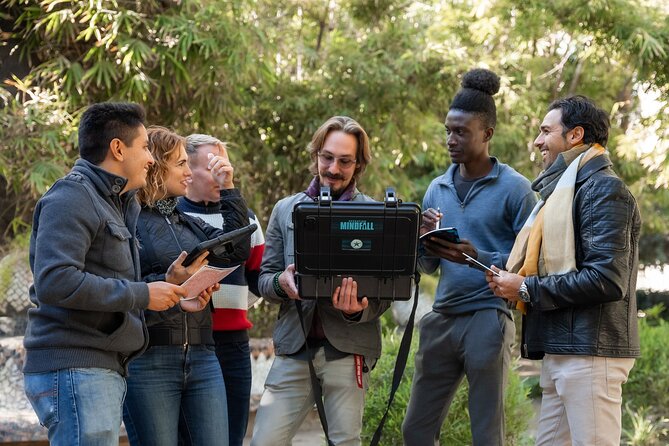
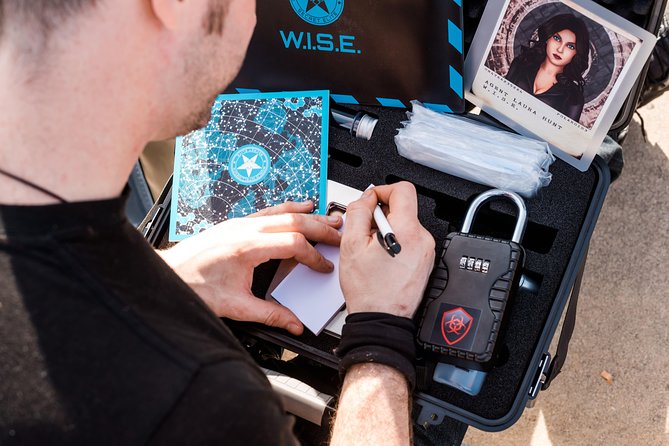
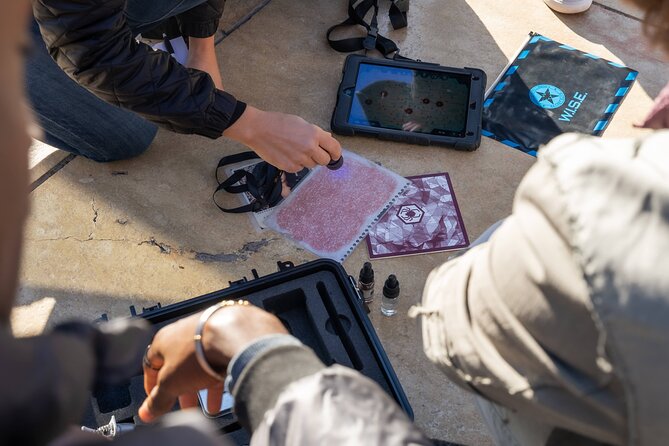
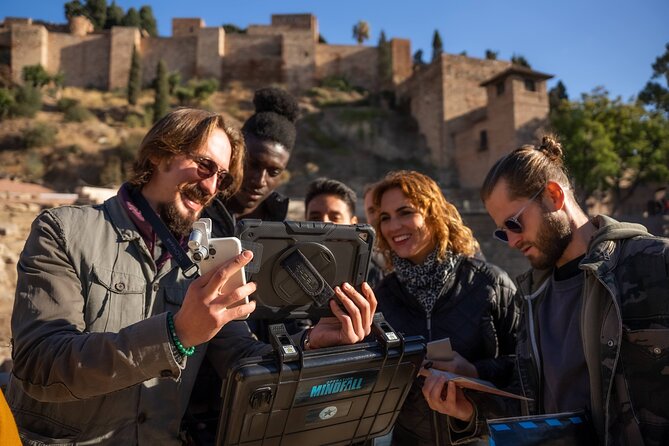
I especially like the hands-on feel: you’re given an iPad hire plus a gadget kit, so you’re not standing around waiting for instructions. I also like the game design that pushes cooperation. The mission story has you and your group solving riddles together, which makes it a solid choice for families and parties.
One consideration: the 120-minute clock is real. If you were hoping for a slow sightseeing stroll, you may find the game nudges you to move on before you can linger at each spot.
In This Review
- Key things to know before you play
- A Mission That Feels Like Walking a Puzzle Map
- What you’ll do during the game (and why it’s more than a gimmick)
- Stop-by-stop: Malaga Cathedral, Alcazaba, and your third mission stretch
- Stop 1: Malaga Cathedral
- Stop 2: Alcazaba
- Stop 3: Malaga (the connective city-walk)
- Using the iPad kit and augmented reality without losing the plot
- The 120-minute format: why the time pressure can be a feature
- Meeting at C. Ángel Ganivet: how to find the start cleanly
- Who this fits best in Malaga (families, parties, and puzzle lovers)
- Price and value: what $24.19 buys you in the real city
- The host touch: friendly guidance that makes a difference
- Weather matters (because puzzles need streets)
- Quick check: should you book Operation Mindfall?
- FAQ
- How long is Operation Mindfall in Malaga?
- What’s the price per person?
- Where does the game start?
- Where does the game end?
- Is it a private activity?
- Do I need to print anything?
- What landmarks do you visit?
- What makes the game different from a regular walking tour?
- What equipment is included?
- Is it suitable for families?
- What if the weather is bad?
- Is there free cancellation?
Key things to know before you play
- Augmented-reality clues guide you through the streets, not just from a map
- iPad hire + gadget kit means the experience is active from minute one
- Team-first gameplay discourages solo efforts and rewards helping each other
- Mix of easy and hard riddles keeps it challenging without turning frustrating
- Two hours is the sweet spot for a city game without eating your whole day
A Mission That Feels Like Walking a Puzzle Map
Operation Mindfall is built like a mystery story you play in the real city. In the 1950s, a secret organization created a dangerous poison, and your group has 120 minutes to find the antidote and stop the threat. The tone is playful but the premise asks for real teamwork. You’re specifically told not to play solo—stick together and talk things through.
What makes this work in Malaga is how the game format turns everyday streets into useful wayfinding. You’re not just wandering. You’re searching your surroundings for hints, then using augmented reality and the supplied devices to confirm what you think you’ve found. That means the route feels purposeful, even when you’re taking turns solving clues.
The overall vibe matches the high rating and strong recommendation rate: people clearly liked that it’s fun for families and parties, and that it gets your group thinking while still moving through the city.
You can also read our reviews of more city tours in Malaga


What you’ll do during the game (and why it’s more than a gimmick)
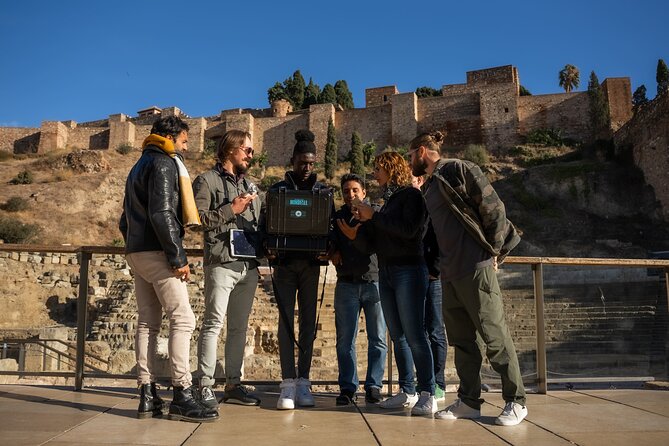
This isn’t a passive audio guide. You’re actively solving puzzles in short bursts, then repositioning to the next location. The game asks for creativity and an open mindset, so when you hit a tough clue, it’s often about noticing details rather than just using outside knowledge.
A big part of the experience is how augmented reality changes what you’re paying attention to. Instead of reading from a board or staring at a plaque, you’re prompted to look around for answers. One of the most liked moments in the feedback was specifically those “look around the city” style tests—those are the clues that make you feel like you’re actually learning how the streets connect.
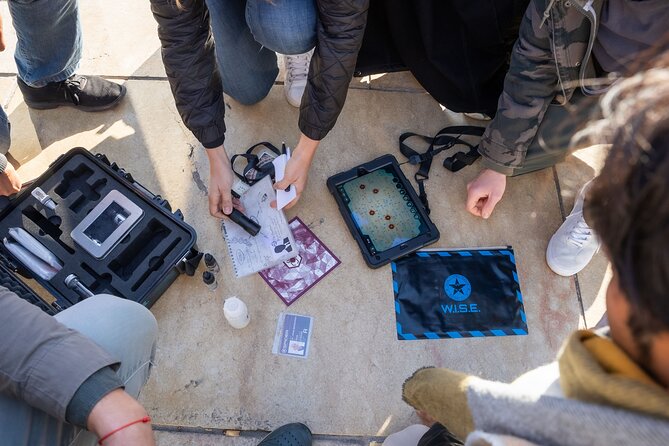
The iPad hire and gadget kit also matter for value. You’re not paying for “just an activity ticket.” You’re paying for a ready-to-use kit that carries the game. Even when the iPad can feel a little fiddly at times, the fact that the equipment is included keeps you from getting stuck halfway through.
Stop-by-stop: Malaga Cathedral, Alcazaba, and your third mission stretch
The route has clear anchors, and that helps you understand where the game is taking you. You’ll start with landmark energy, then shift toward the kind of wandering that fits a city puzzle.
Stop 1: Malaga Cathedral
You begin at Malaga Cathedral, which gives the game a dramatic, easy-to-recognize starting point. It’s a smart choice because cathedrals help you anchor the rest of your route in your mind. Even if you’re moving fast for puzzle time, you’ll still feel like you’re building a mental picture of central Malaga.
The downside is also predictable: you’ll likely spend less time here than you would on a standard visit. Since the clock is ticking, the Cathedral is more of a puzzle launch pad than a full sightseeing stop. If you love architecture and could happily spend an hour inside, plan to come back later.
Stop 2: Alcazaba
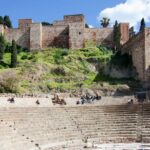
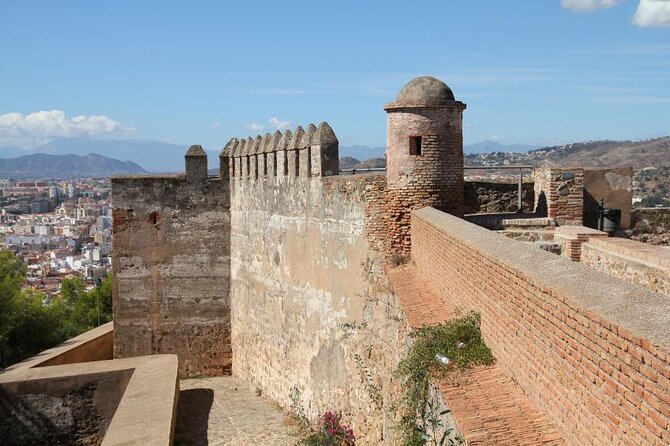
Next up is Alcazaba. This is where the game feels especially “Malaga.” The area gives you the kind of setting that naturally supports visual clues—there’s a lot to notice, from viewpoints to street layouts. The game also gives you a reason to stay alert instead of drifting into casual browsing.
Again, time matters. You’ll be moving through to complete tasks rather than soaking up every angle. Still, many groups like this balance because you get a real taste of the spot without spending your entire afternoon on logistics.





Stop 3: Malaga (the connective city-walk)
The third stop is described as Malaga, which usually means your game time continues through the surrounding streets between the big anchors. This is often the part where you feel most like you’re “figuring out” the city.
If you enjoy figuring routes out the way locals do—by noticing turns, seeing how blocks connect, and using landmarks as references—this middle stretch can be the most memorable. It’s where the look-around style puzzles tend to shine.
Using the iPad kit and augmented reality without losing the plot
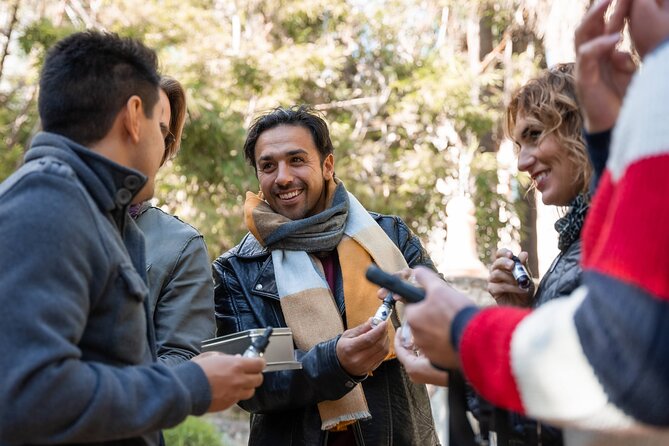
Here’s the practical side: the iPad and kit are part of the game, so your group needs to be comfortable passing devices around, checking prompts, and interpreting clues. One review mentioned that at times the iPad was a little difficult to use, and that’s worth taking seriously.
What helps:
- Assign roles early: one person watches prompts, another focuses on clue discussion.
- If you get stuck, don’t let one person wrestle the device alone.
- Keep the group close. Since you’re solving together, wandering too far from each other can slow everything down.
When it clicks, augmented reality is what makes the city game feel modern and different. It turns a street-level walk into a guided puzzle experience where the environment matters. That’s also why it can be so good for families: kids and adults can contribute in different ways, and the game doesn’t depend on museum knowledge.
The 120-minute format: why the time pressure can be a feature
The mission lasts about 2 hours. That duration hits a sweet spot for a city game because it’s long enough to feel satisfying, but not so long that you burn out your group. One of the comments highlighted that it lasted around two hours and felt like the perfect amount of time to solve the clues.
Still, this is also where the one main trade-off shows up: you might miss sightseeing opportunities. The city is full of side streets, viewpoints, and quick stops, and the game’s pacing means you may not linger when you find something that looks worth stopping for.
My advice: if you’re the type who always wants “one more photo spot,” save extra time before or after the game. Start the game when you’re ready to play first, and then switch into sightseeing mode later.
Meeting at C. Ángel Ganivet: how to find the start cleanly

You’ll meet at C. Ángel Ganivet, 1, Distrito Centro, 29005 Málaga, Spain and the activity ends back at the same meeting point. Starting and ending at one place helps your group recover quickly at the finish.
It’s also near public transportation, which is handy if you’re building a day that includes other sights. Since you’re playing in central Malaga, you won’t feel stranded in the middle of nowhere even if your plans change.
If your group includes teens or kids who get restless, the “back to the start point” ending is a real advantage. You don’t have to track down transit from a random neighborhood.
Who this fits best in Malaga (families, parties, and puzzle lovers)
Operation Mindfall is described as perfect for families and parties, and the results match that. The biggest praised themes are teamwork, fun challenge, and the fact that the riddles range from easy to hard in a way that keeps things engaging instead of turning into a test you either ace or fail.
If you’re traveling with:
- Kids and teens who like mysteries or games (this version is more like an interactive scavenger brain workout than a sit-and-listen tour)
- Adults who like escape-room energy but want it outdoors
- Friends or multi-generational groups who need a shared activity
…this is a strong fit.
If you’re traveling solo, you might still be able to participate since most travelers can, but the mission is clearly designed for groups to stick together. In practice, that means you’ll get more out of it when you can team up quickly and keep communication going.
Price and value: what $24.19 buys you in the real city
At $24.19 per person for about 2 hours, you’re paying for more than narration. You’re paying for a packaged game experience: the iPad hire, the included gadget kit, the augmented reality layer, and the structured route between major landmarks.
That value tends to be best when:
- your group actually likes solving puzzles
- you want a guided reason to walk through central Malaga
- you’d rather spend your time actively exploring than passively touring
If your travel style is more about long museum stops and slow wandering, it may feel like a fixed-route distraction. But if you like games, this price often feels fair because it covers the equipment and the “activity engine” that drives the whole experience.
The host touch: friendly guidance that makes a difference
One name showed up in the feedback: Aymen. People praised him as friendly and helpful, and he even took time to share recommendations for things to do around Malaga. That extra human layer matters. It helps you go from game mode to real city mode smoothly at the end.
Even if your group is focused on the puzzles, having a helpful host can reduce stress. It’s easier to ask a quick question and get a practical suggestion than to scramble later.
Weather matters (because puzzles need streets)
The experience requires good weather. If it’s canceled due to poor weather, you’ll be offered a different date or a full refund. Since the game is played outdoors through the city, this is a real consideration if you’re planning during a rainy window.
In practice, I treat this like any outdoor walking activity: bring layers, wear shoes you can move in, and keep an eye on conditions the day of.
Quick check: should you book Operation Mindfall?
You should book Operation Mindfall if you want a family-friendly augmented reality city game that:
- gets you moving through Malaga in a structured way
- uses real landmarks like Malaga Cathedral and Alcazaba
- turns sightseeing into problem-solving
- gives you equipment so you’re not figuring out logistics on your own
Skip it (or plan around it) if your priority is lingering at sights for long stretches. The game format favors pace and teamwork over slow, detailed sightseeing.
FAQ
How long is Operation Mindfall in Malaga?
It takes about 2 hours (approximately 120 minutes).
What’s the price per person?
The price is $24.19 per person.
Where does the game start?
The meeting point is C. Ángel Ganivet, 1, Distrito Centro, 29005 Málaga, Spain.
Where does the game end?
The activity ends back at the meeting point.
Is it a private activity?
Yes. It’s private, and only your group participates.
Do I need to print anything?
No. You get a mobile ticket.
What landmarks do you visit?
You’ll go to Malaga Cathedral and Alcazaba, plus additional time spent exploring Malaga as part of the mission.
What makes the game different from a regular walking tour?
It uses augmented reality and a mission-style puzzle format.
What equipment is included?
You get iPad hire and a kit full of useful gadgets included with the experience.
Is it suitable for families?
Yes. It’s described as perfect for families and parties, and most travelers can participate.
What if the weather is bad?
Good weather is required. If it’s canceled due to poor weather, you’ll be offered a different date or a full refund.
Is there free cancellation?
Yes. You can cancel up to 24 hours in advance for a full refund.