REVIEW · MALAGA
Night theatrical visit to the English cemetery
Book on GetYourGuide →Operated by Historia Viva Málaga · Bookable on GetYourGuide
When night falls, the English cemetery gets real. This 1.5-hour theatrical visit turns Malaga’s English burial ground into a walking story told in real time at dusk. I like the way the guides blend history with drama, so the graves feel tied to people, not just dates. I also like the logistics that get you in smoothly with a separate entrance rather than fighting the regular flow.
One important consideration: this tour is in Spanish, and once you’re inside the cemetery, you can’t enter or leave after the visit starts. If you’re hoping for an English-speaking performance, plan carefully before you buy.
In This Review
- Key highlights to look for
- Why the English Cemetery at Dusk Feels Different
- Meet at the Entrance: Timing and Getting In
- The 1831 Story: From Beach Burials to a Protestant Cemetery
- Captain Kritschman, Robert Boyd, and Mary Ann’s Stone Angel
- How the Theatrical Format Keeps You Paying Attention
- What You’ll See Inside (Without Turning It Into a Checklist)
- Price, Timing, and Value for $23
- Who This Night Walk Is For
- Practical Tips for a Smooth, Locked-Gate Visit
- Should You Book This Tour or Skip It?
- FAQ
- Is the English cemetery tour in English or Spanish?
- How long is the night visit?
- Where do I meet for the tour?
- Can I skip the line to enter the cemetery?
- What time of day does the tour run?
- Can I enter late or leave after it starts?
- What’s the main story focus during the tour?
- How much does the tour cost?
Key highlights to look for
- First English cemetery of the Peninsula: a major piece of Malaga’s religious and cultural crossroads.
- Dusk access behind closed doors: you visit when the cemetery is closed to the public.
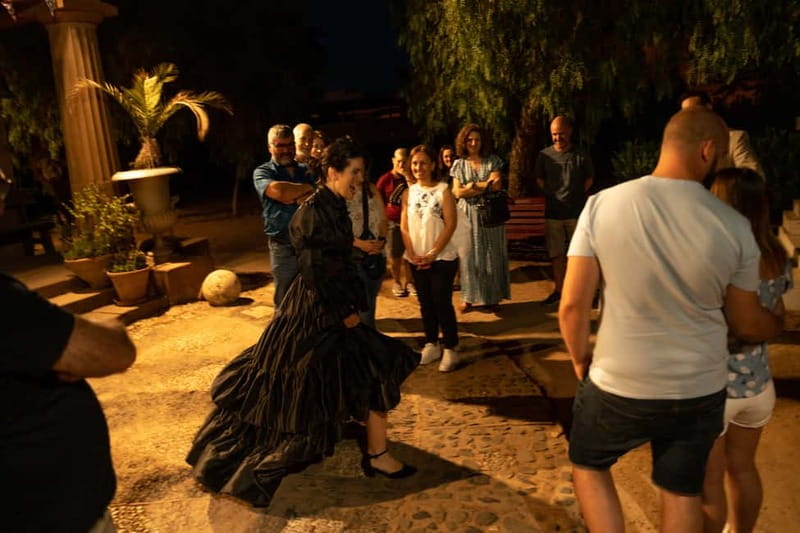
- Story-driven guides and actors: characters like Captain Kritschman and Robert Boyd shape the experience.
- The Stone Angel moment: Mary Ann’s story centers on the most valuable and famous sculpture here.
- Attention held from start to finish: performances are paced like a live show, not a lecture.
Why the English Cemetery at Dusk Feels Different
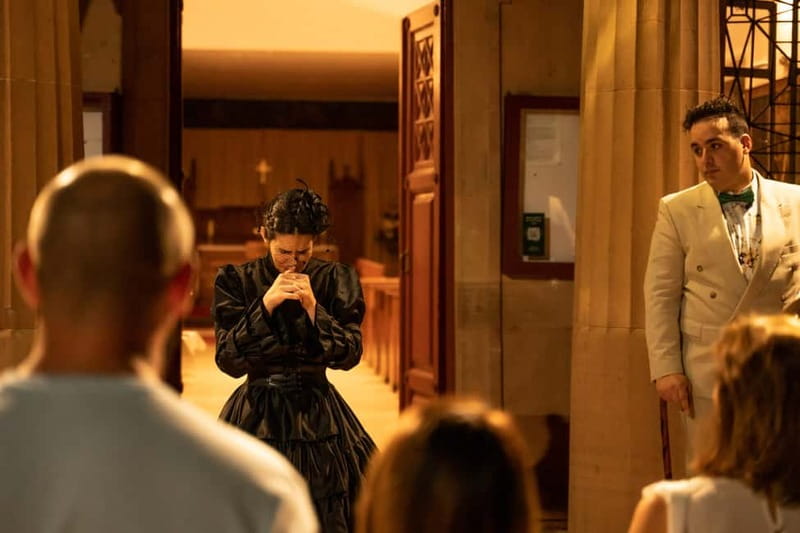
A cemetery by day is one thing. A cemetery at night is another. In Malaga, this experience is designed for exactly that mood shift: you enter at dusk and explore as a guided performance rather than wandering alone.
What makes it work is the combination of setting and storytelling. The English cemetery of Malaga dates to the early 1800s era, but the tour doesn’t treat it like a museum. It frames the place as a turning point—how burial customs, faith, and outsiders’ lives collided here.
This is also a smart way to “see” a cemetery. Instead of only reading epitaphs, you hear the human drama attached to them. If you’re the type who normally skips gloomy history tours, this format gives you a reason to pay attention: there’s a plot and named characters.
You can also read our reviews of more evening experiences in Malaga



Meet at the Entrance: Timing and Getting In
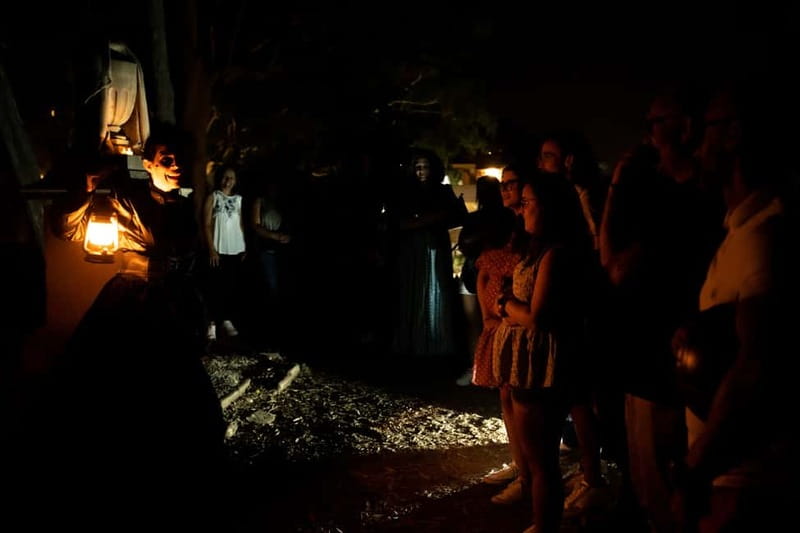
Plan to arrive 15 minutes early. That’s not a suggestion for the early birds; it’s built into how the visit runs. Once the visit starts, you can’t enter or leave the cemetery, so showing up late can mean missing the beginning of the show.
The good news is that you’re not just waiting around. The tour includes entrance to the cemetery and access at dusk, plus skip-the-line using a separate entrance. That matters because you’re doing something time-based. A tight start time keeps the night atmosphere intact.
The experience runs about 1.5 hours, and you finish at the exit of the English cemetery, returning back to the meeting point. In other words: you’re not stuck for hours, and the tour doesn’t turn into a long, uncertain meander.
The 1831 Story: From Beach Burials to a Protestant Cemetery
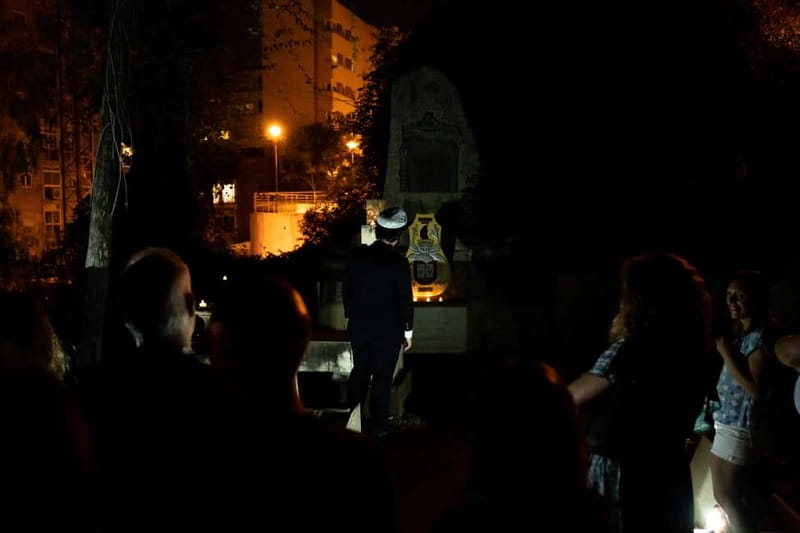
The centerpiece of the tour’s historical framing is Malaga’s shift in the early 19th century. The story starts with a harsher reality: non-Catholics were buried on the beach, then left vulnerable to the sea. It’s a bleak image, but it sets up why something like an English cemetery mattered.
Then the narrative pivots to change. The English cemetery of Malaga was constructed in 1831, and the tour emphasizes how that move altered the course of the city’s history for the living and the dead. Instead of treating the cemetery as a sad end point, you get the sense of how it helped reshape community treatment and respect—at least on the burial side.
Even if you don’t catch every historical nuance in Spanish, the structure is clear. You’re guided through a transformation: from improvised, precarious burials to an established burial ground with rules and identity.
Captain Kritschman, Robert Boyd, and Mary Ann’s Stone Angel
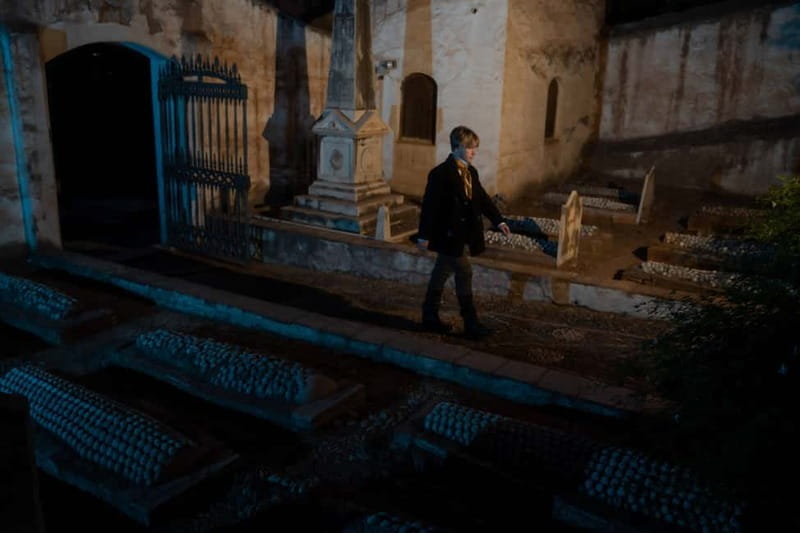
One reason this tour gets such strong praise is that it’s built around named stories. You’re not just looking at monuments; you’re hearing dramatized accounts tied to people connected to the cemetery.
Captain Kritschman is part of the tour’s shipwreck storyline, centered on Malaga’s great shipwreck. Robert Boyd is linked to a story of an unfair shooting, and the tour treats these as more than vague tragedies. They become characters, with the cemetery as the stage where their stories are remembered.
The other anchor is Mary Ann’s segment, focused on Mary Ann’s secrets and her connection to the stone angel. The tour calls out this angel sculpture as the most valuable and famous sculpture of the English cemetery. That’s a great detail because it gives you a “where to look” moment: when the story reaches the stone angel, you’re positioned to understand why people point to it.
If you like learning history through people, not just facts, this is the part that will likely stick with you long after the tour ends. The cemetery becomes a map of narrative beats.
How the Theatrical Format Keeps You Paying Attention
Cemeteries can test attention. There’s usually not much to do but listen—or read. This night visit solves that with performance. The guides and actors help you follow the stories like a living show, with cues that keep the group oriented.
I like this approach because it avoids the common “audio guide drift,” where you listen politely while your mind wanders. Here, the storytelling is designed to prompt you to look up, listen closely, and stay engaged with what’s happening in front of you.
You’ll also feel the timing of the tour. It starts, moves through key characters and places, and then ends cleanly after around an hour and a half. That rhythm matters when you’re spending time in a dark outdoor space. It’s easier to keep energy up when the format is paced like theater.
One more thing: Spanish is the delivery language. If you speak Spanish well enough to catch character names and the story’s emotional turns, you’ll get a lot more out of the experience. If you don’t, you can still enjoy the atmosphere, but the performance will likely feel less vivid.






What You’ll See Inside (Without Turning It Into a Checklist)
This isn’t a “spot five landmarks” tour. It’s a guided experience that uses the cemetery’s specific spaces to support the narrative. The highlights you should keep in mind are the areas connected to the tour’s named stories—especially the moments that build toward the stone angel.
Along the way, you’ll hear how this cemetery changed the way non-Catholics were buried in Malaga after 1831. That context is important because it helps you read what you see. Otherwise, an English cemetery can feel like an odd pocket in Spain: why is it here, and what did it mean in the moment?
The best way to enjoy the visuals is to treat each stop as a scene. When a character’s story is introduced—shipwreck, unfair shooting, Mary Ann and the stone angel—let your attention go to the connected monuments and symbolism the guides point out. That’s where the visit turns from spooky to meaningful.
Also, remember the “behind closed doors” aspect. This is not a passive walk among random visitors. You’re touring when the cemetery is accessed for the event, which gives the space a more controlled, focused feel.
Price, Timing, and Value for $23
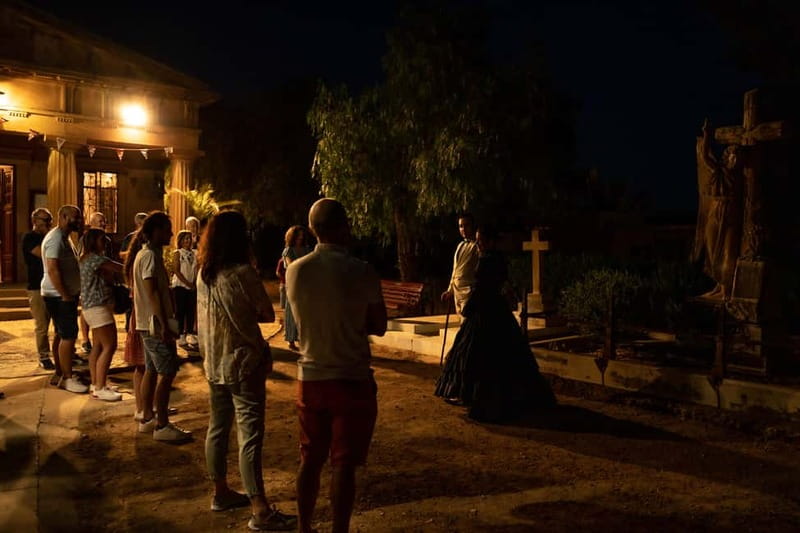
At about $23 per person for a 1.5-hour night visit, the value depends on what you want from your Malaga evening. If you prefer standard guided walks—plus time to roam at your own pace—this might feel more structured than you expect. But if you like history with drama and guided pacing, the price can make sense quickly.
Here’s why it’s reasonable: you’re paying for more than entry. You’re getting theatrical storytelling, access at dusk when the cemetery is closed to the public, and a tour structure that includes a separate entrance to reduce hassle. For a place that can be uncomfortable to explore alone at night, the “guided show” format is exactly what you’re buying.
Also, the time length is tight enough to fit well with a typical day of sightseeing. You can still do dinner afterward without losing your whole night to one activity.
If you’re traveling with someone who prefers calm, straightforward tours, you should talk it through first. This is not just “see the cemetery.” It’s “watch a story unfold in the cemetery.”
Who This Night Walk Is For
I’d especially recommend it if you like:
- history told through characters and scenes, not only dates
- experiences that make you look at a place with fresh context
- nighttime activities in small, story-focused formats
It’s also a solid choice for a couple of travelers who want something different from the usual cathedral, museum, and viewpoint circuit.
If you’re someone who relies on English-language narration, though, be cautious. The tour is in Spanish, and the misunderstanding risk is real if you’re expecting an English performance. One traveler story already shows how easy it is to assume language based on the cemetery being English—so check the language details carefully before you commit.
Practical Tips for a Smooth, Locked-Gate Visit
Night + cemetery + performance has a few rules of thumb that make the experience better.
- Arrive early. 15 minutes early helps you settle before the visit begins.
- Don’t plan on leaving early. Once the tour starts, you can’t enter or leave the cemetery.
- Wear something comfortable. You’re walking around an outdoor site at night for about 90 minutes, so think footwear first.
- If your Spanish is limited, prepare mentally. You can still enjoy the mood and the structure, but the full emotional impact will be harder to catch.
The locked-gate part is the big one. It’s not unusual for evening cemetery access, but it’s a strong reason to treat this like a timed event, not a casual stroll.
One more practical note: because it ends back at the meeting point, it’s easy to plan your next stop. You won’t be wandering around trying to find your way out after the final scene.
Should You Book This Tour or Skip It?
Book it if you want a night activity in Malaga that’s more than sightseeing. If you like dramatized storytelling, named characters, and the idea of entering the first English cemetery of the Peninsula at dusk, this is a smart choice. The best moments revolve around the shipwreck story, Robert Boyd’s unfair shooting, and the Mary Ann / stone angel highlight.
Skip it if your priority is a relaxed, self-paced cemetery visit or if you need the performance in English. With Spanish-only delivery and no in-and-out access during the show, mismatched expectations can ruin the experience quickly.
My honest take: this is a good-value choice for people who enjoy live-story formats. If language and timing are aligned with how you travel, you’ll likely have a memorable night in a very unusual setting.
FAQ
Is the English cemetery tour in English or Spanish?
The live tour guide speaks Spanish. The performance and guidance are delivered in Spanish.
How long is the night visit?
The visit lasts about 1.5 hours.
Where do I meet for the tour?
You start at the entrance to the English cemetery. The tour ends back at the meeting point.
Can I skip the line to enter the cemetery?
Yes. The experience includes skip-the-line access through a separate entrance.
What time of day does the tour run?
The tour is timed for dusk (night visit).
Can I enter late or leave after it starts?
No. Once the visit starts, it won’t be possible to enter or leave the cemetery.
What’s the main story focus during the tour?
You’ll hear dramatized accounts connected to the cemetery, including stories about Malaga’s great shipwreck (Captain Kritschman), Robert Boyd, and Mary Ann’s secrets, with a highlight involving the stone angel.
How much does the tour cost?
The price is listed at about $23 per person.