REVIEW · MARBELLA
Private Excursion to Ronda from Costa del Sol 7 Hours
Book on Viator →Operated by Ronda Private Tours · Bookable on Viator
Ronda hits you fast—then it just keeps getting better. This private day trip from Marbella and Estepona is built around Puente Nuevo views plus an official natural guide, so you don’t just see Ronda—you get oriented and understand it. I love the mix of cliffside viewpoints and that included coffee pause in town.
I also like the pricing value: your ticket fees are handled for the big stops, including the Plaza de Toros de Ronda and Casa Museo Don Bosco. The only real drawback to plan for is that this is a full, stop-heavy day with plenty of walking between viewpoints and sights, so bring good shoes and keep your energy up.
In This Review
- Key highlights to look forward to
- From Costa del Sol pickup to Ronda’s first viewpoints
- Mirador del Puente Nuevo: New Bridge photos and a real coffee break
- Ronda’s old-town logic: gardens, plazas, and the people who shaped it
- Plaza de Toros de Ronda: Spain’s oldest bullring, explained step-by-step
- Puente Viejo and Cuenca Gardens: views that connect Muslim-era Ronda to today
- Casa Museo Don Bosco and the New Bridge: design you can still feel
- Plazas and the city’s key landmarks before free time
- Price and value: what you’re actually paying for
- Practical notes before you go
- Should you book this Ronda private excursion?
- FAQ
- How long is the Ronda private excursion from Costa del Sol?
- Where does pickup happen?
- Is this tour private or shared?
- Is the tour in English?
- What entrance tickets are included?
- Is lunch included?
- What if the weather is bad or I need to cancel?
Key highlights to look forward to
- Private pickup from Marbella and Estepona: You start right from your accommodation in a van built for an easy day.
- Official local guide for the main Ronda walk: You’ll follow a route that’s relaxed but still hits the best sights.
- Two viewpoint stops before the walking loop: Your first views come early, so the rest of the town makes sense.
- Puente Nuevo viewpoint + included coffee break: Photos first, then a small reset with a drink.
- Plaza de Toros included: The bullring visit covers the ring, bull areas, and the museum.
- Casa Museo Don Bosco included: Modernist style, Andalusian details, and quiet gardens—plus admission is included.
From Costa del Sol pickup to Ronda’s first viewpoints
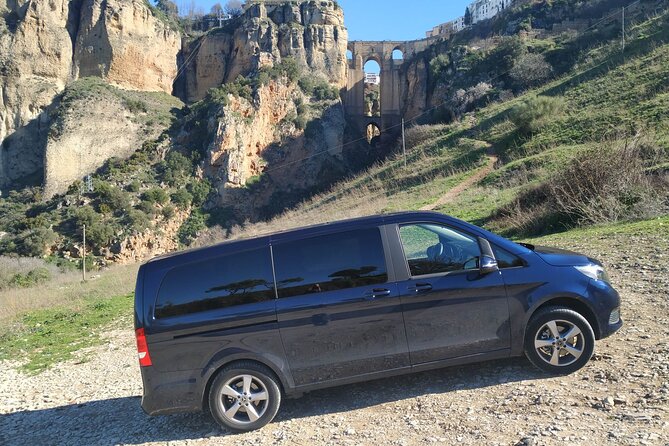
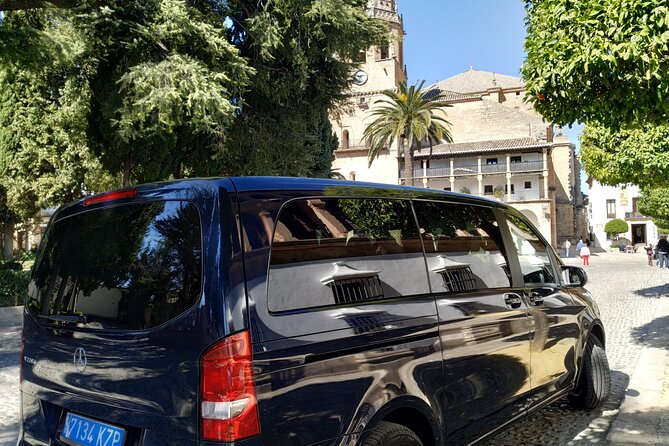
You meet your driver at your hotel or apartment in Marbella or Estepona, and you roll into Ronda in a private vehicle. The day starts with a 9:00 am departure, and the whole experience runs about 7 to 8 hours, so you’ll feel like you’ve had a real getaway, not just a quick drive-by.
Before your main walking time, you’ll do viewpoint stops with big perspectives over the valley and the city’s dramatic cliff setting. This matters more than it sounds. When you first see where the city “sits” on the gorge, the rest of the walking route stops feeling random and starts feeling like a story with locations.
One more practical win: bottled water is included, and the van is set up to keep the day comfortable. That’s not glamorous, but it’s the kind of detail you’ll thank yourself for later when you’re carrying a camera and a hot day hits.
You can also read our reviews of more private tours in Marbella
Mirador del Puente Nuevo: New Bridge photos and a real coffee break
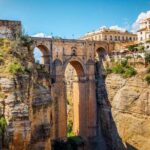
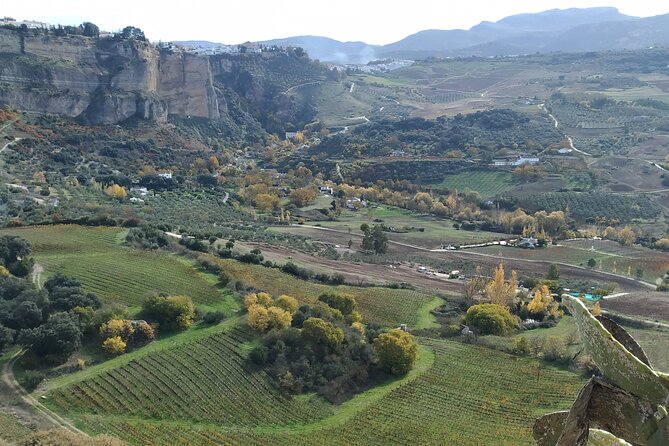
Your first major Ronda moment comes at the Mirador del Puente Nuevo viewpoint. From here, the New Bridge looks almost unreal—massive, engineered, and placed right over the gorge that made Ronda famous in the first place. You’ll get time to take photos, then you’ll have coffee in a special spot in town.
That coffee stop is short (about 15 minutes), but it’s timed perfectly. You’re about to switch from “look and photograph” to “walk and learn,” and that tiny reset helps you absorb the guide’s stories without rushing.
Also, don’t ignore the calm details. The guide’s job here is to show you how Ronda connects modern viewpoints to older neighborhoods, and that coffee break gives you a moment to regroup before the walking portion begins.
Ronda’s old-town logic: gardens, plazas, and the people who shaped it
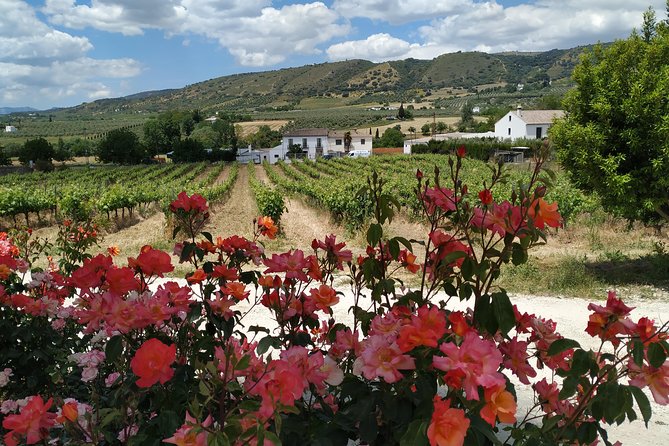
Once you get into the core of Ronda, the tour becomes a guided walk through major stops and also quieter areas that don’t show up on every quick circuit. You’ll move through named gardens and viewpoints that help you understand Ronda’s geography—especially how the city was shaped by its defensive position and later by its culture.
A few highlights you’ll see:
- Paseo de Blas Infante: Statues of Orson Welles and Ernest Hemingway appear in the gardens. At the edge of this area, you’ll also spot representations of Ronda bullfighting dynasties—Los Romero and Los Ordoñez—plus a viewpoint at the bottom that makes the city’s long 2,500-year timeline easier to grasp.
- Alameda del Tajo: This is Ronda’s key park area, with statues tied directly to bullfighting legends (Pedro Romero and the Lady Goyesca). From the Mirador de los Reyes Católicos, you look out over the gorge and toward the Sierra de Grazalema and Serranía de Ronda.
- Arco de Felipe V: After the Old Bridge period, this arch became a main access point. It’s also a fun photo stop because of the way it frames the old access route into town.
- St. Sebastian Minaret: This tower started as a mosque minaret and later became a bell tower for a church. Today only the tower remains, and it carries that mixed Islamic-to-Catholic story in its very structure.
If you care about getting your bearings fast, this part of the day delivers. Instead of hopping between unrelated sites, the route links plazas, parks, and city edges into one mental map.
Plaza de Toros de Ronda: Spain’s oldest bullring, explained step-by-step
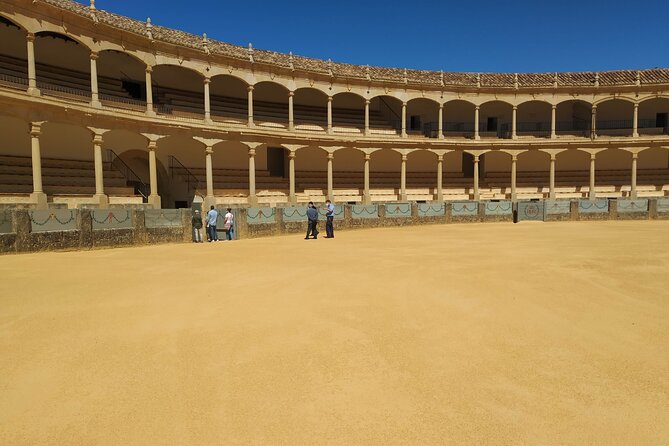
The biggest scheduled interior stop is the Plaza de Toros de Ronda, and you’ll spend about 45 minutes there. It’s the oldest bullring in Spain, inaugurated in 1785, and tied to the Real Maestranza de Caballería de Ronda—an order of knights created in 1572 on King Felipe II’s order.
What I like here is that the visit isn’t only a glance from outside. You’ll tour:
- the ring area
- the bull area used during bullfights
- and the bullfighting museum, which connects what you see on the ground to how bullfighting developed into the modern form
The guide also explains how a bullfight works and what the event means today, which helps you understand why this place is more than architecture—it’s a living cultural reference point in Ronda.
If you’re not into bullfighting at all, this might feel like the one section of the day that’s more about tradition than scenery. But if you’re curious about how Spanish culture holds onto old rituals—and why people still talk about this—this stop is one of the most powerful ways to get the local context.
Puente Viejo and Cuenca Gardens: views that connect Muslim-era Ronda to today
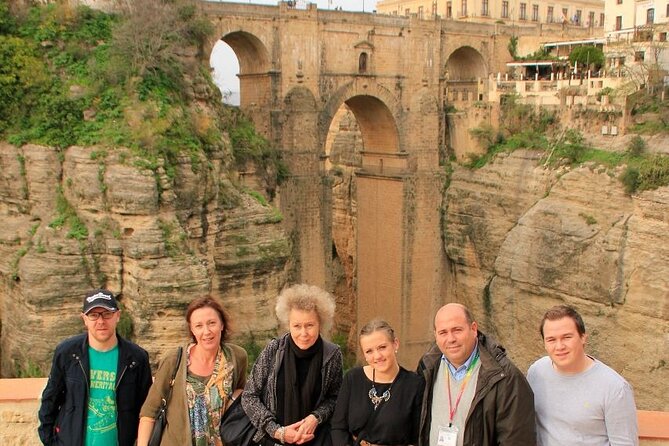
Once the tour moves toward the old part of Ronda, you’ll cross Puente Viejo, a 16th-century bridge that helps you enter the city area locals call The City. From the bridge, your guide points out key features around the gorge, including the Arab Baths and the tanneries area, plus the Cijára Wall. You’ll get the Muslim-era importance of this zone explained in plain language.
Then you drop into the Jardines de Cuenca. These gardens are named because of the similarity between this area in Ronda and the Hanging Houses in Cuenca (your guide will connect the visual dots). As you stroll, you get standout views of both the New Bridge and the Old Bridge.
One of the story-focused moments comes at the Casa del Rey Moro area, where your guide tells the story of La Mina—a staircase built in Arab times that goes down from the gardens toward the bottom of the Guadalevín gorge. Even if you don’t go down it, the explanation makes the landscape feel engineered for access and survival, not just for beauty.
Next up: Mirador de Aldehuela, one of the best “big picture” viewpoints. You’ll see the Old Bridge, the Cuenca Gardens, the hanging houses of Ronda, and the Casa del Rey Moro. From here, you can also view Sierra de las Nieves National Park—when visibility is good.
And yes, this is a lot of looking. That’s the point. Ronda’s charm is visual, but you also learn the geography behind it.

Casa Museo Don Bosco and the New Bridge: design you can still feel
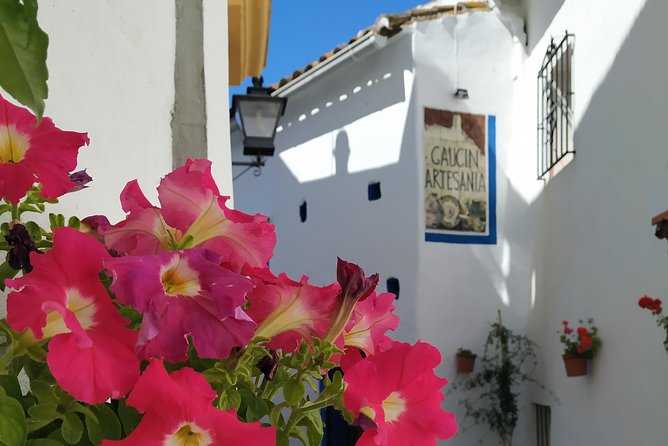
After the gardens and viewpoints, you’ll visit Casa Museo Don Bosco (admission included). This early 20th-century mansion belonged to the Gómez-Granadino family and mixes modernist style with traditional Andalusian decoration. The gardens around the house are part of the experience too: they’re quiet and made for lingering while you take in the views of the surrounding landscape.
Then the tour brings you to the New Bridge itself. It’s about 100 meters high, and it was an 18th-century engineering achievement. Today it still plays a practical role as the main link between Ronda’s modern areas and its old town.
This combination—views from multiple angles plus the bridge itself—helps you understand why Ronda’s bridges are not “nice extras.” They’re central to the city’s layout and identity.
Plazas and the city’s key landmarks before free time
The tour continues through Plaza Duquesa de Parcent, which has long been one of Ronda’s most important squares. Here you’ll find four Catholic churches: Santa María de la Encarnación, La Caridad, Santa Isabel de los Ángeles, and María Auxiliadora, plus the Town Hall. The gardens in this area trace back more than a century and were designed by Jean-Claude Nicolas Forestier, who also designed Seville’s Maria Luisa Park gardens.
At Plaza de Espana, your guided portion ends. After that, you get free time for lunch and/or walking on your own. Then the tour adds a quick stop at Palacio de Salvatierra, known for its beautiful facade. This palace belongs to the same family that lived there from after the Christian conquest of Ronda until today.
If you want one practical tip: use your free time to eat close to where you finished the walk. You’ll be tired enough that a short hop matters, and you’ll avoid losing your momentum hunting for a place across town.
Also, based on real experiences shared about this tour, the team can help with restaurant planning—sometimes even arranging a table when you request it—so you don’t spend your limited Ronda hours playing restaurant roulette.
Price and value: what you’re actually paying for
At $435.57 per person, this isn’t the cheapest way to reach Ronda. But it’s a private day trip with pickup in Marbella and Estepona, plus it’s built around a guided route and included admissions for the two big ticket items: the bullring and Casa Museo Don Bosco.
If you were doing this on your own, you’d still pay for:
- transport (even if it’s a train or bus, you’ll likely end up paying taxis within town)
- entrance fees to the bullring
- entrance fees at Casa Museo Don Bosco
- and a guide if you want the explanations that make the city click
So the value is in the time saved and the guidance provided, especially in the old-town sections where the “why” matters just as much as the “what.” You’re also getting coffee (or a soft drink) and cold water as part of the day, which helps make the schedule feel livable instead of frantic.
One more thing I appreciate: it’s private, meaning it’s only your group. No waiting around for different paces. That’s a big part of why this feels relaxed even though it packs a lot in.
Practical notes before you go
This experience runs when the weather cooperates, and the operator notes it requires good weather. If conditions are poor, you should expect a different date offer or a full refund.
In day-trip mode, I’d plan for:
- comfortable walking shoes
- a light layer (cliffs and river gorges can shift temperatures)
- a camera with extra battery, because the viewpoints in Ronda give you plenty of “one more” photo moments
Language is English, and you’ll receive confirmation at booking. Service animals are allowed, and the tour is set up so most people can participate.
Should you book this Ronda private excursion?
Book it if you want Ronda with context—views, city layout, and culture explained by a local guide from Ronda—plus the two key admissions handled for you. The combination of Puente Nuevo viewpoint time, a guided walk that goes beyond the busiest sights, and the Plaza de Toros museum stop makes it a strong fit for first-time visitors who care about understanding what they’re seeing.
Skip it (or consider a lighter alternative) if you dislike structured tours or you’d rather spend your day in just one or two attractions. Also, if you’re extremely sensitive to walking, remember this is built as a walk-through route with many stops.
If you’re the type who likes to feel oriented by the end of the day—rather than just tired and photo-covered—this private format is a smart choice.
FAQ
How long is the Ronda private excursion from Costa del Sol?
It runs about 7 to 8 hours.
Where does pickup happen?
Pickup is offered from any accommodation in Marbella and Estepona.
Is this tour private or shared?
It’s a private tour/activity, meaning only your group participates.
Is the tour in English?
Yes, the excursion is offered in English.
What entrance tickets are included?
Tickets are included for the Plaza de Toros de Ronda and for Casa Museo Don Bosco. Other listed viewpoint and stop locations are indicated as admission-free.
Is lunch included?
No. Lunch is not included, but you’ll have free time for lunch after the guided tour ends.
What if the weather is bad or I need to cancel?
The experience requires good weather. If it’s canceled due to poor weather, you’ll be offered a different date or a full refund. Cancellation is free up to 24 hours in advance for a full refund.