REVIEW · MALAGA
Cycling – Via Verde de la Sierra – Easy Difficulty – Ronda
Book on Viator →Operated by White Village Tours · Bookable on Viator
A day on the Via Verde de la Sierra feels like riding with training wheels. This easy, gently downhill 36 km route follows an old railway line through the hills north of Ronda, with tunnels, old stations, and big views you won’t earn from a car. You start with a proper bike fit, then you cycle self-guided with support nearby.
What I like most is that it’s set up for real comfort and real ease. You get a bicycle picked for your height, plus a helmet, and the bikes are built for the ride (including handling some gravel well). I also love the variety along the way, like the vulture conservation stop and the atmospheric tunnels that cool you down right when you want a break.
One consideration: you still need to be okay with a bit of uneven surface. Even on an easy route, parts involve gravel, and the tunnels can make conditions feel cooler and changeable during the day.
In This Review
- Key things to know before you go
- Why this ride feels easy: the old railway trick
- Getting to Olvera and getting your bike fitted in Ronda
- What you’ll actually ride: 36 km of tunnels, viaducts, and stations
- Vulture conservation centre: the stop that adds meaning
- Timing and food: how the 3.5-hour ride window works
- Riding comfort details that actually matter (especially for gravel)
- The guide role: self-guided, but not alone
- Value check: does $132.03 make sense?
- Who this suits best (and who might feel less happy)
- Should you book the Via Verde de la Sierra cycling from Ronda?
- FAQ
- What is the route length for the Via Verde de la Sierra cycling?
- Where do you start this experience?
- What time does the tour start?
- Is the route guided or self-guided?
- Do I need navigation or a map to follow the route?
- How long do I have to complete the ride?
- Are bikes provided, and are they adjusted for me?
- What if the weather is bad?
- Can I cancel for a full refund?
Key things to know before you go
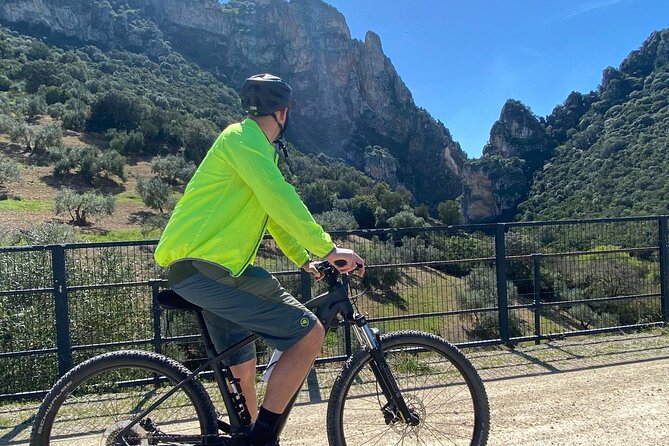
- 36 km, mostly gently downhill: Designed to be fun rather than punishing.
- Self-guided route with support vehicle: You ride independently, but help is close by.
- Tunnels, viaducts, and old railway stations: This isn’t just scenery; it’s a whole rail-world experience.
- Vulture conservation centre stop: Watch birds of prey in a focused setting along the route.
- Bikes fitted by height + helmet: Less fiddling, more riding.
- 3.5 hours on the route: A realistic window that still leaves time for stops and photos.
Why this ride feels easy: the old railway trick
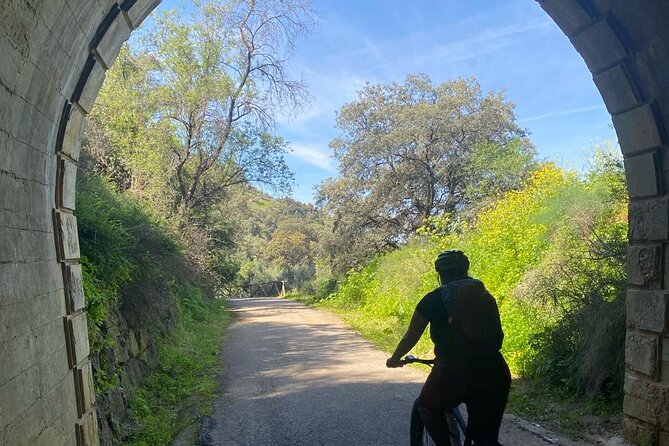
The Via Verde de la Sierra’s magic is simple: it used to be a railway. That means the route follows a gradual grade from start to finish, so you’re not constantly climbing. On a good day, you’ll spend a lot of time gliding downhill with only easy pedaling, which is exactly why this works for people with moderate fitness.
It’s also why the half-day format feels so satisfying. You get a long distance (36 km) without the “I’m going to regret this tomorrow” feeling that comes with more hilly cycling. Instead, you get a steady rhythm: pedal, coast, tunnel, open view, repeat.
And the tunnels change the experience in a clever way. Reviews and route notes point out that the air feels cooler in the tunnels, then warms up again once you’re back in the sun. That makes layering a smart move, especially if you’re cycling in spring or shoulder season.
You can also read our reviews of more cycling tours in Malaga
Getting to Olvera and getting your bike fitted in Ronda
Your day starts in Ronda. The meeting point is public parking La Concepción, at C. Comandante Salvador Carrasco, 3 (29400 Ronda). The start time is 9:15 am. From there, you drive with the guide to Olvera, where the Via Verde starts.
This matters more than it sounds. If you’ve ever rented a bike in a hurry, you know how quickly a “close enough” fit turns into a sore back or numb hands. Here, your bike is selected in advance based on your height. You’re fitted at the start, you get a helmet, and the guide explains the route so you can ride with confidence.
Your bike setup also seems tuned for real-world conditions. People mention well-maintained bikes and comfort touches like seat padding if you want it. Reviews also highlight lights for tunnel sections and dependable braking. In plain terms: you’re not just getting wheels; you’re getting a ride that expects you’ll pass through tunnels and gravel.
What you’ll actually ride: 36 km of tunnels, viaducts, and stations
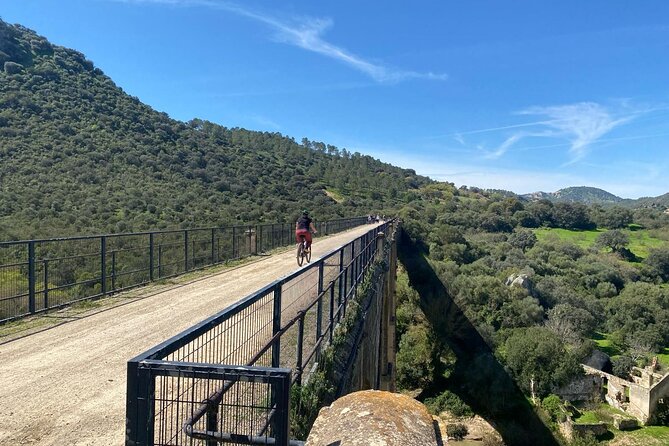
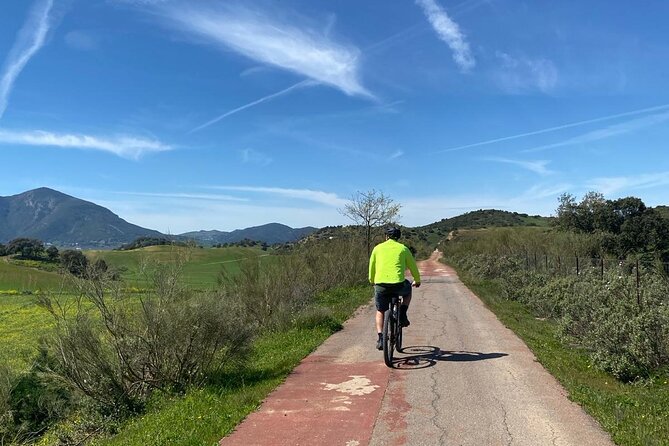
You’ll cycle 36 km along a dedicated route that’s made for cycling and walking. That dedicated setup is huge for stress level. There are no junctions to navigate, and navigation isn’t required because the path stays in its lane. The result is that your attention stays on the ride, not on maps.
Along the way, the route includes elements that make the old railway feel alive again:
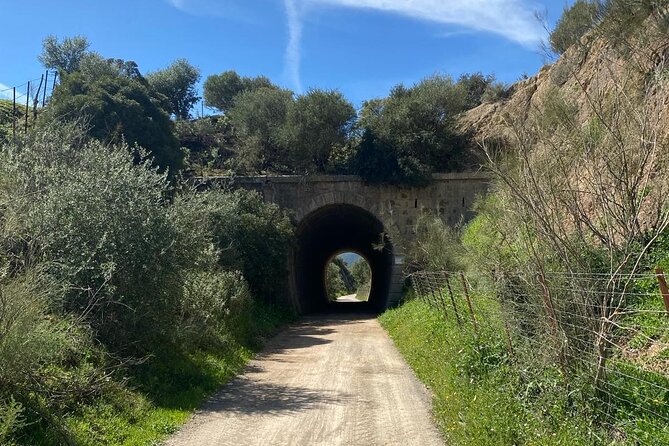
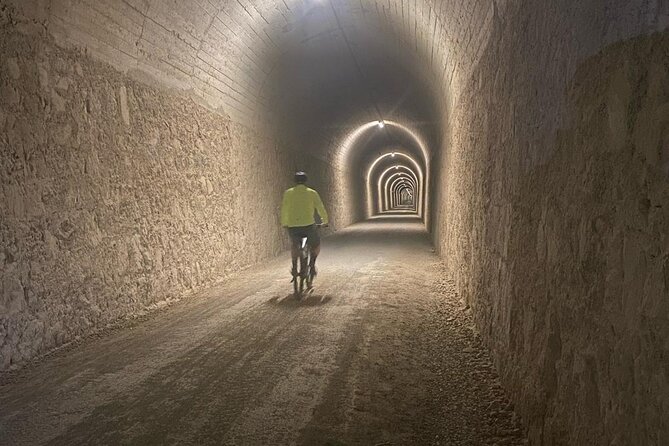
- Tunnels: Disused rail tunnels that act like cool little time capsules.
- Viaducts: People specifically mention multiple viaduct crossings, which adds excitement without adding difficulty.
- Old railway stations: There are points of interest where you can pause, stretch, and take photos.
One station has been turned into a recreational area with a café, which is a great mid-ride mental checkpoint. Even if you don’t stop there, the existence of an en route food option helps you plan your pacing.
The best part is that these features are spaced through a route that stays easy overall. You’re not being forced into a “stop for me, move for me” schedule. You can slow down for a tunnel moment, speed up when you feel good, and still reach the end within the allotted ride time.
Vulture conservation centre: the stop that adds meaning
Part of the appeal here is that the route isn’t only about biking. You also pass a vulture conservation centre (explicitly described as a stop along the way), and it’s the kind of experience that turns a scenic ride into something memorable.
Practically, it gives you a reason to slow down. When you’re riding gently downhill, time can feel like it’s flying. A focused stop like this helps you absorb the place instead of just passing through it.
It also adds a local wildlife element that fits the region around Ronda. If you’re the type who likes seeing conservation work in action, this is one of the stronger reasons to choose the Via Verde over a generic bike path.
And yes, it’s also photo-worthy. Reviews mention vulture activity and exciting moments watching birds in flight from the right vantage points.
Timing and food: how the 3.5-hour ride window works
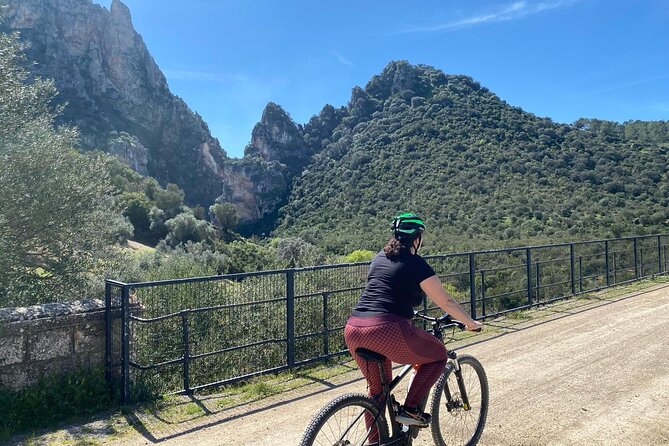
You’ll have about 3.5 hours to complete the route. The cycling ends at the final station, where your guide collects you. Your guide is also available during the route, including via a support vehicle, so you aren’t left stranded if something goes sideways.
That time window is important. You don’t have to race. But you do want to plan stops so you finish comfortably before the pickup point. In practice, that means:
- Plan a main stop for the vulture conservation centre.
- Use the café station as your flexible option (snack, coffee, or a longer break if you’re ahead of schedule).
- Keep tunnel-photo stops quick. They’re fun, but the light can change fast.
Food is usually part of the equation. One of the reviews mentions the guide arranging packed lunches as a backup if the café is closed. So if you’re traveling at a time when you want extra certainty, it’s worth asking what’s available on the day and whether packed options are offered.


Riding comfort details that actually matter (especially for gravel)
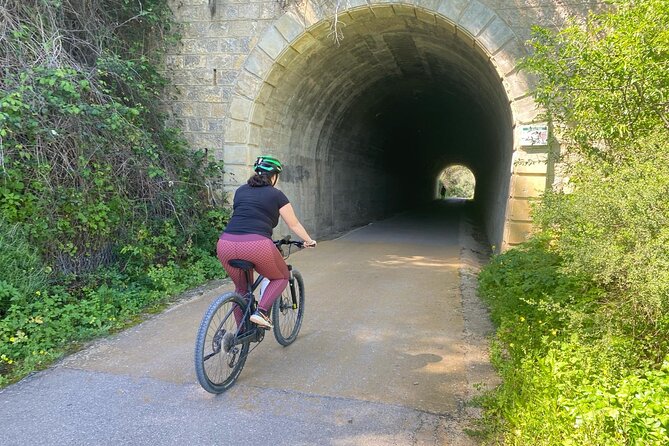
“Easy” doesn’t mean “perfect pavement.” A recurring theme is that the route includes gravel sections, and the good news is that the bikes have wide tires designed to handle it well. That’s why the ride can still feel comfortable even if you’re not an expert cyclist.
If you’re new to cycling or you haven’t ridden outside much, gravel is usually the limiting factor, not the distance. Here, the wide tires and stable setup help you maintain confidence.
Another detail I appreciate: seat comfort. Reviews mention padded seating, and extra padding is available if you want it. That small option can make a big difference over 36 km.
Also keep in mind that the route passes through tunnels. People mention lights for tunnel riding, which makes the experience feel safer and more relaxed. You’re not just hoping you can see; the gear is planned for this route.
The guide role: self-guided, but not alone
This is a private experience, so it’s only your group. That alone can make the day feel smoother—no waiting around for someone who’s unsure, no shuffling in a crowded pack.
The guide’s job is clear:
- Meet you at the start.
- Fit the bike (based on your height) and give route instructions.
- Provide support during the ride, including a support vehicle.
- Collect you at the end back at the final station.
Because navigation isn’t required and the route is dedicated, self-guided works well here. You’re not stopping every few minutes to figure out where you are. Instead, you ride, enjoy the tunnels and stations, and use the guide as your safety net and local resource.
And local resource is real. Reviews specifically call out Lee (White Village Tours) for communication and for being attentive, helpful, and available with advice. That shows up as practical extras too: help adjusting bikes, guidance on the day, and even suggestions for food and what to do after the ride.
Value check: does $132.03 make sense?
At $132.03 per person for a roughly half-day experience, the price can feel steep—until you break down what you’re actually getting.
You’re not paying just for a bike. You’re paying for:
- A 36 km organized route experience on a dedicated trail
- Bike selection and fitting based on your height
- A helmet and route briefing
- A self-guided setup with a guide and support vehicle
- Time for a real experience, not just a quick rental
If you tried to replicate this on your own, you’d still need transportation to Olvera, bike logistics, and a reliable plan for riding the route without getting turned around. Here, the day is structured so you can show up, ride, and get back to Ronda without spending hours coordinating.
Also, the provider offers group discounts, which can improve value if you’re traveling with friends or family. And the booking uses a mobile ticket, which tends to reduce friction when your schedule is packed in Ronda.
Who this suits best (and who might feel less happy)
This is marketed as easy difficulty, but it still asks for moderate physical fitness. That usually means: you can ride for hours, you’re comfortable with some gravel, and you don’t need a perfectly flat, paved-only ride.
This is a strong fit if:
- You want a long cycling distance without major climbing.
- You like tunnels, stations, and a route with built-in “things to see.”
- You want an active day that’s still relaxed enough to do other Ronda sightseeing afterward.
- You’d enjoy adding the vulture conservation centre to your itinerary.
You might want a different activity if:
- You dislike gravel entirely.
- You need a slower, more instruction-heavy guided ride (since this is self-guided on a dedicated route).
- Weather is a hard no for you, because the experience requires good weather.
Should you book the Via Verde de la Sierra cycling from Ronda?
If you’re planning time in Malaga and your base is Ronda, this is one of the better ways to get out into the hills without committing to a tough workout. The combination of gently downhill rail-trail riding, real route structure, and the built-in highlights (tunnels, stations, vulture conservation) makes it feel like a full experience, not just a bike rental.
I’d book it if you want an easy day with strong “wow” moments that don’t demand expert cycling. I’d think twice only if gravel is a deal-breaker or if you’re traveling on a day where weather might be unreliable.
FAQ
What is the route length for the Via Verde de la Sierra cycling?
The cycling route is 36 km along the old railway line.
Where do you start this experience?
You meet at Public parking La Concepción, C. Comandante Salvador Carrasco, 3, 29400 Ronda, Málaga, Spain.
What time does the tour start?
The start time is 9:15 am.
Is the route guided or self-guided?
The route is self-guided. Your guide explains the route at the start, and support is available during the ride.
Do I need navigation or a map to follow the route?
No. Navigation is not required because it is a dedicated cycling and walking route with no junctions to navigate.
How long do I have to complete the ride?
You have about 3.5 hours to finish the route.
Are bikes provided, and are they adjusted for me?
Yes. You’re fitted with bicycles chosen in advance based on your height, and you also receive a helmet.
What if the weather is bad?
The experience requires good weather. If it’s canceled due to poor weather, you’ll be offered a different date or a full refund.
Can I cancel for a full refund?
Yes. You can cancel up to 24 hours in advance for a full refund.