REVIEW · MALAGA
Guided tour of Ronda with an official guide
Book on Viator →Operated by Feel Ronda · Bookable on Viator
Ronda rewards slow walking. This guided loop through Ronda’s key viewpoints gives you real context for the sights, from the cliffs of the Tajo to the photo-famous Puente Nuevo. I like that it’s structured enough to keep you moving, yet paced with short stops for photos and questions, and you’ll end in the center of town.
Two things I really like: first, you get a local-style history walk that ties big names and eras to specific places, like the bullring’s connections and the stories around the bridges. Second, the viewpoints are planned so you see Puente Nuevo from multiple angles, not just one postcard view.
One possible drawback: this is about 2 hours of walking and it’s not recommended for mobility difficulties, so you’ll want to judge your comfort level with uneven paths and viewpoints.
In This Review
- Key highlights and why they matter
- A Two-Hour Ronda Loop With an Official Guide
- Starting at Pl. de la Merced: the Tajo and Alameda del Tajo first
- Bullring history at Paseo de Blas Infante
- New Bridge (Puente Nuevo): the photo everyone comes for
- Jardines de Cuenca: hanging terraces and rose season details
- The palace rear façade and the water-supply grotto story
- Puente Viejo and the story of the Secret Mine
- Plaza Duquesa de Parcent and Santa María de la Encarnación
- Mirador de Aldehuela to El Campillo before Plaza España
- Guides, pace, and what to expect on the ground
- Value check: is this tour worth $230.80 per group?
- Who should book this Ronda guided walk?
- Should you book this tour?
- FAQ
- How long is the Ronda guided tour?
- Is this tour private?
- How many people are in a group?
- What language is the tour in?
- Where does the tour start and end?
- Do I need to buy entry tickets for the stops?
- Do I need a printed ticket?
- Is the tour suitable for people with mobility issues?
- Is the tour dependent on weather?
- What is the cancellation policy?
Key highlights and why they matter
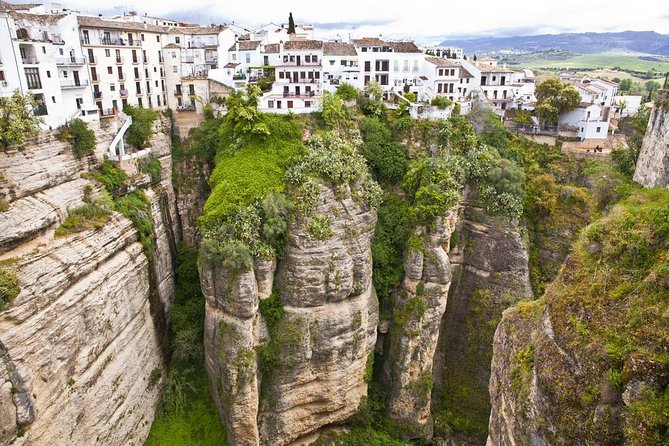
- Multiple Puente Nuevo angles so your photos look like more than one template
- Official guide storytelling that connects buildings to events and dynasties
- Alameda del Tajo and Cuenca Gardens viewpoints for that dramatic Ronda feel fast
- Bullring + Ordoñez connections linked to Orson Welles and Ernest Hemingway
- Secret water and mining lore tied to real spots, not vague legends
- End in Plaza España area so you can keep exploring without a long return plan
A Two-Hour Ronda Loop With an Official Guide
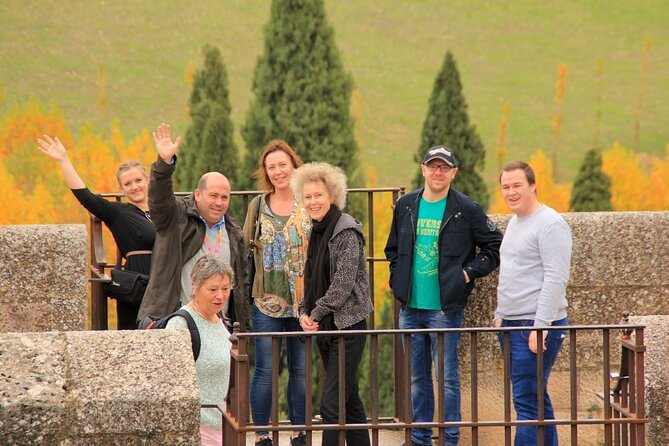
This tour is built as a smart highlights walk. You’re out for about 2 hours, and it moves through Ronda’s old and new viewpoints in a tight route, with short stops that keep the energy up. It’s offered in English, and it’s set up for small groups: up to 15 per group, with the bonus that it’s a private tour for only your group.
For the price, think in group terms. It’s listed at $230.80 per group (up to 15). If you’re traveling as a fuller group, the cost per person drops a lot; if you’re only a few people, it’s a pricier way to do Ronda, but you’re paying for guided interpretation and time saved figuring out the route.
What makes this feel worth it is the balance of viewpoints and explanations. You’ll pause at scenic ledges, then get the story that makes those places click. The reviews consistently point to guides who are upbeat and responsive—names you might see include Alfredo Carrasco, Milagros, Sonia, Marta, Carmen, Anna, Claudia, and others—so you’re not just being read a script.
You can also read our reviews of more guided tours in Malaga
Starting at Pl. de la Merced: the Tajo and Alameda del Tajo first
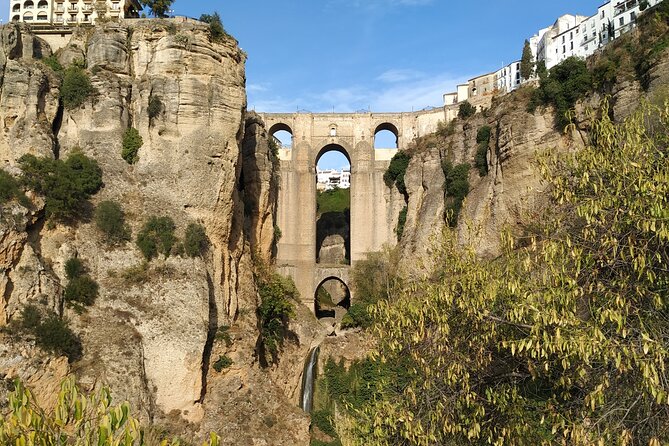
You meet at Pl. de la Merced, 1 in Ronda, right in front of the Parador de Ronda. This is a great starting point because it gets you into the viewpoints logic immediately, rather than starting with a classroom lecture and walking later.
Stop one is the Alameda del Tajo, Ronda’s key cliffside park. You walk through the park and enjoy the views from its viewpoints, which is exactly what you want at the start: you get oriented fast and you understand what kind of city Ronda is. When you can look out and see the cuts in the rock and the drop toward the valley, everything else you see later makes more sense.
Why I like starting here: it sets the mood. Ronda is famous for the dramatic gap between levels, and Alameda del Tajo lets you feel that right away.
Bullring history at Paseo de Blas Infante
Next you move to Paseo de Blas Infante, tied to the oldest bullring in the world. The tour focuses on what the square means in Ronda’s identity, and it also connects the Ordoñez dynasty to cultural history, including links to Orson Welles and Ernest Hemingway.
This stop is short, but that’s part of the design. You get a quick, solid storyline you can carry as you look around. Even if you’re not a bullfighting fan, the point here is the social history: why this place mattered and how Ronda’s fame spread beyond the town.
A practical tip: keep your camera ready, but also listen for the guide’s connections. The quickest way to make Ronda feel real is to hear why a building is there, not just what it looks like.
New Bridge (Puente Nuevo): the photo everyone comes for
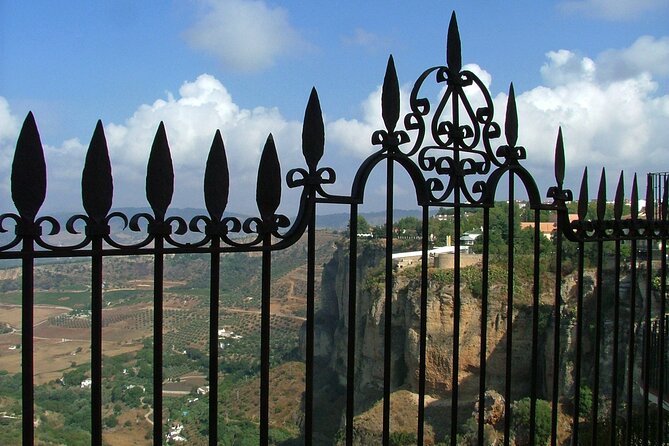
Then you hit the main event: New Bridge, also called Puente Nuevo. It’s described as an 18th-century construction and the most important monument in Ronda. The tour has you viewing it from several different angles, so you can get the classic shot while also capturing variations that show the bridge’s shape and scale.
This is the moment many people think they already know from photos. Seeing it in person is another story, because the width, height, and the cliffside setting look very different when you’re standing near it and when the angle changes. The guide’s job here is to help you see what to look for—where the bridge sits in the gorge, how the route of the crossing reads from far away, and why certain viewpoints give better framing.
Time-wise, it’s about a 10-minute stop. If you’re a slow photographer, you may want to take one main photo immediately, then use the other angle stops for refinement.
Jardines de Cuenca: hanging terraces and rose season details
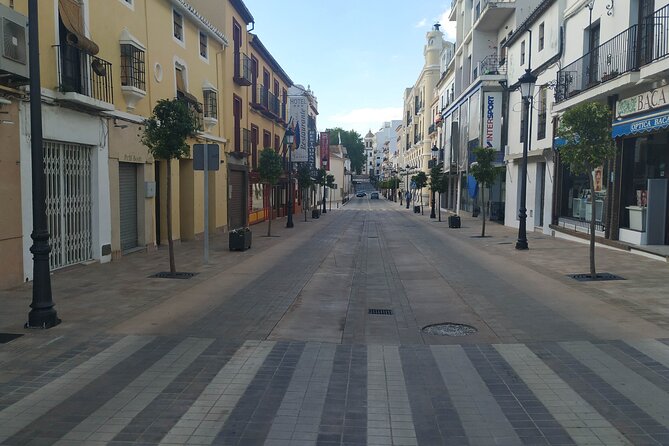
After Puente Nuevo, you go to Jardines de Cuenca, often described as hanging gardens because they sit on ledges of the pit. The tour calls out the twinning connection between Cuenca and Ronda, which helps explain why the gardens exist in this specific form.
You’ll go down terraces and enjoy views of the most important bridges. This is also where a detail like 30 varieties of roses becomes useful. Even if you visit outside peak bloom, the guide’s explanation helps you understand the garden layout and why it’s designed to feel like a lookout point with seasonal color.
The trade-off: gardens can be slower than they look. Even though your official time is short, stairs and ledges can slow your pace. If your legs tire easily, plan to take a breather and let your group flow around you.


The palace rear façade and the water-supply grotto story
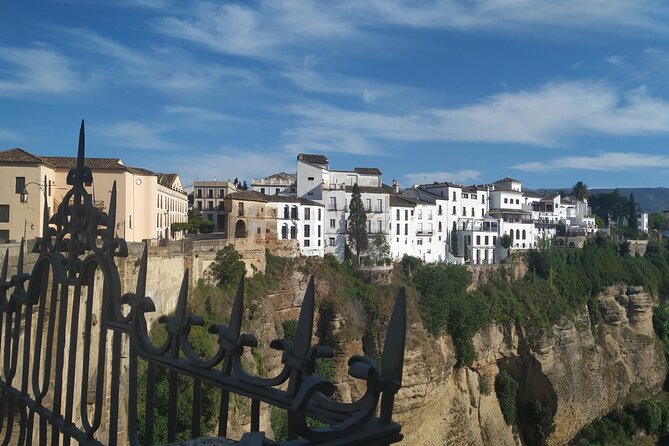
One of the more intriguing parts of this walk is the moment that points out the rear façade of an 18th-century palace. The guide explains where a staircase carved into rock begins, leading toward the Guadalevín River, and why there’s a grotto linked to siege-era water supply.
This is the kind of stop that turns a pretty photo spot into something memorable. Instead of seeing a structure and moving on, you get the practical reason it was built and used. Ronda has plenty of dramatic architecture, but stories like a hidden water route show how people actually survived here.
If you like history with real-world purpose, this stop is a winner.
Puente Viejo and the story of the Secret Mine
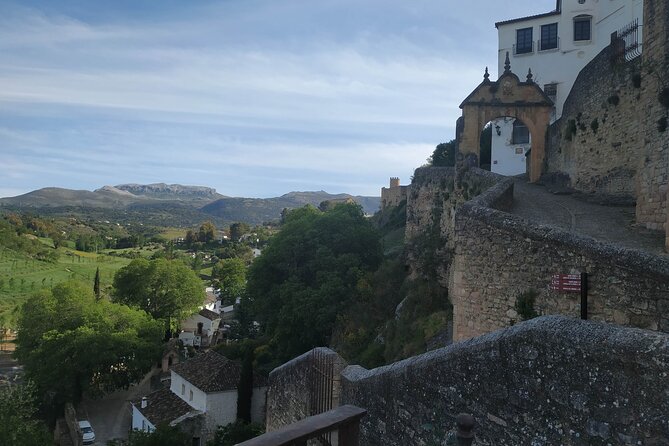
Next comes Puente Viejo, the Old Bridge, reached through the Cuenca Gardens. You get what I’d call a “best-of-both” view: you can see Puente Nuevo in perspective from here, and you can also look toward Casa del Rey Moro.
The guide adds story time with the Secret Mine. Even if you’ve heard rumors about Ronda’s mines before, hearing the tale tied directly to a spot helps it land. The key is that it’s not floating folklore; it’s attached to places you’re standing near.
Then you get another palace focus: the guide points out a façade described as among the most beautiful in Ronda and shares secrets about the palace. This stop also includes a fun pop-culture note: Madonna made a video clip on these streets. If you like mixing classic history with modern references, this is a good way to keep the tour from feeling too heavy.
Plaza Duquesa de Parcent and Santa María de la Encarnación
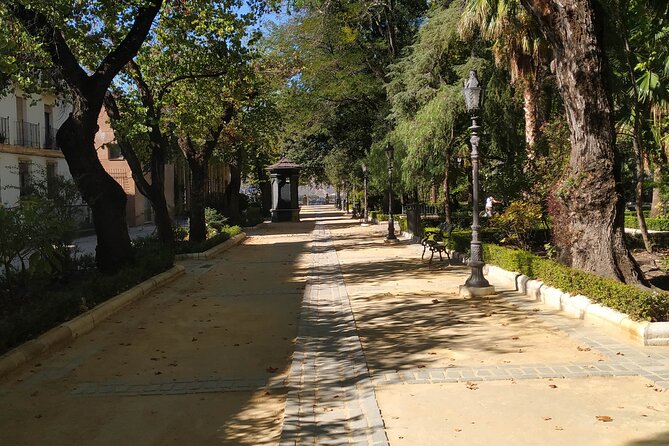
At Plaza Duquesa de Parcent, the tour shifts from viewpoints to the civic and religious center. It’s described as one of the most important places in Ronda, where you’ll find the main church and town hall. The gardens here are linked to Forrestier, which gives the plaza a more thoughtful, designed feel rather than being just a random square.
The tour then focuses on Santa María de la Encarnación, the collegiate church. The explanation is the part that makes this stop matter: it’s built on the most important mosque site, and the guide also notes earlier Christian basilica presence in the same location. You also learn that the church blends late Gothic and Renaissance styles, and the original door is covered by a balcony built in the 18th century.
If you’ve ever wondered how towns layer faith and power across centuries, this is a clear example. You’re not just looking at a church façade—you’re seeing how Ronda’s identity changed over time without erasing what came before.
In plain terms: you’ll leave this stop with a better sense of why Ronda’s streets feel like they’re packed with meaning.
Mirador de Aldehuela to El Campillo before Plaza España
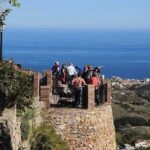
Just before crossing Puente Nuevo toward Plaza de España, there’s a viewpoint stop at Mirador de Aldehuela. The guide has you contemplate the grandeur of Puente Nuevo and look at the route from a distance. This is a smart “wrap-up” moment because it shows the bridge in a broader context, not just up close.
Then you end near Plaza de María Auxiliadora, known as El Campillo. From its viewpoint, the tour calls out views toward the Sierra and the Hoya del Tajo. Finally, you’re placed near Plaza España, where you can keep exploring on your own.
Why this ending works: you finish with wide views, so you’re less likely to feel rushed when you go find lunch or a cafe afterward. The tour doesn’t strand you far away; it sets you up to stay in the center.
Guides, pace, and what to expect on the ground
This experience is built for groups that want structure. Your stops are around 10 minutes each, so you’ll move at a steady clip. That’s good if you’re time-tight, or if Ronda is one of several stops in Southern Spain. It’s less ideal if you want to linger in every church detail or take long photo sessions without pressure.
Because it’s private for your group, you should expect a more conversational feel. The reviews you’ve been given also show guides who handle questions well and tailor their explanations to different ages, including kids. Names that came up repeatedly—like Alfredo Carrasco, Milagros, Sonia, and Carmen—are all described as friendly and responsive.
A weather note: the experience requires good weather. If conditions are poor, the tour may be rescheduled or you’ll get a full refund. If you’re traveling in a season with uncertain skies, I’d plan your Ronda day with some flexibility.
And yes, service animals are allowed. The tour does not recommend it for mobility difficulties, so if you need step-free routes, you’ll want to think twice.
Value check: is this tour worth $230.80 per group?
Let’s talk value without hand-waving. You’re paying $230.80 per group for up to 15 people, lasting around 2 hours, and including mobile ticket entry. Many of the stops are marked as admission free at the points you visit, so you’re mostly paying for guide time plus route efficiency.
If you’re a family or small friend group, it can still be a good deal because Ronda’s layout can be confusing, and you save time by having someone lead you through viewpoints in the right order. If you’re traveling solo or as a couple, the per-person cost is higher, and you’ll need to decide if the storytelling and guided angles are worth paying for instead of doing it on your own.
My take: this is strongest for people who want to understand what they’re seeing quickly. If your goal is just scenery, you can DIY. If your goal is scenery plus meaning, a guided route like this is a very clean use of time.
Who should book this Ronda guided walk?
You’ll love this tour if you:
- want a tight 2-hour plan that hits Ronda’s biggest viewpoint hits
- like history explanations tied to specific spots, not generic facts
- care about getting Puente Nuevo photos from more than one angle
- want a guide who can answer questions and keep the tone lively
You might skip it if:
- walking and stairs are hard for you, since it’s not recommended for mobility difficulties
- you’d rather wander slowly at your own pace without set stops
Should you book this tour?
Yes, I’d book it if you’re visiting Ronda for the first time and you want to get your bearings fast while still enjoying great views. The route is designed around key lookouts—Alameda del Tajo, Cuenca Gardens, and multiple Puente Nuevo angles—so you’re not stuck doing one dramatic photo and then wandering.
If you already know Ronda well and just want free-form time, you might not need a guided plan. But if you want to leave feeling like you actually understood Ronda, including stories like the Secret Mine, the siege water grotto, and the layered religious history at Santa María de la Encarnación, this guided walk is a strong pick.
FAQ
How long is the Ronda guided tour?
It lasts about 2 hours.
Is this tour private?
Yes. It’s a private tour/activity, and only your group participates.
How many people are in a group?
The group size can be up to 15 people.
What language is the tour in?
The tour is offered in English.
Where does the tour start and end?
It starts at Pl. de la Merced, 1, Ronda, and ends at Pl. España, 2, Ronda (right in front of the Parador de Ronda at the start area).
Do I need to buy entry tickets for the stops?
The listed stops show admission ticket free.
Do I need a printed ticket?
No. You’ll use a mobile ticket.
Is the tour suitable for people with mobility issues?
It is not recommended for travelers with mobility difficulties.
Is the tour dependent on weather?
Yes. It requires good weather, and if it’s canceled due to poor weather you’ll be offered a different date or a full refund.
What is the cancellation policy?
Free cancellation is available. You can cancel up to 24 hours in advance for a full refund, and cancellations within 24 hours of the start time are not refunded.