REVIEW · MARBELLA
Marbella: group walking Tour
Book on Viator →Operated by Tours in Malaga · Bookable on Viator
Want a quick hit of Old Marbella? This 1.5-hour guided walk packs Moorish history and coastal art into a tight route, with the kind of small-group pacing that makes it easy to ask questions. I like how the guide work blends landmarks with stories, so the places stop feeling like random stops and start sounding like real life. One drawback to plan for: double-check the exact meet time before you leave your hotel, because meetup instructions can be inconsistent and that can mean extra waiting.
You’ll start in Alameda Park, then drift toward the beach, the Old Town core, and the Incarnation Church area with Arab castle ruins. Guides like Sonia and Rocío get singled out for being upbeat and story-driven, and that matters on a walking tour, where you’re moving the whole time.
In This Review
- Key highlights
- A 90-Minute Spin Through Old Marbella
- Parque de la Alameda Start at the Rocío Fountain
- Avenida del Mar, Dali Sculptures, and Beach-Promenade Tips
- Marbella Town Hall and Old Town Around Orange Square
- Incarnation Church and the Arab Castle Ruins
- How the Small Group Format Changes the Whole Experience
- Price, Timing, and What to Bring
- Should You Book This Marbella Walking Tour?
- FAQ
- How long is the Marbella group walking tour?
- What language is the tour offered in?
- Where do I meet the guide?
- What day(s) is the meetup listed for?
- How big is the group?
- What’s included in the price?
- Are food and drinks included?
- Can children join the tour?
- Does the tour run in bad weather?
- Is there free cancellation?
Key highlights
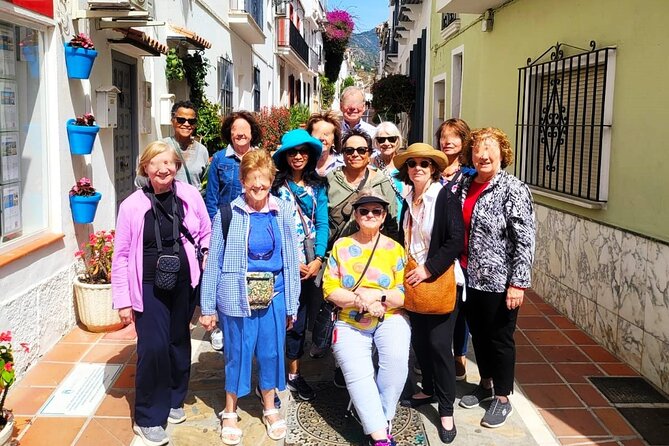
- Small group feel (no larger than 15), with room to talk and ask questions
- Dali sculptures along Avenida del Mar, paired with beachfront walking and local tips
- Old Town focus around Orange Square and 16th-century houses
- Incarnation Church plus the ruins of an Arab castle
- Compact 90-minute format that gives you a coherent overview fast
A 90-Minute Spin Through Old Marbella
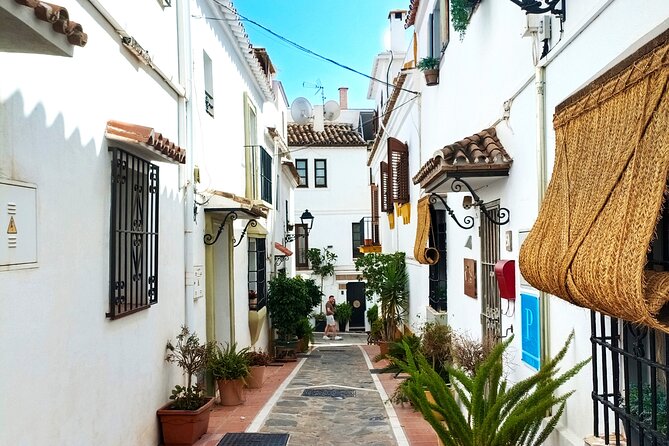
This tour is built for people who want context without committing to a half-day. At about 1 hour 30 minutes, you get a guided loop that hits the key “Marbella basics”: the historic town center, the church-and-ruins area, and the beachfront side of the city. It’s also priced in a way that feels accessible—around $30.04 per person—which makes sense if you’re using it as your first-orientation walk.
Because it’s a group tour (and not a long series of stops), you’re not stuck in bus time or in a “sit-and-listen” format. The guide keeps you moving, but still gives you time at each landmark. In a place like Marbella—where the center can feel compact—you can genuinely turn 90 minutes into a useful mental map.
The other thing I like is that the tour is offered in English and uses a mobile ticket, which cuts down on friction. You’ll still want to do one simple thing: show up at the meetup point at the right moment and be ready to walk in comfortable shoes. The tour runs in all weather conditions, so if it’s sunny, you’ll feel it, and if it’s rainy, you’ll still be walking.
You can also read our reviews of more walking tours in Marbella

Parque de la Alameda Start at the Rocío Fountain
Your morning (or day) begins at Parque de la Alameda, at the “Rocío” fountain. The schedule info lists the meetup specifically on Mondays and Fridays, and the address is Av. Ramón y Cajal, s/n, 29602 Marbella.
Why this first stop matters: Alameda Park is a calm entry point. Instead of dropping you straight into busy streets, the tour starts with a landmark-based orientation. This is where the guide can set the tone—how to read the area, what to watch for as you move toward the historic center, and how Marbella’s layers of influence show up in the architecture.
Also, this is the part where you’ll feel how organized the start is. One real-world caution from the information you have: meetup instructions may not match perfectly across channels. My practical advice is boring but effective—confirm the meet time in advance and plan to arrive with a buffer. If you show up too early and no one is waiting, it turns your first 10 minutes into awkward standing around. If you show up late, you lose time on the back end.
Even with that caveat, this opening stop helps you get your bearings fast. Once you start walking from Alameda into the central streets, everything feels more connected.
Avenida del Mar, Dali Sculptures, and Beach-Promenade Tips
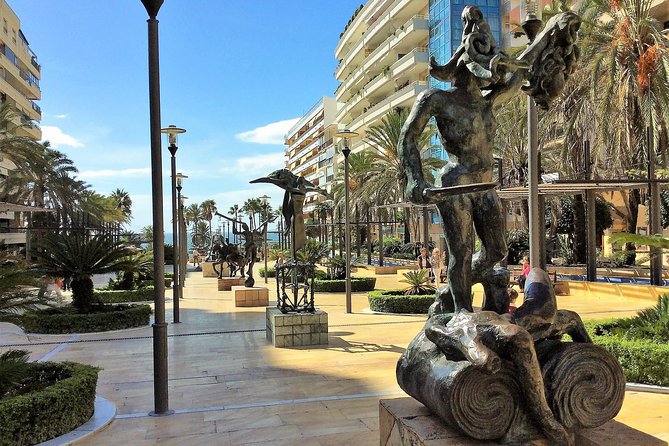
After Alameda Park, the route shifts toward the coast. You’ll head along Avenida del Mar, with a chance to admire permanent sculptures made by Dali along the avenue. Then you’ll stroll the beachfront promenade with your guide.
This stretch is a smart use of time for two reasons. First, it gives you a clear sense of Marbella’s layout: the historic core isn’t just “inland old streets.” It’s also tied to the sea, and you can feel that as soon as you start moving toward the promenade. Second, the guide uses this walk to share insider tips about how to maximize your time in Andalusia.
One thing to expect on a beachfront promenade: you’ll likely be out in the open more than at some inland stops. So think about comfort. Comfortable shoes are essential (this is a walking tour, not a museum session), and if the day is bright, you’ll want sun protection even if the air feels mild. If it’s windy or overcast, bring a light layer—conditions can change along the water.
This stop also tends to be where the tour shifts from “history facts” to “how to enjoy the city.” You’re learning the story, but you’re also getting real guidance for where your time will pay off later. If you plan to add self-guided wandering after the tour, this is the part that helps you decide what to prioritize next.
Marbella Town Hall and Old Town Around Orange Square
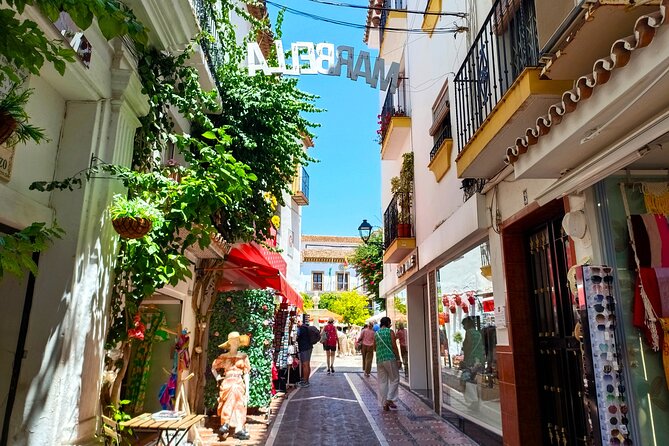
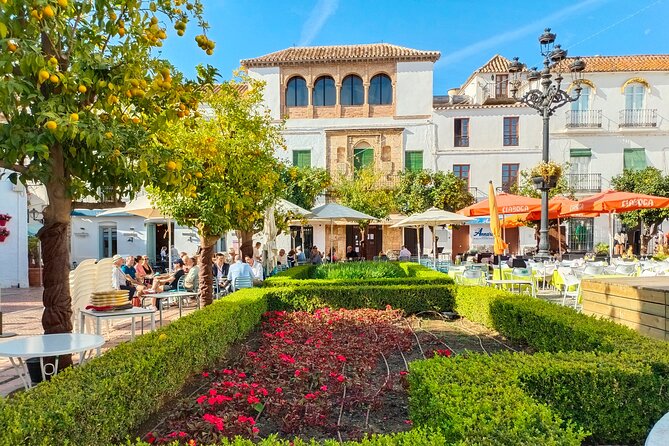
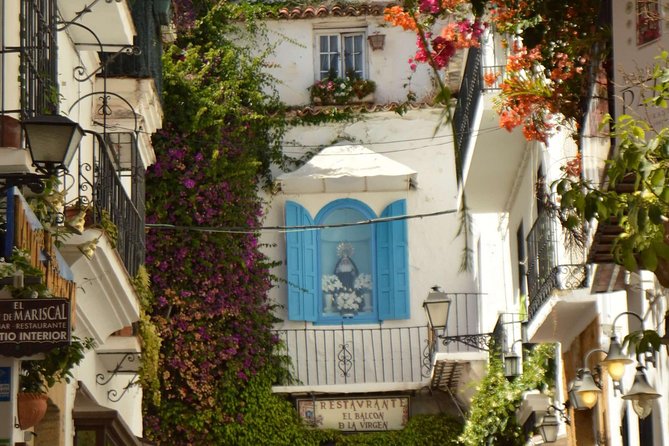
Next up is Marbella Town Hall, and the focus is on Old Town. You’ll spend about 30 minutes exploring, including Orange Square and historic houses dating back to the 16th century.
This is one of the best parts of the route if you want to understand why people come to Marbella beyond the beaches. Old Town in Andalusia-style cities isn’t just pretty streets; it’s a living record of power, faith, trade, and changing cultures. The Town Hall and surrounding streets give you an easy anchor point for that idea.
Orange Square is also practical. It’s a recognizable public space, so even after the tour ends, you’ll remember where you are. That matters because Old Town can look similar block to block. The guide’s job here is to give you “landmark logic”—why this street matters, what the buildings suggest, and how the layout connects.
Possible drawback: since this is the most time-heavy stop in the itinerary (about half an hour), the guide may keep you moving at a steady pace. That’s fine for an overview, but if you like slow photo stops and long sits in cafés, you’ll need to save your deeper wandering for afterward.
When this section clicks, it’s because you’re not just seeing sites—you’re learning how to read them. You’ll leave with a better sense of where the historic heart is, which is what you want from a short tour.
Incarnation Church and the Arab Castle Ruins
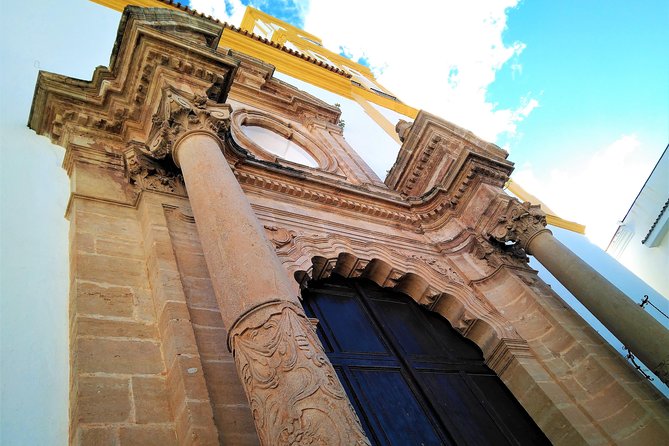
The final stop is Iglesia Mayor de la Encarnacion (the Incarnation Church) and the nearby ruins of the Arab castle. Expect about 20 minutes here.
This is the “layering” stop—the one that makes Marbella’s past feel more complicated in a good way. Churches and castle ruins tell different stories, but they overlap in time. What you get from this section is a guided explanation of how the area’s identity shifted, and what to look for when you’re standing in the ruins and church space.
Even if you’re not a hardcore architecture person, this stop works because it’s visual. You’ll be able to connect the guide’s points to what you can actually see: the church as a clear marker, and the ruins as evidence of earlier rule. The result is that “Moorish and Arab influence” becomes something concrete instead of a line in a travel book.
The main practical consideration here is the same as everywhere else: time is short. You get a guided visit with context, but not a long linger. If you want extra time for close-up photos or to sit quietly, plan to revisit on your own after the tour. The good news is that this stop is the kind of place you’ll want to walk around again once you know what you’re seeing.



How the Small Group Format Changes the Whole Experience
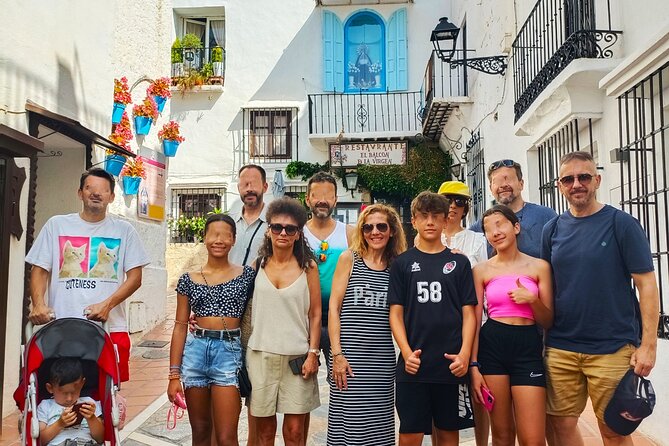
This tour is set up so you can actually talk. The group is kept no larger than 15, even though the overall maximum listing is up to 30 travelers. In practice, the smaller-group cap is where the value shows up.
Why it matters: a historical walk is only fun if you can connect the story to the moment you’re standing in. When the group is small, you’re not hidden behind other people. You can hear the guide clearly, and the guide can adjust—answer a question, slow down at something interesting, and share little lore tidbits without feeling rushed.
The guide style is also a big part of why this tour earns strong ratings. The names Sonia and Rocío come up in standout comments for being engaging and energetic—full of history, local lore, and anecdote. That kind of guiding helps, because walking tours are easy to make boring. This one seems designed to stay lively without turning into a performance.
And because the route is compact, you don’t end the tour feeling like you’ve been dragged for hours. After about 90 minutes, you usually feel like you’ve gotten a true overview: where to go, what matters, and what stories are worth remembering.
Price, Timing, and What to Bring
At about $30.04 per person for roughly 1.5 hours, this isn’t a splurge, and it’s not a bargain-stunt either. It sits in the sweet spot for a guided “get oriented” experience—especially if you’re the type who likes walking tours for context more than for speed.
Here’s the value breakdown that matters for you:
- You’re paying for a pro guide, not just movement from point A to B.
- The route covers multiple high-signal areas: park start, coastal art, Old Town square/historic houses, and church/ruins.
- You’re getting it in a time-efficient window, which makes it easier to build a full day.
What’s not included is important: food and drinks are not part of the tour. That means you should plan your own snack breaks. If you want something like local pastries or street snacks, you’ll need to buy it yourself before or after the walk. The good part is you’ll be passing areas where grabbing something is realistic if you want to extend your experience.
What you should bring:
- Comfortable shoes (non-negotiable)
- Weather-appropriate clothing since it runs in all weather conditions
- Water and sun protection if it’s warm, since you’re outdoors much of the time
One more timing note: this tour is commonly booked about 23 days in advance, which suggests it can be popular during peak periods. If your schedule is tight, booking early is a smart move.
Should You Book This Marbella Walking Tour?
I’d book it if you want a quick, structured way to understand Marbella’s identity—history, architecture, and local storytelling—without committing to a long day. It’s especially worth it if you’re arriving fresh and want help turning the city into something you can navigate on your own afterward.
You might skip it if:
- You dislike meeting-group timing and prefer flexible, solo exploration.
- You want long stops in each site rather than a guided overview.
- You plan to use the time for heavy photo sessions or café lounging during the tour itself.
If you do book, here’s my best “make it smooth” advice: confirm the exact meetup time ahead of arrival and give yourself a little buffer. Then wear good shoes and go in ready to walk. You’ll come away with a clearer picture of Marbella—plus enough lore to make the streets feel like they have memory.
FAQ
How long is the Marbella group walking tour?
It runs for about 1 hour 30 minutes.
What language is the tour offered in?
The tour is offered in English.
Where do I meet the guide?
You meet at Parque de la Alameda, at the Rocío fountain. The address given is Av. Ramón y Cajal, s/n, 29602 Marbella, Málaga, Spain.
What day(s) is the meetup listed for?
The meeting point at the Rocío fountain is listed for Mondays and Fridays.
How big is the group?
The tour is described as a group with no larger than 15, with a maximum of 30 travelers.
What’s included in the price?
The price includes a professional guide and a group tour.
Are food and drinks included?
No. Food and drinks are not included.
Can children join the tour?
Yes, but children must be accompanied by an adult.
Does the tour run in bad weather?
It operates in all weather conditions, so you should dress appropriately.
Is there free cancellation?
Yes. You can cancel for free up to 24 hours in advance for a full refund.