REVIEW · MARBELLA
Marbella Old Town Walking Tour
Book on Viator →Operated by Free Tours Marbella · Bookable on Viator
Marbella’s Old Town packs centuries into 90 minutes. This walking tour follows a chronological route through the oldest layers of Marbella, with stops that connect the Roman, Arabic, and Christian eras into one easy-to-follow story. It’s designed for real orientation, so you leave knowing where you are and why the buildings look the way they do.
What I really like is the focus on specific places you can actually visit, not just passing streets. You get guided time inside and around the Iglesia Mayor de la Encarnación and the Murallas del Castillo, and the final stretch lets you absorb the Old Town atmosphere in a slower, self-guided way while the guide ties it together.
One consideration: it’s a shared group walk (up to 25 people) and the structure is set—so if you need lots of frequent stops or extra time in one site, you may wish you had a more flexible private option.
In This Review
- Key Takeaways Before You Go
- Marbella Old Town in 90 Minutes: Why This Walk Works
- Where You Start at Fuente Virgen del Rocío and How the Timing Fits
- Stop 1: Iglesia Mayor de la Encarnación and the Reconquista Connection
- Stop 2: Murallas del Castillo (Las) and Life Inside a IX-Century Alcazaba
- Stop 3: Marbella Old Town Through Roman, Arabian, and Christian Layers
- Guide Sofi: The Best Reason to Book
- What You Pay: Value of the $17.20 Price Tag
- Who This Marbella Old Town Tour Is Best For
- Practical Tips You’ll Actually Use
- Should You Book This Marbella Old Town Walking Tour?
- FAQ
- How long is the Marbella Old Town walking tour?
- Where does the tour start and end?
- How much does the tour cost?
- What sites are included in the itinerary?
- Are admission tickets included?
- Is this a small group?
- How do I get my ticket?
- Is there free cancellation?
- What if the tour is canceled due to minimum travelers?
- Are service animals allowed and is public transportation nearby?
Key Takeaways Before You Go
- A timeline walk that moves from the older cores to more modern layers, so the town makes sense fast
- Two admission stops included, which adds real value to a low price
- Guide Sofi stands out in the feedback for pacing and turning history into understandable stories
- A group size capped at 25, which usually keeps the tour from feeling chaotic
- Mobile ticket + meeting at a clear landmark for an easy start in central Marbella
Marbella Old Town in 90 Minutes: Why This Walk Works
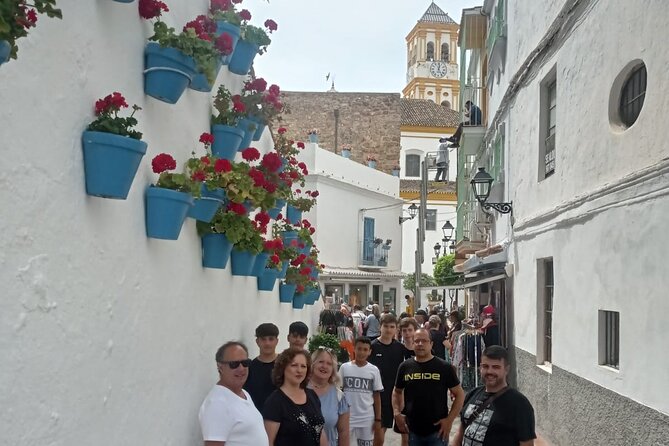
Marbella can feel like a place with layers—white buildings, sea breezes, and a street grid that suggests newer tourism. This tour gives that surface a backbone. You’re not just looking; you’re learning the order of events that shaped the town.
The big win is the chronological flow. Instead of random facts, you get a path that starts with the older religious center and moves into the defensive Arabic core. That makes later wandering through the Old Town much less confusing, because you can mentally sort what you’re seeing into Roman, Arabic, and Christian chapters.
Also, 90 minutes is a practical sweet spot. It’s long enough for meaningful context, but short enough to stack with other plans—beach time, tapas, or a longer afternoon stroll on your own.
You can also read our reviews of more walking tours in Marbella



Where You Start at Fuente Virgen del Rocío and How the Timing Fits
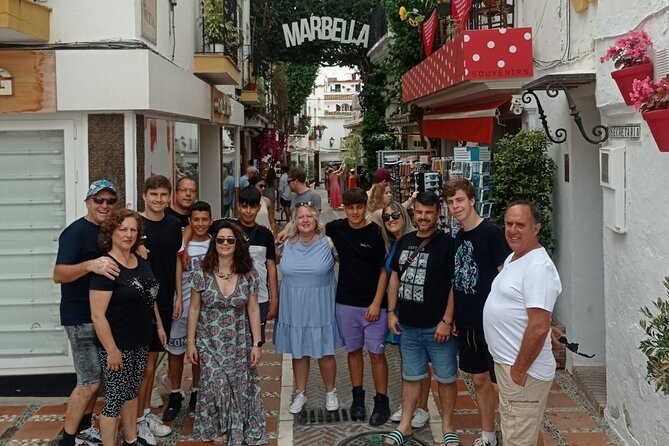
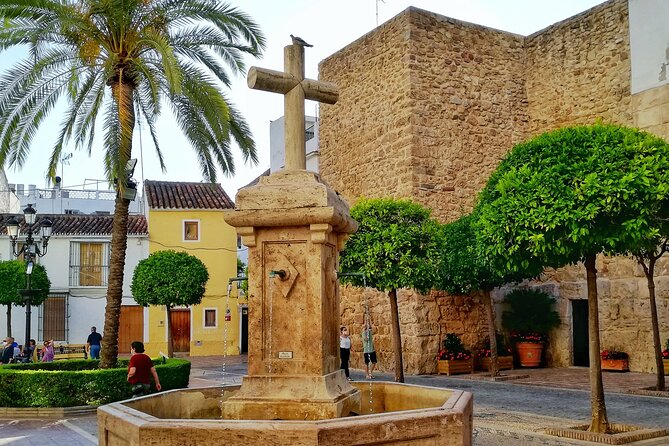
The tour meets at Fuente Virgen del Rocío on C. África (29601 Marbella, Málaga, Spain). It ends back at the same meeting point, so you don’t have to solve a separate “getting back” puzzle.
Timing is structured in short blocks. You spend about 15 minutes at the first stop, about 15 minutes at the second, then about 1 hour exploring Marbella Old Town with the guide’s guidance and context. That layout helps the group keep momentum without dragging through any single site too long.
Because it’s described as near public transportation and offers a mobile ticket, it’s the kind of activity you can plug into a day without complicated logistics. You’re also in a group capped at 25 travelers, which tends to keep the experience personal enough while still offering the social energy people enjoy on shared tours.
Stop 1: Iglesia Mayor de la Encarnación and the Reconquista Connection

Your first stop is the Iglesia Mayor de la Encarnación. The highlight here is the idea of transformation: it was once an ancient Moorish (Mayor) mosque, later converted into a Catholic church after the Spanish Reconquista in the 16th century.
The tour includes time for both interior and exterior viewpoints, plus explanations. Even if you’re not a history scholar, this is the type of site where the guide’s framing matters. When you understand that a building’s purpose changed due to major political and religious shifts, you start reading the architecture differently instead of treating it as just “a pretty church.”
The admission ticket is included for this stop, so you’re not nickel-and-diming your schedule. It’s one of the reasons this tour feels like a better deal than a pure street-walk—your money supports access to the places where history is physically preserved.
A practical downside to know: because the visit includes both outside and inside, you’ll want to be ready for walking between viewpoints. If you prefer fully seated stops, this part may feel a little more active than you’d like, even though the total time is still only about 15 minutes.
Stop 2: Murallas del Castillo (Las) and Life Inside a IX-Century Alcazaba
Next you visit the Murallas del Castillo (Las), tied to the old Alcazaba of Marbella dating back to the 9th century. This is a defensive and residential world at the same time—described as the place where the ancient Arabian king lived.
What makes this stop valuable is the shift in perspective. The first site frames a religious conversion and long-term cultural change. This one shows a city’s earlier priorities: protection, control, and power centered in a fortified complex.
The tour includes admission here too, so you get entry access baked into the price. That matters because fortifications and historic ruins often charge separately when you book them directly. In other words, the tour is smart about where it includes paid access.
You also get time that’s just right: around 15 minutes. It’s enough for orientation—where you are in the site, what it likely meant to the city, and how it connects to the later Old Town you’ll walk through next—without overloading you with too many details before you move on.
Stop 3: Marbella Old Town Through Roman, Arabian, and Christian Layers
The final main portion is a focused walk through Marbella Old Town. This is where the tour earns its “orientation” value: the guide helps you admire buildings from the Roman, Arabian, and Christian times, not just admire scenery.
The tour frames Marbella as founded about 3,000 years ago. Even if you don’t memorize dates, you’ll feel the structure of the town as a timeline you can follow. You’ll also understand why certain areas and architecture styles show up where they do, because the guide is connecting the dots across eras.
This part is about 1 hour, which gives you time to slow down. It’s also described as “a cultural walk” in chronological order from older to more modern history of one of Spain’s popular destinations. That description matters because it signals the tour is trying to build understanding, not just deliver a checklist of sights.
A drawback to keep in mind: the Old Town section is longer than either single admission site, so your experience will depend on how well you keep pace. If you’re comfortable with a steady walk for about an hour, you’ll get the most from it.





Guide Sofi: The Best Reason to Book
If there’s one theme that comes through strongly, it’s the impact of the guide—Sofi. The feedback emphasizes that Sofi is engaging and enthusiastic, and that she keeps a pace that works for different group members.
I think this matters more than people expect. In short tours, a good guide can prevent that common problem of feeling rushed through important material or bored during travel between stops. With Sofi, the reported pacing is described as “just right” for groups that have mixed mobility needs. Even if you’re not dealing with mobility issues, that usually means the tour feels thoughtful rather than frantic.
Another highly praised point is how the guide connects facts to meaning. The tour isn’t just about naming places; it’s about understanding traditions and how they came about. That approach makes the Old Town feel less like a museum you pass through and more like a living place with a layered identity.
And since the tour is capped at 25 travelers, the guide likely has an easier time managing questions and keeping the group together than on very large excursions. That can translate into a smoother flow at the sites that matter most.
What You Pay: Value of the $17.20 Price Tag

At $17.20 per person for about 1 hour 30 minutes, this tour hits a price point that’s hard to argue with—especially because it includes admission tickets for the first two stops.
Most walking tours in popular destinations cost less upfront but make you pay separately once you reach paid sites. Here, the ticket inclusions reduce the “surprise add-ons” problem and make the overall cost easier to trust. It also means your money goes toward access, not just narration.
It’s also booked on average about 32 days in advance, which suggests steady demand. That can be a good sign: if something gets repeated bookings, it usually means the experience holds up for a range of travelers. Still, because it’s subject to availability and confirmation is expected within 48 hours, booking earlier can help secure your date.
The included gratuities is another small detail that supports the overall value. It also helps remove one decision from your planning list.
If you’re traveling on a tighter budget but still want more than a basic “walk and point,” this pricing structure is one of the tour’s smartest parts.
Who This Marbella Old Town Tour Is Best For
This works especially well if you want fast context. You’ll enjoy it if you like history that’s explained in a way you can connect to the streets in front of you.
It’s also a strong fit for mixed groups—based on the reported experience of people with varied mobility. The pacing is described as manageable, and the stops are short. That makes it easier to stay engaged without feeling trapped in one location too long.
I’d be more cautious if your travel style is highly flexible and you hate structure. The tour is set in chronological order with fixed stop times. You can still explore independently after, but during the tour you’ll follow the guided rhythm.
If you want a deep, academic lecture or a long sit-down at one monument, you might find 90 minutes too short. But for getting your bearings in Marbella Old Town and building a mental map of the eras, the length is a real advantage.
Practical Tips You’ll Actually Use
Because this is a mobile ticket experience, make sure your phone is ready to show your ticket when you meet the group. That’s the simplest way to avoid awkward delays at the start.
The meeting point is specific: Fuente Virgen del Rocío on C. África. If you’re using public transportation, give yourself enough time to reach that area comfortably before the tour begins, since the walk starts promptly in most shared tours like this.
Also note the group cap: maximum of 25 travelers. If you’re the type who likes a quieter pace, this size usually feels acceptable, but the experience is still shared. You’ll get more benefit by going in with a friendly, give-and-take attitude.
Finally, remember the itinerary includes admission stops. It’s a good idea to plan your day so you’re not rushing afterward. You’ll want time to absorb what you learned once you’re out in the Old Town on your own.
Should You Book This Marbella Old Town Walking Tour?
I’d book it if you want a clean way to understand Marbella without spending hours digging through guidebooks. The structure is simple, the route makes sense as a timeline, and the included entry tickets for major sites create strong value for $17.20.
I’d hesitate only if you need lots of downtime, prefer fully unstructured sightseeing, or you already know the town’s major architectural and historical layers and you’re chasing something more offbeat.
If your goal is to leave Marbella Old Town with a working mental map—why the mosque became a church, what an Alcazaba meant for the city, and how Roman/Arabic/Christian layers show up in the streets—this tour is built for that. And with Sofi described as a high-energy guide who keeps the pace right, you’re likely to get more than just facts. You’ll get clarity.
FAQ
How long is the Marbella Old Town walking tour?
The tour lasts about 1 hour 30 minutes.
Where does the tour start and end?
It starts at Fuente Virgen del Rocío on C. África, 29601 Marbella, Málaga, Spain, and ends back at the same meeting point.
How much does the tour cost?
The price is $17.20 per person.
What sites are included in the itinerary?
The tour includes: Iglesia Mayor de la Encarnación, Murallas del Castillo (Las), and a walk through Marbella Old Town.
Are admission tickets included?
Yes. Admission tickets are included for Iglesia Mayor de la Encarnación and Murallas del Castillo (Las). The Old Town portion is admission-free.
Is this a small group?
The maximum group size is 25 travelers.
How do I get my ticket?
You receive a mobile ticket.
Is there free cancellation?
Yes. You can cancel up to 24 hours in advance for a full refund.
What if the tour is canceled due to minimum travelers?
If it’s canceled because the minimum number of travelers isn’t met, you’ll be offered a different date/experience or a full refund.
Are service animals allowed and is public transportation nearby?
Service animals are allowed, and the meeting area is near public transportation.