REVIEW · MALAGA
Private visit to Ronda 2 hours
Book on Viator →Operated by Ronda Private Tours · Bookable on Viator
Ronda hits you fast. In just two hours, this private walk strings together Ronda’s gorge viewpoints, the New Bridge photo stops, and the bullring stories—led in English with a mobile ticket you can show on arrival.
I love that most of the stops have free entry, so your time goes straight to seeing. I also love the step-by-step viewpoint angles—you don’t just stare from one spot. One consideration: admission for Palacio de Salvatierra isn’t included, so you may pay extra if you want to go inside.
In This Review
- Key highlights worth your time
- Private Ronda in Two Hours: what you really get
- Price and value for a group up to 15
- Your walking route: stop-by-stop in real life terms
- Stop 1: Alameda del Tajo (10 minutes, free entry)
- Stop 2: Plaza de Toros de Ronda (free entry)
- Stop 3: New Bridge (10 minutes, free)
- Stop 4: Jardines de Cuenca (15 minutes, free)
- Stop 5: Arco de Felipe V (5 minutes, free)
- Stop 6: Palacio de Salvatierra (5 minutes, admission not included)
- Stop 7: Plaza Duquesa de Parcent (10 minutes, free)
- Stop 8: Plaza de María Auxiliadora (10 minutes, free)
- Stop 9: Iglesia de Nuestra Señora de La Paz (10 minutes, free)
- Stop 10: Mirador de Aldehuela (10 minutes, free) — finish by the New Bridge
- The photo plan: where the “wow” shots come from
- Guide style: storytelling, not just signage
- Logistics that keep the day smooth
- Should you book this private Ronda tour?
Key highlights worth your time
- A true two-hour private route: only your group, with an English-speaking guide for the full time.
- Ronda’s most famous bridge, from multiple angles: built in 1793, treated like the star attraction.
- Old-school viewpoints, not just city streets: Alameda del Tajo and several miradors keep you looking over the gorge.
- Bullring history with famous names: Orson Welles and Ernest Hemingway come into the story.
- Hanging gardens for the classic “bridge in the gorge” shot: Jardines de Cuenca does the heavy lifting.
- End right next to the New Bridge: your tour finishes where most people want to linger.
Private Ronda in Two Hours: what you really get
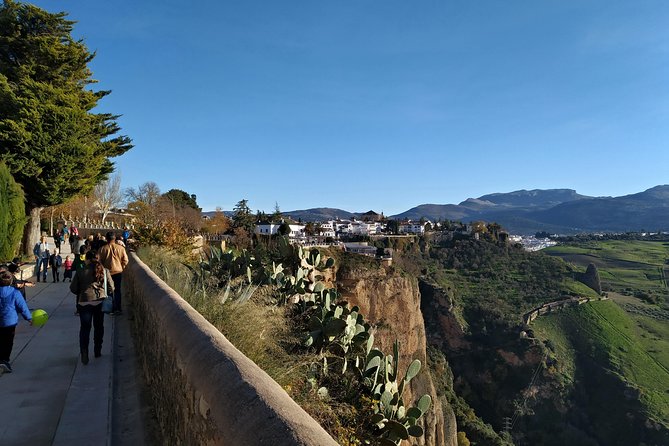
If you want Ronda in bite-size form, this works. You’re not bouncing around for half a day, and you’re not stuck in one single plaza all time. Instead, the route moves in a clean line: park viewpoints, a major landmark, and then a series of angles that slowly widen the view of the gorge.
The best part is the pacing. The visit is about 2 hours, with short stops (often 5–15 minutes) that let you look, take photos, and keep moving before the crowds thicken. It’s also private, so your guide can adapt slightly to what your group cares about—views, architecture, or the storytelling angle around the bullring.
You’ll also get a mobile ticket, and the tour is offered in English. Meeting is easy to find at Pl. de la Merced, 1, and you end at Mirador de Aldehuela right by the New Bridge.
You can also read our reviews of more private tours in Malaga

Price and value for a group up to 15
The price is listed as $300.40 per group (up to 15 people) for about two hours. On paper, that sounds like you’re paying for a private guide rather than a per-person ticket. That can be good value if you’re traveling with family or friends, because the cost doesn’t scale the way many walking tours do.
You also get practical value in the included-experience structure. Most stops are marked as free admission (so you’re not constantly budgeting for entrances). The one notable exception in the route is Palacio de Salvatierra, where admission isn’t included—so if your group is the type that wants to go inside buildings, plan for a possible extra cost.
One more value point: the tour is commonly booked far in advance (on average, about 114 days). If you’re traveling in peak season or on a busy week, it can be smart to lock it in early so you get the time slot you want.
Your walking route: stop-by-stop in real life terms
This is built like a “greatest hits” circuit around Ronda’s most photographed spots, plus a couple that connect the city’s story to what you see.
Stop 1: Alameda del Tajo (10 minutes, free entry)
This is where the tour earns its name as a viewpoints-first visit. Alameda del Tajo is described as the most beautiful park in Ronda, with gardens around 200 years old. That age matters because it helps explain why the place feels composed and intentional: it’s not just trees and benches, it’s a long-shaped garden built for looking out.
What you do here is simple—pause, breathe, and take in the views from the park vantage points. You’ll also get a sense of the gorge scale, which makes the next bridge stops land harder. If you skip this first look, the New Bridge later can feel less dramatic. Here, it’s the setup.
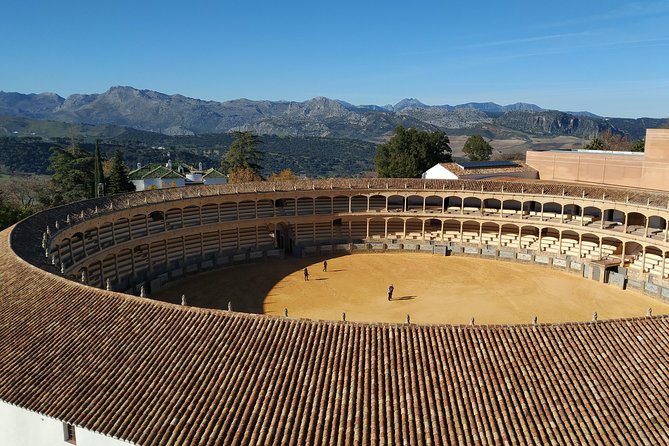
Stop 2: Plaza de Toros de Ronda (free entry)
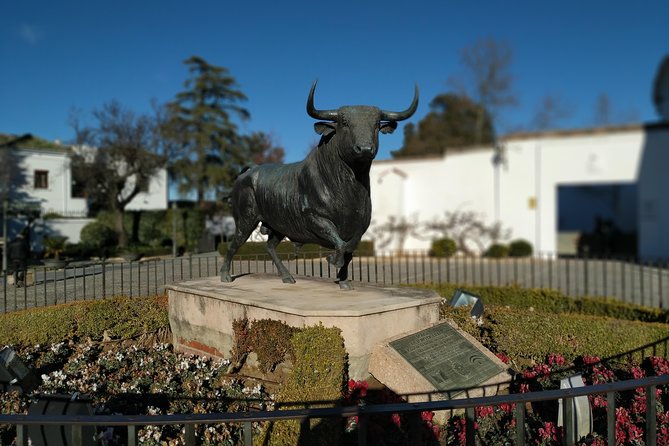
Next comes the bullring, in the surroundings of the oldest bullring in Spain. The stop isn’t just about architecture. Your guide tells the story of modern bullfighting and ties Ronda to big cultural names—Orson Welles and Ernest Hemingway are specifically mentioned as people who fell in love with the city.
This is one of those stops where the guide quality can make a real difference. One theme from past guides’ styles is that they make the story feel alive, not like a lecture. Also, if your guide points you toward the museum portion, there’s a very short movie you can watch inside the bullring area. It’s quick, and it helps connect the legends to how the place works.
A small practical consideration: because the bullring stop is tied to story and possible museum time, you’ll want to stay flexible with timing if your guide encourages that film.
You can also read our reviews of more tours and experiences in Malaga


Stop 3: New Bridge (10 minutes, free)
Now you reach the icon. The New Bridge was completed in 1793, and it’s treated as the symbol of Ronda. The tour doesn’t just point at it once. You’ll observe it from several different angles to check its beauty and proportions.
This is a smart approach. The bridge changes depending on where you stand—distance, height, and the curve of the gorge all shift the look. So when your guide moves you around, it’s not random walking. It’s part of how you read the structure correctly.
If you’re the type who takes photos in bursts, this is a good stop for it. You’ll likely get multiple good shots without needing to hunt on your own.
Stop 4: Jardines de Cuenca (15 minutes, free)
Jardines de Cuenca are hanging gardens designed for those classic “bridge in the gorge” images. If you’ve seen photos of the New Bridge framed with greenery and depth, this is the place that helps create that effect.
Your guide also connects this area to nearby landmarks you’ll keep seeing later: the House of the Moorish King and the Old Bridge. Even if you don’t go inside anything, the point is to train your eye. By the time you leave Jardines de Cuenca, you should understand how the city’s different eras stack on top of each other across the gorge.
The drawback here is simple: hanging gardens can have uneven paths and spots where standing to take photos is a bit tricky. The good news is your time is focused—15 minutes here is long enough to enjoy without feeling dragged.
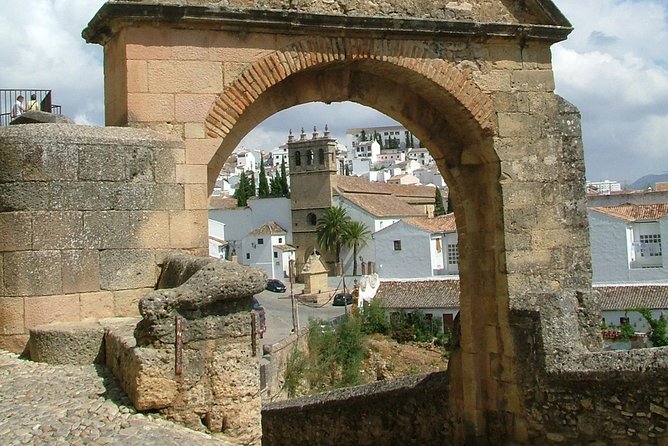
Stop 5: Arco de Felipe V (5 minutes, free)
This is a quick “gateway” stop. The entrance to Ronda through the Old Bridge leads to the Arco de Felipe V, described as a door built in the 16th century. It’s the kind of place where a short pause pays off, because the arch creates a natural frame.
Your guide will help you photograph the Church of Father Jesus framed by the arch. That framing detail is exactly why this stop exists—so you capture a relationship between monuments instead of photographing them separately.
Because it’s only about 5 minutes, treat it as a snapshot stop. Get your photo, listen for the story, and then keep moving.
Stop 6: Palacio de Salvatierra (5 minutes, admission not included)
This is the visual “facade moment.” Palacio de Salvatierra has an 18th-century facade, and the description highlights specific elements like the forge, the wooden cover, the noble shield, and colonial elements that summarize Ronda’s importance in that period.
Admission isn’t included here, so you’ll likely see the facade and key architectural features rather than do a full interior visit. If your group’s priority is exterior architecture and not museums or rooms, this stop still works well.
If your group does want inside access, you’ll have to decide on the spot. The tour gives you the historical context and the visuals; your next choice is whether to pay for admission separately.
Stop 7: Plaza Duquesa de Parcent (10 minutes, free)
Now you shift from gorge drama to city layers. Plaza Duquesa de Parcent is described as the most important square in Ronda, and it’s known for important archaeological remains. The tour also notes three Catholic churches here, underlining the religious and civic importance of the place.
Key buildings called out include the City Hall and the Church of Santa María de la Encarnación. This stop is useful because it anchors the earlier viewpoint stops to the lived city—the place where people gathered, governed, and built churches across time.
A gentle caution: because this square is historically layered, it can feel like information comes fast. A good guide slows it down just enough that you can connect what you’re hearing to what you see in the stone and streetscape.
Stop 8: Plaza de María Auxiliadora (10 minutes, free)
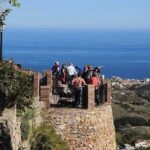
Also known as El Campillo, this plaza delivers one of the tour’s biggest “look across the region” views. From the viewpoint, you can see the Sierra de Grazalema, the Hoya del Tajo, and the Archaeological Site of Acinipo in the distance.
Your guide also points out details closer to the ground: the gardens here include two pinsapos, which are of interest. That combination matters. It stops the visit from becoming only big-view sightseeing and gives you something to notice at multiple scales.
This is a great stop if your group likes geography and distant context. If not, it can still work because the view is the star and the pinsapos add an easy extra detail.
Stop 9: Iglesia de Nuestra Señora de La Paz (10 minutes, free)
This small church is remembered for its colorful facade and baroque decoration inside. The tour’s description also names the Virgin of the Paza as the patroness of Ronda.
You don’t need long here to understand why it’s special. The point is contrast: after bridges, gardens, and plazas, you get a tight visual pocket of color and ornament. Your guide helps you notice the facade first, then the interior baroque detail.
One consideration: this is a shorter stop. If you’re the type to want extended quiet time inside churches, you may wish you had more minutes. Still, the route gives you a good taste without eating the rest of your two hours.
Stop 10: Mirador de Aldehuela (10 minutes, free) — finish by the New Bridge
The tour ends at Mirador de Aldehuela, where you can see the New Bridge and Old Bridge together, plus the Gardens of Cuenca and the Casa del Rey Moro. You also get a wider sweep that includes Plaza de España.
Finishing here is smart because you’re not “done and gone.” You finish right next to the New Bridge, where most people want to linger for sunset light or one last photo. Your guide likely ties this final view back to earlier stops, so the route feels like a story rather than a checklist.
The photo plan: where the “wow” shots come from
If your camera roll is your priority, this route is built for it. The New Bridge isn’t treated as a one-shot subject. You’re positioned in a way that lets you capture different angles, and then you return to the subject again from the Gardens of Cuenca.
A key tip: use your first bridge look (New Bridge stop) to learn the basic shape. Then use Jardines de Cuenca to get the “bridge set in the gorge” feeling. By the time you hit the final Mirador de Aldehuela, you should be seeing the city’s puzzle pieces connect.
The hanging gardens, the arch framing at Arco de Felipe V, and the end mirador all reinforce the same idea: Ronda is all about viewpoints. If you plan your photos like you plan your walking, you’ll waste less time and end up with better shots.
Guide style: storytelling, not just signage
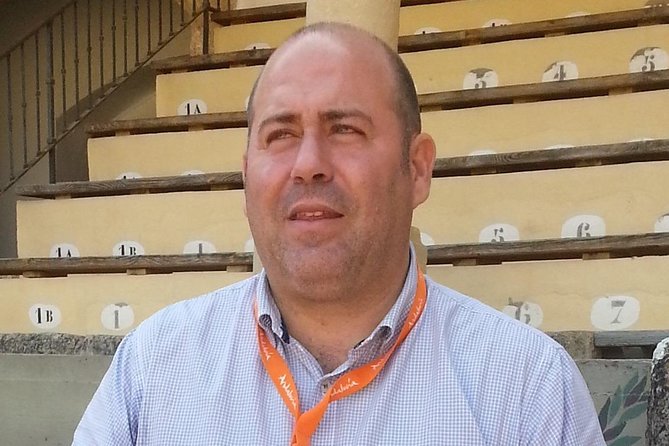
This is a private tour, which means the guide matters. In particular, the guides associated with this experience have earned praise for turning the route into a living story. One guide style mentioned is that the explanation feels methodical and scientific—so you get route logic and history in a way that makes sense for the actual streets and viewpoints you’re standing on.
Other praised guide moments are practical. For example, one guide was noted for adding solid dinner recommendations. Another was praised for making bullring time feel worthwhile—especially the short museum film part.
You’ll also want to lean into the English explanation. Since the tour includes names and cultural references tied to the bullring and historic places, having it in English helps you connect dots without guessing.
Logistics that keep the day smooth
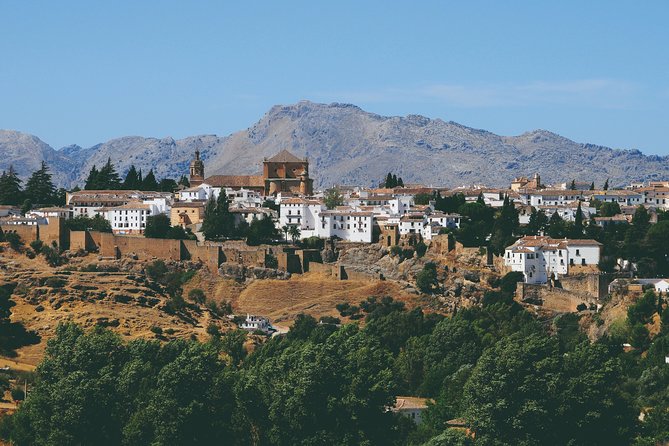
You start at Pl. de la Merced, 1, and you end at Mirador de Aldehuela, C. Armiñán, 1, finishing right next to the New Bridge. That end point is ideal because you’re close to the area where you’ll naturally want to continue exploring after the guided portion.
The tour runs about two hours, and it’s designed so most people can participate. Service animals are allowed, and the meeting area is near public transportation.
Tickets are mostly easy here. Many stops are listed with free admission, and the tour uses a mobile ticket. The only interior admission not included is Palacio de Salvatierra, so keep that in mind when you plan your spending.
If your schedule is uncertain, free cancellation is available up to 24 hours in advance for a full refund.
Should you book this private Ronda tour?
Book it if you want a focused, high-impact Ronda visit without turning it into a long day. The mix of gorge viewpoints, the New Bridge photo angles, and the bullring story gives you both scenery and context. It’s also a good choice if you’re traveling with a group (up to 15), because the price is per group rather than per person.
Skip or rethink it if your top priority is full museum time or extended interior visits. The route is short per stop, and Palacio de Salvatierra’s admission is not included—so you may need to add extra time on your own if interiors are your main goal.
If your plan is to get oriented fast and leave with a clear sense of why Ronda is famous, this two-hour private circuit is a strong bet.