REVIEW · MALAGA
Visita Guiada Ronda
Book on Viator →Operated by Claudia Valle Visitas Guiadas · Bookable on Viator
Ronda hits hardest when you go in order. This private guided tour strings together the big wow moments—Puente Nuevo and the old-town heart—so you get the story of the city without spending your whole day walking. I like how the pacing keeps moving, and I also like the way guides mix history with human details, so the route feels more like a guided conversation than a lecture.
One thing to plan for: monument entry tickets aren’t included, so you’ll want a little extra cash and time if you decide to go inside at the places that charge.
In This Review
- Key Points Before You Go
- Entering Ronda: Why This Route Works in Just Two Hours
- What the “Private + Up to 15” setup changes for you
- Puente Nuevo First: The Signature Bridge Gets Its Full Context
- Why I like starting here
- Plaza de Toros de Ronda: Beyond the Postcards
- A balanced takeaway you can carry with you
- Paseo de Blas Infante and the Easy Part of the Walk
- Why these “free” stops matter
- Mirador de Aldehuela: The View Checklist You’ll Actually Use
- A Small Tile That Teaches a Big Feeling
- Palacio de Mondragón: Mudéjar-Renacentista Meets Archaeology
- What to consider at Mondragón
- Plaza Duquesa de Parcent: The Town Center Finale
- Price and What You’re Really Buying
- How to think about it before booking
- Logistics That Affect Your Day (In a Useful Way)
- What Kind of Traveler Will Love This?
- Guide Style: What You Can Expect From the Human Side
- Should You Book This Guided Tour of Ronda?
- FAQ
- How long is the guided tour of Ronda?
- Where does the tour start and end?
- Is this tour private?
- What language is the tour offered in?
- What’s included in the price?
- Are monument entry tickets included?
- Is lunch included?
- How many people are in a group?
- When will I receive confirmation?
- What weather conditions can affect the tour?
Key Points Before You Go
- Private group up to 15: you’ll stay with just your party and your guide.
- Puente Nuevo + bullring in the first half: you see two of Ronda’s headline landmarks fast.
- Free miradors and photo stops: the views come without paying another ticket.
- Palacio de Mondragón adds depth: mudéjar-renacentista style with an archaeology museum.
- English mobile-ticket tour: easy to manage on your phone.
- Guides adapt on the move: several past visitors praised how guides handled pace and questions well.
Entering Ronda: Why This Route Works in Just Two Hours
If you’re doing Ronda for a short stop—on a day trip from Málaga or as a break between bigger regions—this kind of tour is gold. The reason is simple: Ronda is dramatic, but it’s also spread out over levels. If you wander on your own, you can end up seeing great views and still miss the “why it matters” part.
This tour is built around a tight storyline. You start near Pl. de la Merced (3) and end at Pl. Duquesa de Parcent (13). In between, you walk through the visual anchors people come for, then you soften the edges with gardens, viewpoints, and small stops that make the city feel lived-in.
You’ll also be in a private group (only your group participates), with the option of English. That matters because the best moments in Ronda are the ones you understand—why this bridge looks the way it does, why the bullring sits where it does, and what those Muslim-Christian layers mean for the town’s architecture.
You can also read our reviews of more tours and experiences in Malaga.

What the “Private + Up to 15” setup changes for you
With a private group, you usually get a more natural pace. And since the group limit is up to 15, it’s not a tiny whisper-quiet tour, but it also isn’t a massive crowd event. That’s helpful for photos, asking questions, and not feeling rushed every ten steps.
Puente Nuevo First: The Signature Bridge Gets Its Full Context
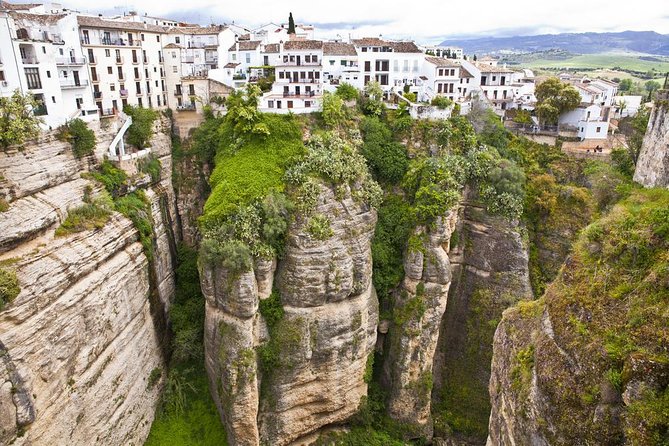
The tour begins with the New Bridge (Puente Nuevo) area, with about 25 minutes focused on the monument. This is the right move. Puente Nuevo is the image that sells Ronda, but it’s also a perfect “opening chapter.” From here, you can understand why people keep using Ronda’s cliffs and ravines as the city’s stage.
Expect your guide to connect the bridge to Ronda’s deeper identity—its rise through time, its role in the city’s layout, and how the bridge became the dramatic link between parts of town.
Practical heads-up: admission tickets aren’t included at this stop. That doesn’t stop you from enjoying the area, but if you want to go inside a ticketed portion, you’ll pay separately.
Why I like starting here
When you start with Puente Nuevo, everything you see later makes more sense. You’re not just collecting landmarks; you’re learning the geography that created them. Even if you only plan to look, you’ll get the story behind that look.
Plaza de Toros de Ronda: Beyond the Postcards
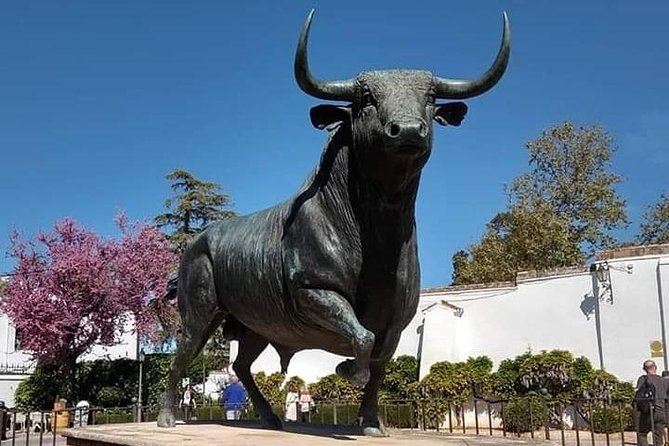
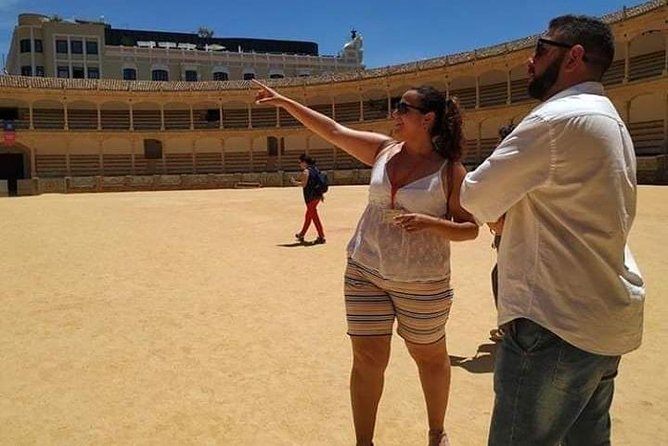
Next up: the Plaza de Toros de Ronda, another 25-minute stop. This is your history-and-tradition moment, centered on the long-standing bullfighting culture in Ronda.
What’s valuable here is that the tour doesn’t treat the bullring as a single object. Instead, it frames it as part of the city’s identity—something tied to community life and tradition. If you’re curious about why Ronda became such a symbol of this side of Spanish culture, this stop is the cleanest way to get oriented.
Again, ticket note: admission isn’t included. So you can enjoy the exterior and explanation, then decide on the spot whether you want to pay for entry.

A balanced takeaway you can carry with you
Even if you’re not into bullfighting, learning the cultural context helps you read Ronda differently. You’ll understand the bullring as architecture, history, and local tradition—not just as a famous ring on a map.
Paseo de Blas Infante and the Easy Part of the Walk
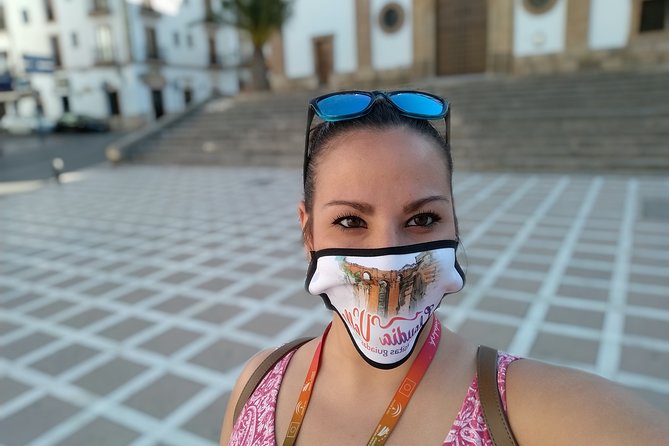
Then you step into calmer mode at the Paseo de Blas Infante, around 15 minutes. This portion leans into gardens and miradors with a free stop, meaning no extra admission cost for what you see here.
This is a nice change after two heavier landmark moments. It gives you air. It also helps you reset your eyes after cliffs and stonework—so when the next viewpoints show up, they feel even better.
Why these “free” stops matter
In Ronda, it’s tempting to chase paid attractions only. But the free areas often deliver the best payoff for effort: small scenic angles, gentler walking stretches, and views you can enjoy without checking ticket rules.
Mirador de Aldehuela: The View Checklist You’ll Actually Use
At the Mirador de Aldehuela, you get about 10 minutes. This is another free stop and it’s designed for quick, high-value sight reading.
From here, you’ll look out over Puente Viejo (17th century), plus gardens of Cuenca and Casa del Rey Moro. Even if you’ve seen names on your own, a guide’s narration helps you place them correctly in the city’s layers.
This stop is also ideal for photos. The structure of the timing means you’re not stuck staring for an hour—you’re getting the “what am I looking at?” version right when your eyes need it.
A Small Tile That Teaches a Big Feeling
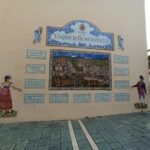
Next is the Placa A Los Viajeros Románticos, another 10-minute stop with no admission. It’s brief, but it adds texture. Ronda has a way of drawing people in—writers, artists, travelers looking for romance and old-world drama.
When a tour includes a small landmark like this, it’s usually because the guide wants to show you Ronda isn’t only monuments. It’s also mood.
Palacio de Mondragón: Mudéjar-Renacentista Meets Archaeology
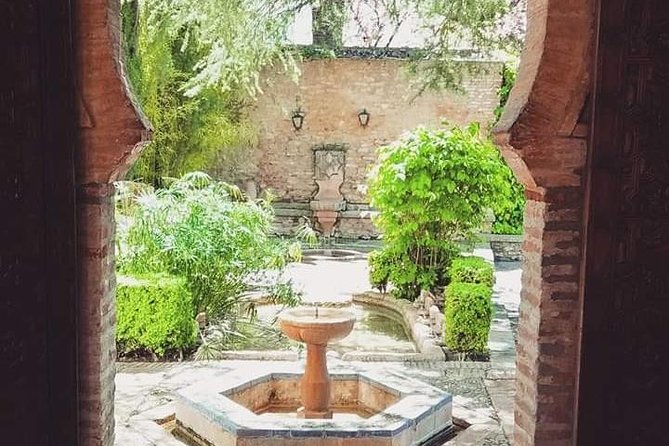
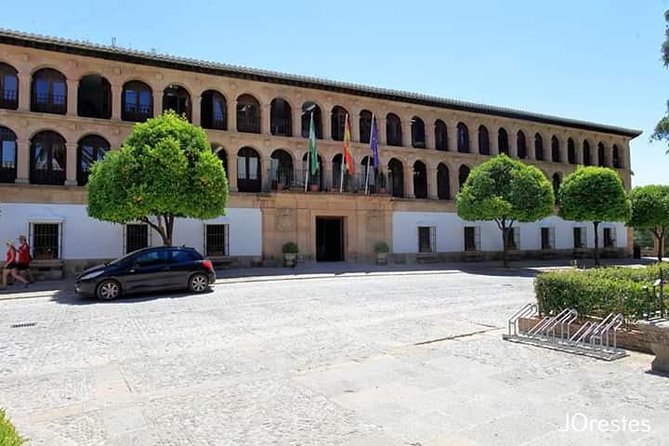
The tour then moves to the Palacio de Mondragón, about 10 minutes, and this one is ticketed (not included). Even if you don’t go inside, the exterior and the explanation are worth it because the building style carries meaning.
You’ll hear about its mudéjar-renacentista character, mixing influences that reflect Ronda’s historical crossroads. The palace also connects to a municipal archaeological museum, so it’s not just a pretty house—it’s a place where local material history gets some structure.
What to consider at Mondragón
Because the entry ticket isn’t included, you’ll face a choice. If you’re the type who likes to see the “inside layer” of a destination, plan to pay for the museum piece. If you’re more view-and-stories focused, you may prefer to use the stop time for the exterior look and let the walking itinerary do its job.
Either way, it’s a smart stop because it reminds you that Ronda isn’t only about dramatic stone and cliffs. It’s also about cultural fusion in buildings and objects.
Plaza Duquesa de Parcent: The Town Center Finale
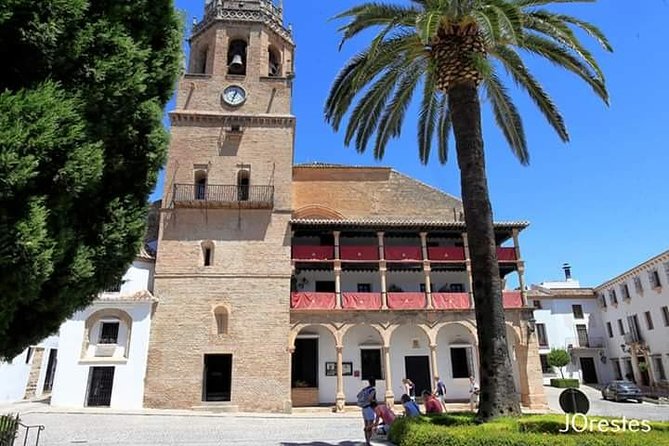
You finish at Plaza Duquesa de Parcent, with about 20 minutes. This is the old-town center that ties the walk together.
Expect the explanation to cover the town hall and the Colegiata de Santa María la Mayor. Even if you’re not going inside, you’ll get the sense that this is the civic and religious gravity point of Ronda’s older core.
Ending here is practical: it places you where you can continue on your own—find a café, stretch your legs, or start a longer walk if you have time.
Price and What You’re Really Buying
The price is $239.65 per group (up to 15) for about 2 hours. That pricing structure is where the value shows.
You’re paying for:
- a timed, story-driven route through Ronda’s main hits
- a private group experience (your party only)
- English narration
- the guide’s in-the-moment explanations that help you understand what you’re seeing
You’re not paying for:
- lunch (not included)
- entry tickets to monument interiors (not included)
- any optional paid activities you choose after you hear the guide’s context
How to think about it before booking
If you’re traveling solo, you’ll likely feel the group price more. If you’re splitting with friends or family, it can look a lot more reasonable because the cost doesn’t rise per person.
A smart way to decide: ask yourself whether you want a “walk with stories” or a “self-guided photo run.” If you want interpretation, this is usually money well spent.
Logistics That Affect Your Day (In a Useful Way)
This tour uses a mobile ticket and operates in English. It’s listed as near public transportation, which can help if you’re coordinating with buses or trains.
Also, it runs as a private tour/activity, so you don’t join a mixed crowd. That makes it easier to keep your group together and manage photo stops.
One more real-world note: the experience requires good weather. If the day is pouring rain or visibility is poor, the views and the mirador parts won’t land the way they should. In that case, you’ll typically be offered a different date or a refund.
What Kind of Traveler Will Love This?
This tour is a strong fit if:
- you want a fast, organized intro to Ronda
- you like history that feels human, not just dates on repeat
- you want key landmarks with free viewpoint stops mixed in
- you’re traveling with family members who benefit from a guide keeping everyone on track
If you’re already obsessed with one very specific interest—like deep art history or long museum sessions—then you might still love it, but you’ll probably want additional time beyond the 2 hours.
Guide Style: What You Can Expect From the Human Side
Several past participants highlighted the guides’ energy and storytelling approach. Names you may see associated with this tour experience include Carmen, Claudia, Jamie, Marta, Ana María, Elena, and Toñi—each praised for making the walk lively and keeping explanations clear.
You should expect:
- facts plus anecdotes, so Ronda doesn’t feel like a textbook
- a guide who checks pace and group cohesion
- time for questions during the walk, rather than a strict scripted monologue
That “story” emphasis matters because Ronda’s history is complicated: Muslim and Christian influences, shifting powers, and architecture that reflects those changes. A good guide makes it understandable, and the tour length makes sure you don’t get overwhelmed.
Should You Book This Guided Tour of Ronda?
I’d book it if you want to maximize understanding in minimal time. For most first-timers, two hours is the sweet spot: you’ll see Puente Nuevo, the bullring, a set of viewpoints, and finish in the main plaza so you can keep exploring afterward.
I’d think twice if:
- you already plan to do multiple museum-style visits inside buildings that require separate tickets
- you’re traveling in bad weather conditions where miradors won’t be enjoyable
If you’re on a tight schedule, this is one of the smartest ways to get the lay of the land—plus it saves you from the common first-timer problem in Ronda: seeing amazing sights but missing how they connect.
FAQ
How long is the guided tour of Ronda?
The tour lasts about 2 hours.
Where does the tour start and end?
It starts at Pl. de la Merced, 3, 29400 Ronda and ends at Pl. Duquesa de Parcent, 13, 29400 Ronda (near Plaza Mayor).
Is this tour private?
Yes. It’s a private tour/activity, so only your group participates.
What language is the tour offered in?
The tour is offered in English.
What’s included in the price?
The price includes impreso/IVA-style goods and services tax. The mobile ticket is also part of the experience.
Are monument entry tickets included?
No. Admission to monuments is not included, so you may need to pay separately if you want to enter certain places.
Is lunch included?
No. Lunch is not included.
How many people are in a group?
The price is per group for up to 15 people.
When will I receive confirmation?
You’ll receive confirmation at booking unless you book within 1 day of travel, in which case confirmation comes as soon as possible based on availability.
What weather conditions can affect the tour?
The experience requires good weather. If canceled due to poor weather, you’ll be offered a different date or a full refund.
If you want, tell me what day you’re going and who’s in your group (couple, family, etc.). I can help you decide whether this 2-hour structure is enough or if you should pair it with extra time for museums and viewpoints.