REVIEW · NERJA
Nerja: Caves of Nerja Entry Ticket with Audio Guide
Book on GetYourGuide →Operated by Distributor: GetYourGuide Tours & Tickets GmbH · Bookable on GetYourGuide
The caves hit you with scale fast.
Nerja Caves are a pre-booked audio-guided walk through huge rooms of stalagmites and stalactites, with the key stop being the Cataclysm room—the largest and highest area open to the public, home to the largest column in the world. I like that the tour is self-paced, so you can pause, look up, and hear the story without a loud group rushing you.
My second favorite part is that your ticket goes beyond the underground route. You get the Museum of Nerja (where the cave story and findings make more sense) and the included 360º virtual reality room set in life 35,000 years ago. One drawback to plan for: the audio experience depends on your phone and setup, and there are lots of steps—so it is not a good fit if you have mobility limitations.
In This Review
- Key things to know before you go
- Nerja Caves feel bigger than the photos
- Ticket value: one price for caves, museum, and VR
- From parking and reception to the audio start
- Self-guided audio tour: numbered stops and real quiet
- Cataclysm room: where the scale turns into a wow moment
- Museum of Nerja: the cave story makes more sense upstairs
- 360º VR room: a first-person jump to 35,000 years ago
- Timing and crowds: go early for a calmer cave
- What to bring, where to rest, and who should skip it
- Should you book the Nerja Caves audio ticket?
- FAQ
- What is included with the Nerja Caves entry ticket?
- How long is the visit and is it for one day?
- What languages is the audio guide available in?
- Do I need to use the audio guide on my phone?
- Is it suitable for wheelchair users or limited mobility?
- What should I bring for the cave?
Key things to know before you go
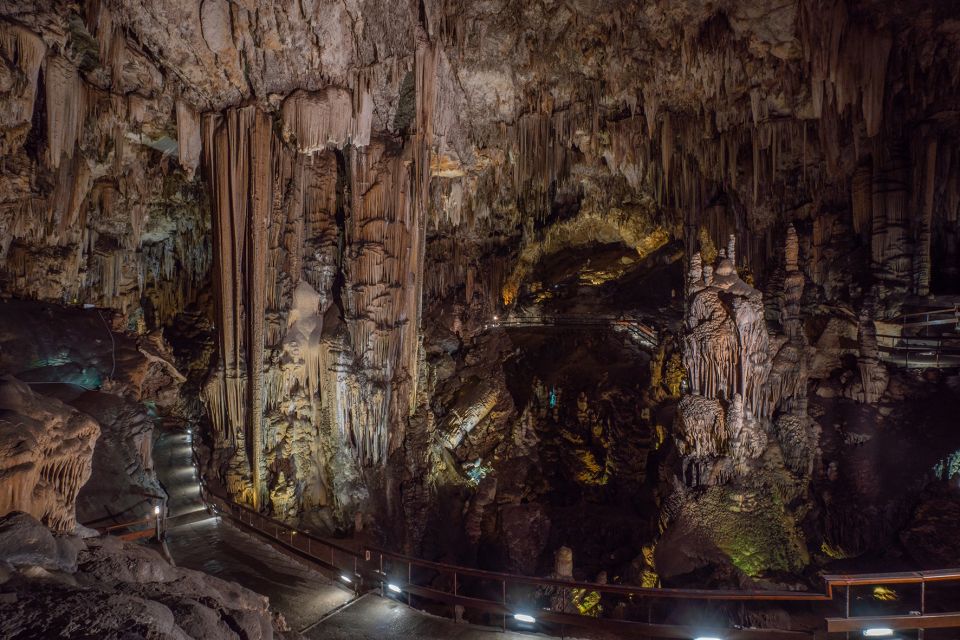
- Cataclysm room is the headline stop, with the world’s largest column in the highest public chamber.
- Mobile audio guide lets you move at your pace, using numbered points along the route.
- Museum of Nerja + cave context helps explain what you’re seeing underground.
- 360º VR experience gives a first-person feel for life 35,000 years ago.
- Bring comfortable shoes and a light jacket—the caves are warm and the walk involves stairs and steps.
- Start early if you want quieter halls and an easier audio rhythm.
Nerja Caves feel bigger than the photos
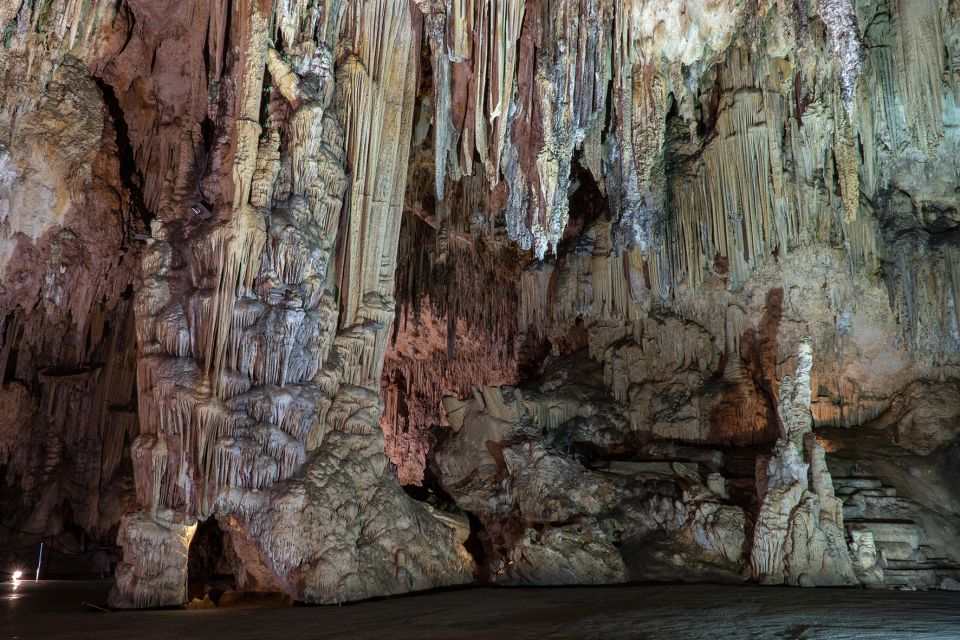
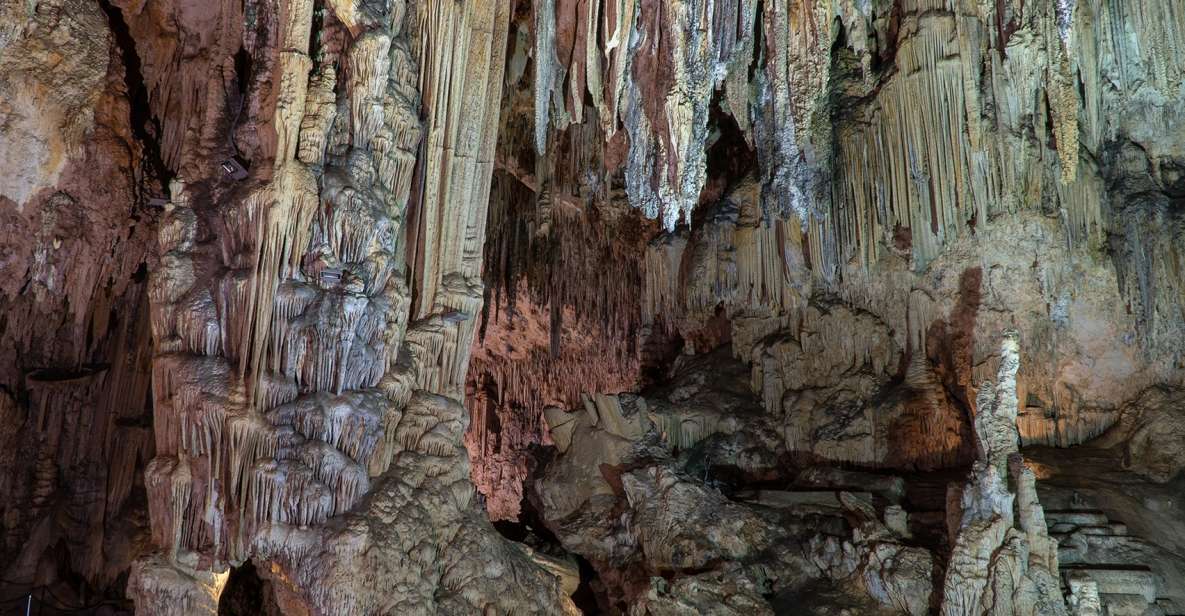
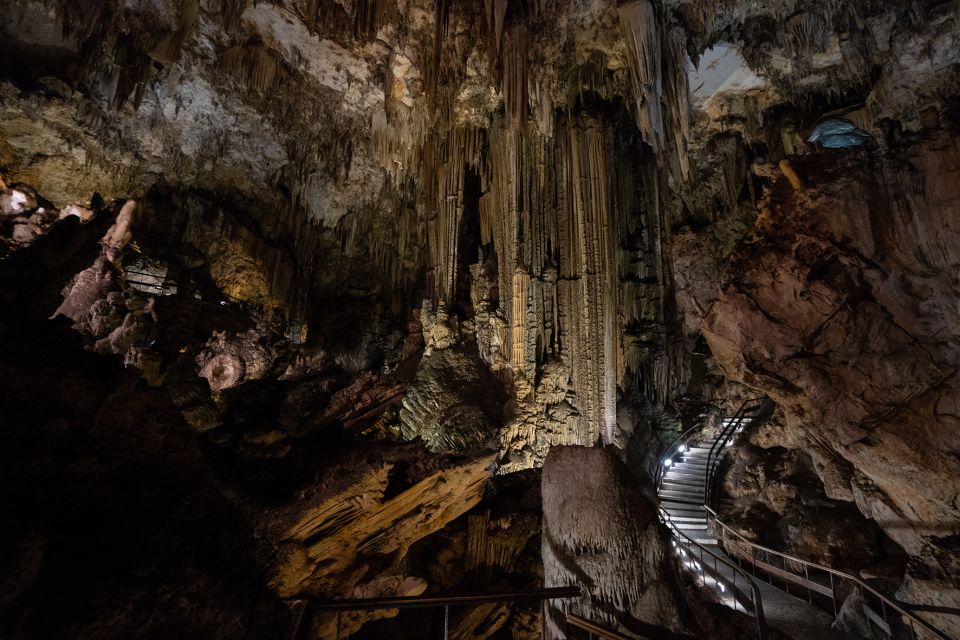
Nerja Caves are famous for a reason, and it’s not just because they’re scenic. What surprises you is the ceiling height and the way formations seem to keep going—stalactites hang overhead like slow-motion weather, while stalagmites rise from the floor in steady columns. The walk is well marked, with handrails and lighting in places, but you still get that sense of being inside a real natural system, not a theme-park set.
The vibe is also a gift. With the audio guide in your ears (not blasted into the crowd), the whole underground circuit feels calm. You get to take in the formations long enough for them to stop being just impressive rocks and start being readable geology.
You can also read our reviews of more tours and experiences in Nerja.


Ticket value: one price for caves, museum, and VR
This is sold as a single 1-day visit, and for $18 per person, it’s not only about walking the cave route. Your ticket includes entrance to the Nerja Cave, a mobile audio guide, the Museum of Nerja, and the virtual reality room. That matters because the cave itself can be surprisingly quick if you’re just moving—adding the museum and VR stretches it into a fuller storyline.
Think of it like this: the cave shows you the formations and the underground “workings.” The museum helps you place those findings in archaeological, geological, and biological context. Then the VR room gives you the human side—how people might have lived 35,000 years ago—so the whole day feels connected instead of like two unrelated stops.
From parking and reception to the audio start
There’s a lot to like about how the site runs, but you do need to pay attention when you arrive. Some visitors found the parking/entry area confusing—there weren’t always obvious signs pointing you to reception—so plan to ask at the first information point you see if anything looks unclear.
Also, don’t leave your phone setup to the last second. The audio is a mobile guide, and multiple experiences shared that the app and instructions work best when you get the setup right before you begin. If you arrive and only then realize your phone isn’t ready, you’ll feel rushed trying to fix it while you’re standing in line.
Practical tip: build in a few extra minutes for calm setup, especially if you’re going early to beat crowds.
Self-guided audio tour: numbered stops and real quiet
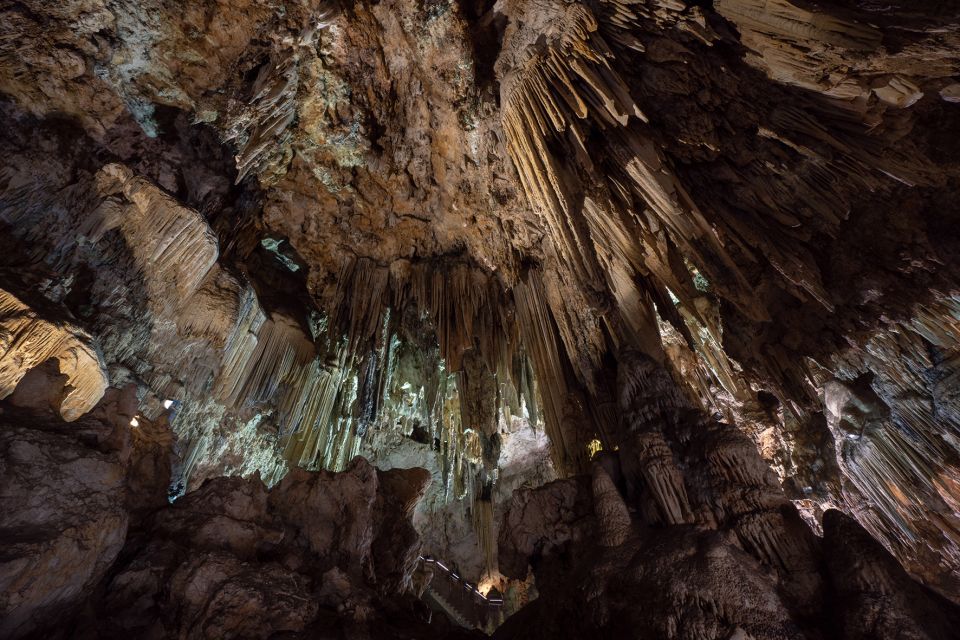
The tour is built around an audio-guided route through different areas of the Nerja Caves. You’ll walk through chambers where stalagmites and stalactites become the main characters, then move toward the Cataclysm room. What makes it work is that it’s structured—there are numbered points/stations that match what the audio is telling you, so you can follow along instead of guessing.
I like this format because it’s forgiving. If you want to spend longer staring at one section, you can. If you’d rather keep the pace, you can do that too. Several visitors also liked the fact that audio lets you enjoy the caves in silence rather than hearing other people’s speakers at full volume.
One caution from real-world use: the app experience can be fiddly. If you don’t get everything downloaded or accessible before you start, you may hit issues like weak signal or trouble getting the audio to play. If you want this to go smoothly, download and test whatever the guide requires before you’re inside.
Cataclysm room: where the scale turns into a wow moment
The Cataclysm room is the part you’ll remember days later. It’s described as the largest and highest room accessible to the public, and it’s where you’ll see the largest column in the world—the result of a stalactite and stalagmite meeting. Standing anywhere near that space, the geology stops being abstract. You can’t help but look up and measure scale with your body.
The route here also signals that you’re nearing the tour’s peak. The audio and the walking rhythm guide you through the cave’s story as you progress, so this doesn’t feel random. It feels like the cave is building to a single, clear point.
Lighting is another factor to think about. The cave is dark by design to protect fragile features. That’s why the cave drawings can be hard to spot during the cave walk—more than one person found them difficult or not visible in the cave itself. The good news is that the museum is the place where those details become easier to see and understand.
You can also read our reviews of more guided tours in Nerja


Museum of Nerja: the cave story makes more sense upstairs
The Museum of Nerja is included, and it’s the smart follow-up to the underground walk. Even if you love the cave route on its own, the museum helps connect archaeology, geology, and biology into one bigger picture. You’ll also get a chance to see cave findings in clearer conditions than inside the darker chambers.
This matters most if you care about the cave drawings. Several people mentioned that they either struggled to see the drawings underground or didn’t see them at all. That’s not a reason to skip the cave—it just means the cave environment doesn’t always make every feature easy to view. The museum becomes the better spot to focus on the art and the meaning behind it.
Give yourself time here. If you’re the type who likes reading captions and piecing together the timeline, the museum is where you’ll feel your day click into place.
360º VR room: a first-person jump to 35,000 years ago
After the cave and museum, the included 360º virtual reality room adds a human layer to everything you’ve been looking at. The premise is simple and specific: life on Earth 35,000 years ago, presented as a 360º experience. This is one of those add-ons that doesn’t feel like filler because it ties directly into why the caves matter—people, not just rocks.
The VR also changes your pace in a good way. You go from walking stairs to sitting for a structured experience. That break is especially helpful if you’re coming in with kids or if you want something less physical after the cave circuit.
One practical note: the VR and any end-of-visit shows can vary in timing depending on the flow of your slot. So don’t treat it as an automatic add-on you can rush. If it looks ready when you arrive, take it then rather than trying to squeeze every last minute outside.
Timing and crowds: go early for a calmer cave
If you can go early, do it. Multiple experiences praised morning timing for fewer crowds, which makes a big difference in an underground walk. Even when the site manages visitor flow well, smaller crowds make it easier to hear your audio at the right volume and to pause without feeling in someone else’s lane.
Your cave time can also vary. Some people moved through in under 30 minutes, while others spent around an hour inside. If you want both photos and careful looking, plan closer to an hour or more underground.
And yes, plan for stairs. This is not an effortless flat walk. There are lots of steps up and down for the entrance and exit, and at least one person mentioned about 100 steps straight up to get out. You don’t need to be an athlete, but it helps to go in with realistic expectations and solid footwear.
What to bring, where to rest, and who should skip it
Bring comfortable shoes above all. The caves involve stair sections and walkways that can feel warm and humid. Water helps, and a light jacket can be a comfort even if some people felt the cave didn’t require it—better safe than cold when you’re heading back outside.
Also, save yourself stress with your phone. The audio guide is on mobile, and people reported that headphones or ear-buds make the experience far easier and more comfortable. Try to download the audio guide app content before you start, because signal and playback can be hit-or-miss once you’re underground.
If you want a bit of a treat afterward, there’s an on-site café/restaurant feel described by visitors as offering views over Nerja and even places to grab a beer after. There are also gardens and a play structure for kids.
Who should skip it? The ticket is not suitable for people with mobility impairments or wheelchair users, largely because of stairs.
Should you book the Nerja Caves audio ticket?
Book it if you want a value-packed, self-paced way to see one of Spain’s standout cave systems, with the bonus of the Museum of Nerja and the 360º VR room included. It’s especially worth it if you like stories you can control—hearing the cave in your own timing rather than in a rushed group.
Skip it if stairs are a problem for you. And if you’re prone to phone tech issues, plan to handle the audio setup before you enter, not while you’re standing in the cave line.
If you get your basics right—download the audio guide, wear good shoes, and give yourself time—you’ll walk out with that rare feeling that rocks can feel like a living timeline.
FAQ
What is included with the Nerja Caves entry ticket?
Your ticket includes entrance to the Nerja Cave, a mobile audio guide for the cave, entry to the Museum of Nerja, and access to the virtual reality room.
How long is the visit and is it for one day?
It’s listed as valid for 1 day. You’ll also choose from available starting times depending on the slot schedule.
What languages is the audio guide available in?
The audio guide is available in English, Spanish, German, Arabic, Chinese, French, Dutch, Italian, Japanese, Korean, Norwegian, Polish, Portuguese, Russian, and Swedish. There is also a children’s audioguide in Spanish and English.
Do I need to use the audio guide on my phone?
The guide is a mobile audio guide, so you’ll be using your phone to access it. Bring headphones/ear-buds for comfort.
Is it suitable for wheelchair users or limited mobility?
No. It is not suitable for people with mobility impairments or wheelchair users.
What should I bring for the cave?
Wear comfortable shoes and comfortable clothes. Bring water and a jacket.