REVIEW · MALAGA
Paella and Sangria Workshop in Malaga
Book on Viator →Operated by Lebasi Taller de Cocina · Bookable on Viator
That cold almond soup kicks things off. This 3-hour class in Málaga mixes hands-on cooking with real Spanish flavors you can actually repeat at home.
I love how structured it is: you cook three dishes, then you sit down and eat everything you made. I also like the small-group vibe (max 14) and the way instructors like Diego and Laura explain technique, not just recipes.
One thing to consider: you won’t control the menu or flavor profile. If you’re picky about paella style (one person noted a chicken version instead of seafood) or sangria sweetness, there’s a chance you may like some parts more than others.
In This Review
- Key highlights to look for
- A 3-hour Málaga cooking lesson with three signature dishes
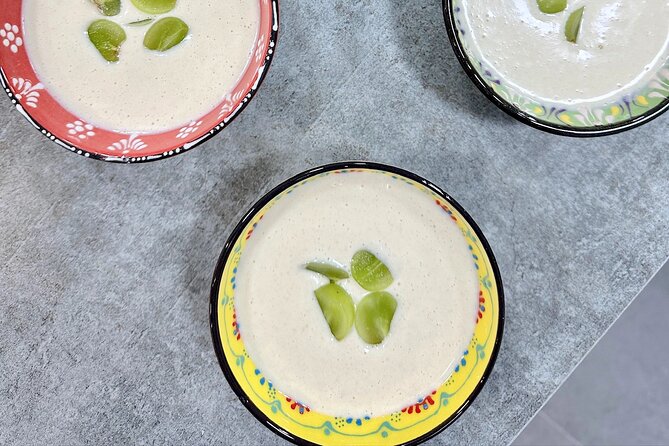
- Ajoblanco first: the cold-almond soup that sets expectations
- Malagueño soak: Costa del Sol flavor in a hands-on format
- Valencian paella: learning the rice secret, not just the ingredients
- Sangria during cooking, then Andalusian dessert after the feast
- Your small-group setup at Lebasi Taller de Cocina (max 14)
- Price and value: what $84.66 gets you in Málaga
- Who this paella and sangria workshop suits best
- Should you book the Paella and Sangria Workshop in Málaga?
- FAQ
- Where is the meeting point for the workshop?
- How long is the Paella and Sangria Workshop in Málaga?
- Is the workshop offered in English?
- What dishes will we cook?
- Is the group small?
- Are dietary options available?
- What is the cancellation policy?
Key highlights to look for
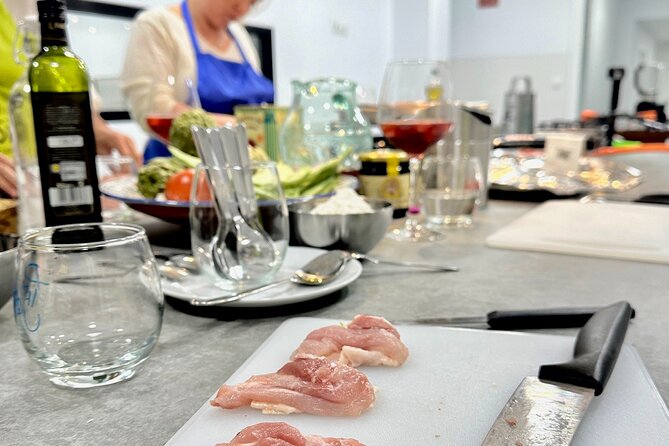
- Three dishes in one session: ajoblanco, a Málaga Costa del Sol dish, and Valencian paella
- Sangria made during cooking: fresh, not bottled
- Small group size: up to 14 people, so you get attention while you cook
- Technique focus: instructors share tips for rice and overall flavor
- Family-friendly and interactive: you’ll do the work, not just watch
- Dietary options with notice: vegan, vegetarian, and gluten-free accommodations
A 3-hour Málaga cooking lesson with three signature dishes
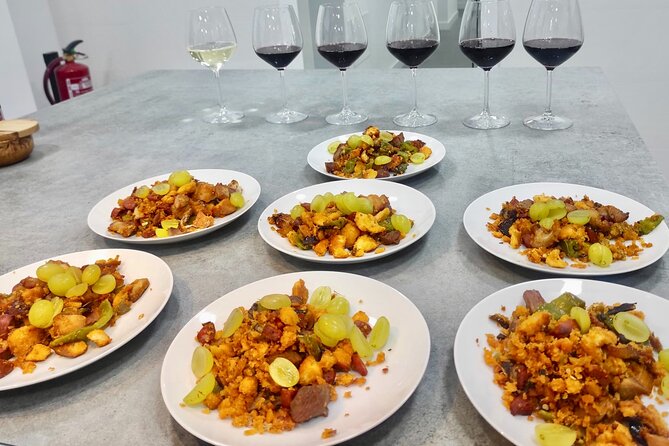
This class is built like a good night out, just with an apron. In about 3 hours, you’ll move through three typical dishes from Málaga and Spain. You start with ajoblanco, a chilled almond soup. Then you’ll tackle a very local Costa del Sol plate (listed as Malagueño soak / Malagueño Soak). And you finish with Valencian paella, the “original” style.
Why this matters: it’s not just paella as a single event. It’s a quick tour of how Andalusian and Spanish flavors work—cold, savory, then rice-and-spice heat—so you don’t leave with one trick. You leave with a way of thinking about ingredients and timing.
And yes, you’ll taste what you make. The payoff isn’t a demo you watch. It’s the meal you helped produce, finished with a typical Andalusian dessert.
You can also read our reviews of more tours and experiences in Malaga


Ajoblanco first: the cold-almond soup that sets expectations
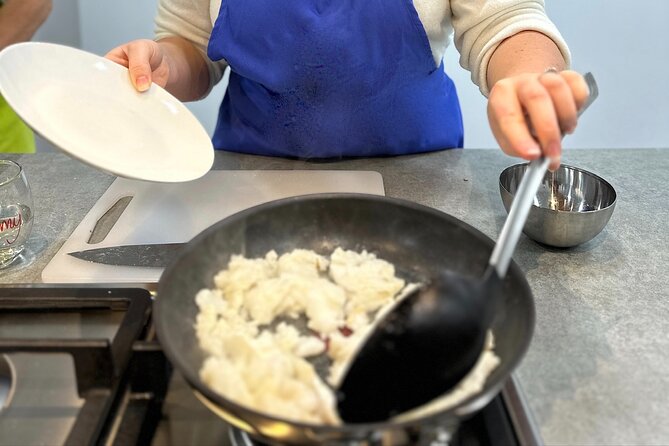
Ajoblanco is a smart first step because it wakes up your senses. You’re working with something cool and creamy, not hot and heavy. It also forces the class to slow down and teach basics: balance, texture, and how flavors come together even when you’re not cooking over fire.
In practical terms, it helps you settle into the kitchen routine. Cold soups don’t demand constant stirring or panic over heat. That means you can actually learn the rhythm of the workshop. You’ll get the feel for how the instructors explain steps and how you should taste and adjust as you go.
If you’re used to thinking of Spanish food as only warm and savory, this is a nice reality check. Ajoblanco shows up in Málaga and Southern Spain for a reason: it’s refreshing and it’s flavorful without needing drama.
Malagueño soak: Costa del Sol flavor in a hands-on format
Next comes the Malagueño soak, a dish that locals treat as familiar. The workshop frames it as a typical Costa del Sol option, and you’ll cook it as part of the same active flow as the other dishes.
This part of the class is valuable because it balances the session. Paella can dominate the story, but a second savory dish teaches you more than one technique. You get a broader sense of how Málaga builds meals—how the flavors complement each other, and how you move from one texture to another without the class feeling scattered.
One other plus: when you make two separate dishes before paella, the paella lesson feels less like a random finale. It feels like the last step in a sequence. That’s exactly what you want if you’re hoping to recreate it later.
Valencian paella: learning the rice secret, not just the ingredients
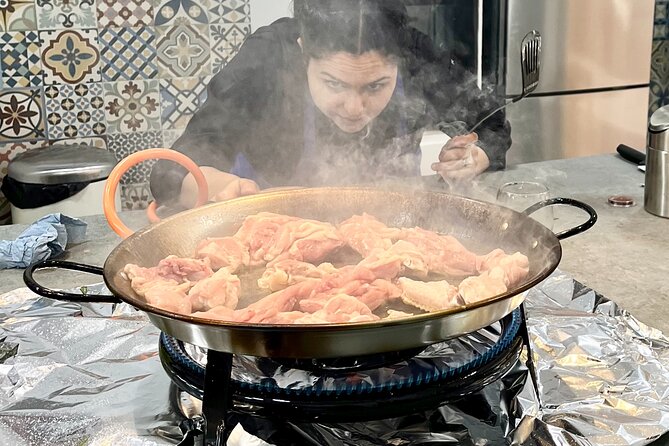
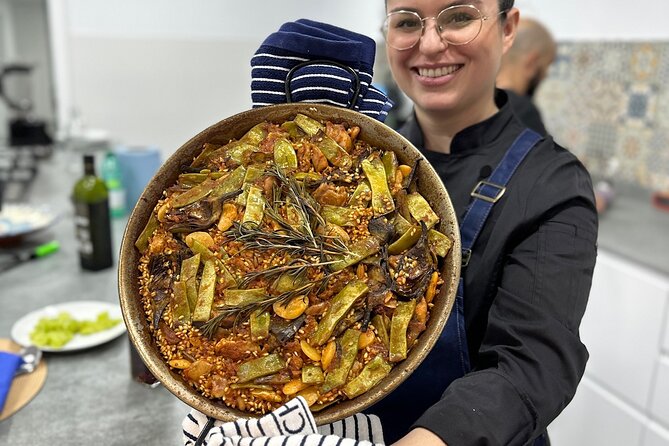
The paella portion is the star, and the instruction quality is where this workshop earns its high rating. People talk about learning the secret to rice—especially getting the rice and liquid ratio right. That’s the difference between paella that tastes good and paella that tastes right.
Expect step-by-step guidance and technique talk while you cook. Instructors like Diego and Laura are repeatedly praised for being clear, personable, and direct with tips. You’re not just handed a list of ingredients and told to follow it. You learn why things matter, like timing and proportions, so you can understand what you’re doing when you’re back in your own kitchen.
A practical note: paella doesn’t always mean seafood. One participant described a chicken-based paella surprise. That doesn’t make it wrong. It just means your paella style may differ from what you picture. If you only want seafood paella, ask the operator ahead of time what version you’ll make.
Even with that small uncertainty, the teaching approach is consistent: you’ll come away with confidence. That’s the real value here.
Sangria during cooking, then Andalusian dessert after the feast
Sangria is built into the session, not treated as an afterthought. You’ll make sangria during cooking, and the group ends with tasting and dining. The sangria is repeatedly described as fresh, and you’ll usually get more than one beverage option at the eating moment.
The best part is that it matches the mood of the class. You cook first, then you slow down and eat. The drinks fit the transition, and they don’t feel like a gimmick.
Dessert is an Andalusian sorbet (listed as Andalusian Sorbet). It’s a clean finish after paella and soup—sweet, light, and not heavy in the way some desserts can be. It also reinforces that this isn’t a stuffy cooking class. It’s more like Spanish food, paced like Spanish life.
One consideration from the feedback: if you’re very picky about sangria style or flavor choices, there’s a chance you may not love every element. One person specifically pointed to the sangria and paella not matching their taste preferences. That’s not a reason to skip, but it’s worth keeping in mind.



Your small-group setup at Lebasi Taller de Cocina (max 14)
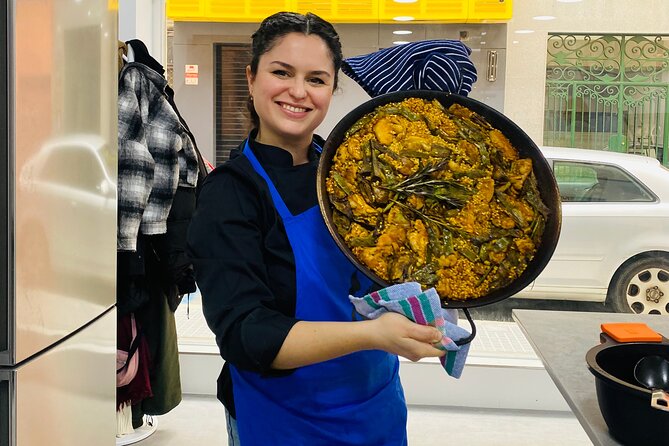
This workshop caps at 14 travelers, and it shows. With a small group, the instructor can actually watch what you’re doing and correct issues early. That matters most during paella, where one small mismatch in rice/liquid can throw off the final result.
It’s also offered in English, which is a big deal if you’re traveling with limited Spanish. You’ll still get cultural and food context while you cook, and several people mention history and stories tied to the dishes.
You may meet different instructors depending on the day. Names that came up include Diego, Laura (more than one Laura is mentioned), Nahuel, and Nicolas. Across the board, people describe the teachers as friendly, interactive, and willing to answer questions while you’re cooking.
Logistics-wise, it runs near public transportation, and it uses a mobile ticket. The class starts at C. Martínez Campos, 15, Distrito Centro, 29001 Málaga and ends back at the meeting point, so you don’t need to plan a tricky second leg.
Price and value: what $84.66 gets you in Málaga
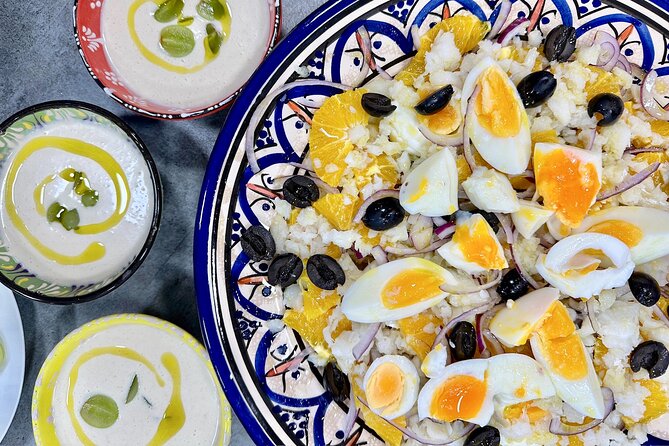
At $84.66 per person for about 3 hours, you’re paying for more than a meal. You’re paying for instruction, a complete multi-dish menu, and the drinks/dessert rhythm that makes it feel like a real experience.
Here’s what you get inside that price:
- three dishes cooked and then eaten (including paella)
- sangria preparation during the class
- a typical Andalusian dessert (sorbet)
- English instruction in a small group (max 14)
Is it cheap? Not exactly. But it’s strong value if you want technique you can use, plus a full sitting meal. If you just want food, you could eat cheaper in Málaga. If you want to learn how to make paella with better rice control and better overall flavor, this is the kind of class where the cost starts to make sense.
Also, if you’re visiting in a group or with family, the interaction level is a big part of what you’re buying. One review highlighted how a child was included in the cooking process and had a great time, which suggests the class isn’t only for adults who already know their way around a stove.
Who this paella and sangria workshop suits best
This is ideal if you want something more interesting than another tapas hop. You’ll get a structured food experience in just a few hours, with plenty of chances to ask questions and taste as you go.
It’s also a great fit if:
- you’ve tried paella at home and it never comes out right (the rice lesson is built for that)
- you want a fun social activity in Málaga that still teaches real skills
- you’re traveling with mixed ages and skill levels (people mentioned it working from kids to older adults)
If you’re the type who hates cooking classes because you just want to watch, you may prefer a different format. This one is hands-on, and the fun comes from being active.
If you have dietary needs, you’re in luck: vegan, vegetarian, and gluten-free options are available with prior notice. If dietary requirements are important for you, communicate them early so the kitchen can plan.
Should you book the Paella and Sangria Workshop in Málaga?
I’d book it if your goal is to leave with a repeatable paella method, not just a souvenir plate. The session’s structure—ajoblanco, Málaga’s Costa del Sol dish, and then Valencian paella—keeps it varied and practical. And the repeated praise for instructors like Diego and Laura points to a class that actually teaches, with step-by-step guidance and helpful tips.
I would hesitate only if you’re extremely specific about paella style (seafood-only expectations) or you know you don’t like certain flavor profiles. Also, if you’re hoping for a totally silent, no-interaction experience, this isn’t that kind of tour. You’ll be cooking and talking.
If you want a memorable Málaga afternoon that feels local, tastes real, and gives you technique you can use next weekend, this one is a strong choice.
FAQ
Where is the meeting point for the workshop?
The class meets at C. Martínez Campos, 15, Distrito Centro, 29001 Málaga, Spain, and it ends back at the same meeting point.
How long is the Paella and Sangria Workshop in Málaga?
It runs for about 3 hours.
Is the workshop offered in English?
Yes, the experience is offered in English.
What dishes will we cook?
You’ll cook three dishes: ajoblanco (cold almond soup), Malagueño soak (a typical Costa del Sol dish), and Valencian paella. You’ll also make sangria during the class and enjoy an Andalusian sorbet for dessert.
Is the group small?
Yes. The workshop has a maximum of 14 travelers.
Are dietary options available?
Yes. Vegan, vegetarian, and gluten-free options are available if you notify the customer in advance.
What is the cancellation policy?
You can cancel for a full refund up to 24 hours before the start time. If you cancel less than 24 hours before, the amount you paid is not refunded. If the minimum number of travelers isn’t met, you’ll be offered a different date/experience or a full refund.