REVIEW · MALAGA
Private Walking Tour in Málaga
Book on Viator →Operated by Córdoba a Pie | Visitas Guiadas y Free Tours · Bookable on Viator
Walls and waves in one tight walk. This private walking tour in Málaga strings together coastal views, old-town streets, and fortress-and-cathedral landmarks in about three hours, with a professional art historian guide. I like that you can steer the pace toward what you care about most, and I also like how the guide connects art, power, and Málaga’s maritime setting so it clicks fast. The one drawback to plan for: monument tickets aren’t included, so you’ll want to budget extra entry fees.
Because it’s private, it doesn’t feel like a cattle-car history lesson. You’re with your group only (up to 15), in English, and you start and end at Plaza de la Marina, so there’s less hassle and fewer transfers. One more thing to know up front: you’ll do real walking, so wear comfortable shoes and don’t treat this like a sit-and-sip tour.
In This Review
- Key Highlights You’ll Actually Feel
- Private 3-Hour Walking Plan in Coastal Málaga
- Getting Oriented at Plaza de la Marina and the Port-Edge Promenade
- Down Larios Street: People-Watching and the Main Shopping Spine
- Teatro Romano de Málaga: A Quick Roman Chapter You Can Picture
- Alcazaba Fortress Walk: Arms Courtyard and Cuartos de Granada Views
- Lifting the Story Toward Power: Málaga Cathedral as the Final Big Landmark
- Price and Tickets: Is This Good Value for You?
- Who This Tour Fits Best (and Who Might Skip It)
- Should You Book This Málaga Walking Tour?
- FAQ
- How long is the private walking tour?
- What’s the price?
- Is the tour private?
- What language is the tour offered in?
- Are monument tickets included?
- Where does the tour start?
- What’s included in the price?
- Can I cancel for a refund?
Key Highlights You’ll Actually Feel
- Private, customizable 3-hour route with just your group and an English-speaking art historian
- Plaza de la Marina start right by the port entrance and Palmeral de las Sorpresas
- Roman Theatre opener that gives you a quick sense of Málaga’s imperial era
- Alcazaba viewpoints plus the Arms Courtyard tied to the Catholic Monarchs era
- City-center street time along Larios Street for people-watching and a feel for everyday Málaga
- Monument admissions not included, so check ticket costs for each stop before you go
Private 3-Hour Walking Plan in Coastal Málaga
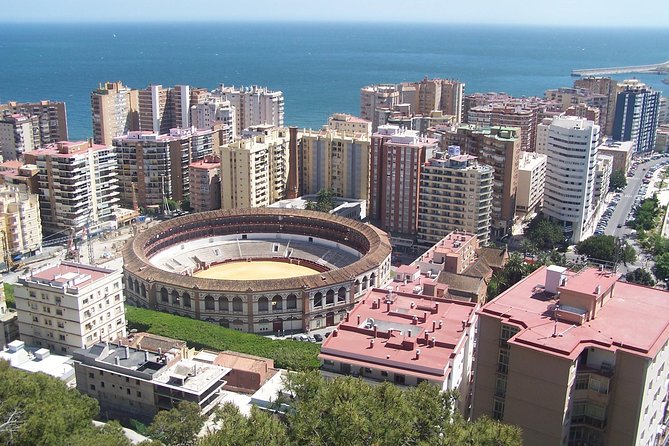
This tour is built for getting your bearings without over-planning. You’re walking through a good slice of Málaga’s most important layers—seafront to historic core—while your guide keeps the story grounded in what you’re seeing right now. That matters, because Málaga can feel like multiple cities stitched together: coastal promenade mood, Moorish-era fort walls, and then the later power centers in the heart of town.
The best part is the flexibility. Since it’s private, you’re not stuck racing through every stop at someone else’s pace. If you’re more into defensive architecture and panoramas, you’ll likely spend more time where you want it. If the cathedral area feels more interesting to you, you can usually adjust the balance.
What makes it especially appealing is the guide profile. You’re not just getting a local storyteller; you’re getting a professional art historian guide, which changes the vibe. You’ll notice small details more—how spaces were used, what changed after conquests, and why certain spots mattered. Guides like Maria and Dani are praised for staying clear and responsive, including practical help and solid restaurant ideas for after the tour. Keko gets highlighted for explaining the Alcazaba defenses with energy, which is exactly what you want when you’re standing in front of those walls.
The only real tradeoff is time. Three hours is a great overview, but it’s not a full museum marathon. If you want to go deep into one monument’s interiors, you may still need to add a follow-up stop later.
You can also read our reviews of more walking tours in Malaga

Getting Oriented at Plaza de la Marina and the Port-Edge Promenade
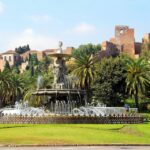
You start at Plaza de la Marina, a smart choice because you’re immediately near the seafront logic of the city. The route begins in front of the main entrance of the Port and the Palmeral de las Sorpresas, with the Alameda Principal on one side and Parque de Málaga on the other. This is the kind of location where the city’s “coastal Málaga” identity isn’t abstract—it’s in your senses: the movement of the waterfront, the open sightlines, and the way streets angle back toward the old center.
This first stretch is more than a warm-up. Your guide frames Málaga as a place shaped by maritime life and the kind of history that travels along trade routes. You’ll also pass through the “in-between” zones that travelers often skip—areas that show how people actually move through the city day to day.
And it’s practical. Starting near transit and a central plaza helps you arrive with less stress. Plus, because the tour ends back at the meeting point, you can plan dinner nearby or keep exploring without needing to figure out your next move.
If you’re trying to decide when to do this tour, do it early in your trip. You’ll come back later with better questions and a clearer sense of where things are. If you do it late, it still helps—but you might feel like you should have taken notes earlier.
Down Larios Street: People-Watching and the Main Shopping Spine
From the port area, the walk shifts toward the old-town heart, and you get a taste of everyday Málaga. One key segment is the pedestrianized main shopping street that leads from Avenida Principal into the old town. It’s a classic “sit, watch, and get your bearings” corridor.
Then you hit Calle Larios, Málaga’s most important avenue. It’s where you see the city’s more exclusive retail side, and it’s a useful contrast to the older fortress-and-heritage stops. This isn’t about shopping for the sake of shopping. It’s about rhythm—how the city breathes between big landmarks, how the streets guide you without you even noticing.
Your guide can make this segment more than just a stroll. Since the emphasis is art and maritime history, you’ll likely get connections between what you see in the built environment and the bigger story of the city’s changing power. Even if you’re not hunting for stores, this stretch helps you understand how the modern city overlays the older one.
Practical tip: this is a great moment to slow down and ask questions. If you’re the kind of person who likes context before you enter a monument, this is the time. The tour is designed so you’re not just moving from place to place—you’re learning while you move.
Teatro Romano de Málaga: A Quick Roman Chapter You Can Picture
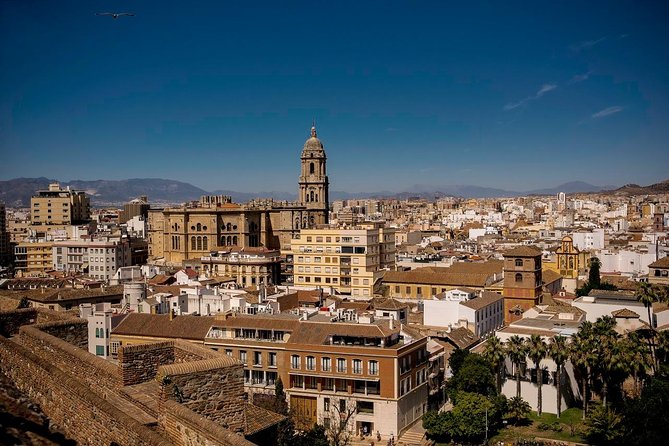
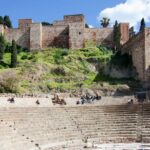
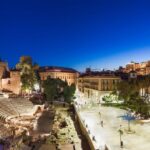
Next comes Teatro Romano de Málaga, with the Roman Theatre and its Visitors Center as your focus for about 30 minutes. Admission isn’t included, so you’ll either pay on-site or plan to purchase separately, depending on what’s easiest when you arrive.
Why this stop works so well early in the tour: it gives you a baseline. Your guide can connect what you’re about to see later—al-Andalus-era architecture and the fortress logic—to a deeper time line where Málaga mattered to the Roman world too. The Roman Theatre is one of those places where, even if you’re not a Roman-history expert, you can still sense the scale and intention. It’s not just ruins; it’s the idea of public life carved into stone.
Drawback to consider: because your time here is shorter, don’t expect a full theater-focused tour. You’re getting orientation and story context. If you want to linger for photos or read everything in the Visitors Center, you may need to stretch that out on your own later.
Still, as an opening “anchor,” it’s a smart move. By the time you reach the Alcazaba, you’ll have a better sense of how Málaga’s “big eras” stack up.
Alcazaba Fortress Walk: Arms Courtyard and Cuartos de Granada Views

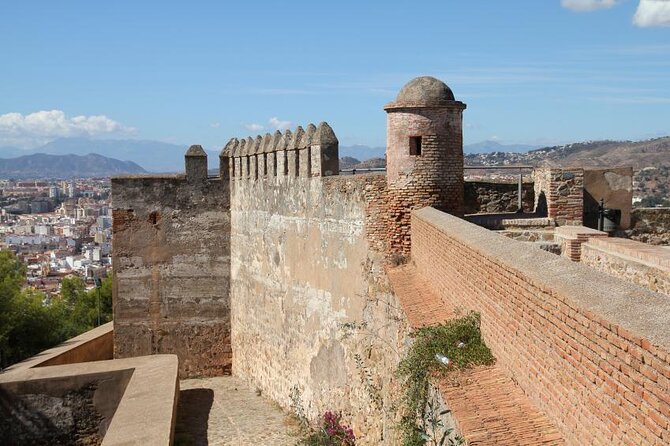
The Alcazaba is the heart of this tour for many people, and it earns that spot. This is a 1-hour stop focused on a Muslim Spain (al-Andalus) fortress, built with a defensive mindset that still shows in the layout. Your guide will likely point out why it can feel reminiscent of the Alhambra in Granada—same general idea of fortress-as-visual-world, even if the details are different.
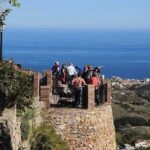
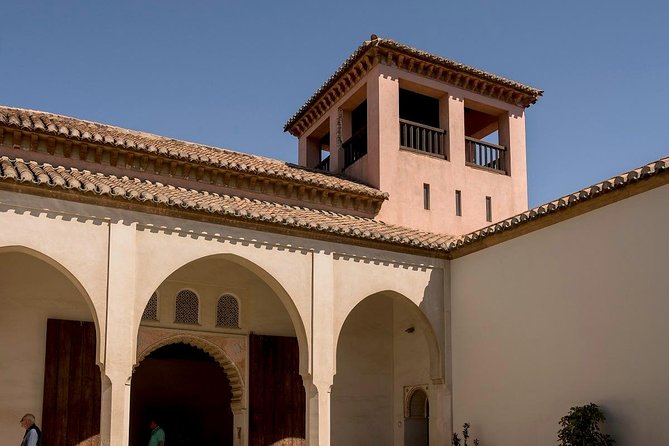
What I love here is how the story is layered. You’re not only looking at walls. You’re walking through changes in power and use over time. One standout part is the Arms Courtyard, used by the Catholic Monarchs after the conquest of the city. Another is the Cuartos de Granada, where you get spectacular panoramic views over the harbor and the center.
Those views aren’t just photo opportunities. They explain strategy. High ground tells you why certain lines were chosen, how defenders could see and control movement, and how the geography supported the fortress role. This is where guides like Keko are praised for their explanations of how the Muslims defended the fortress—because if you get the logic, the site stops being a pile of stone and becomes a working machine from another era.
Possible drawback: the Alcazaba involves walking on uneven ground and can be exposed. If the weather is hot, you’ll feel it. Plan accordingly and bring water if you can (food and drinks aren’t included on the tour).
If you want the best experience, keep your eyes up as much as your eyes forward. The tour’s value is in letting your guide point out what your brain would otherwise miss: the relationship between walls, courtyards, and the harbor below.
You can also read our reviews of more private tours in Malaga






Lifting the Story Toward Power: Málaga Cathedral as the Final Big Landmark
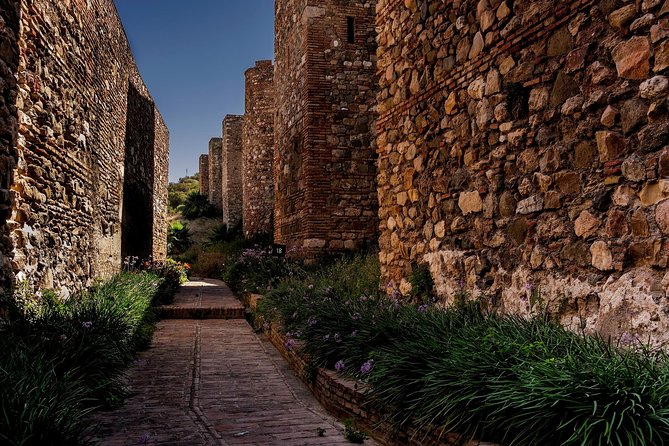
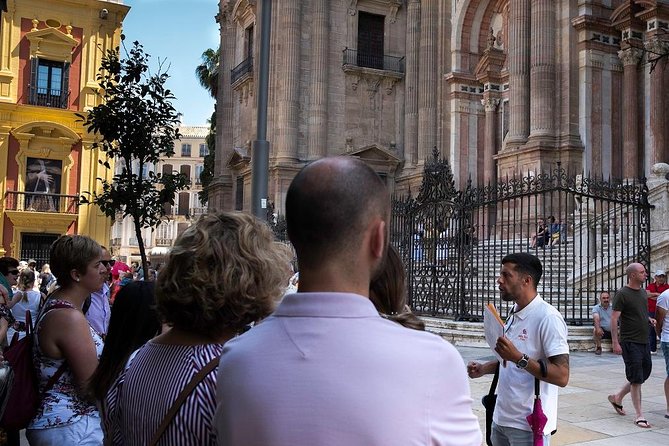
After fortress views, the route continues to Málaga Cathedral, another 1-hour stop where you’ll see the city’s later religious and civic identity. Admission isn’t included here either, so keep an extra line in your budget for entry.
Even without turning this into a deep architectural textbook, the art historian angle helps. The cathedral stop works as a “connect-the-eras” moment. You’ve just been in an al-Andalus fortress built for defense and control, and now you’re in a landmark tied to later Catholic Málaga. A good guide will help you understand the shift in worldview—how cities rewrite their most visible statement buildings over centuries.
For me, this stop adds balance. If your brain is only holding onto the dramatic Alcazaba panoramas, the cathedral helps re-center you in the city’s core. You get to see how different types of power live in the urban landscape: military strength above, and monumental religious architecture at the heart of town.
Here’s the consideration: if you’re expecting a quiet stroll with lots of downtime, this part can feel busy because it’s a major site in a main pedestrian area. You’ll still get guidance and time to see the key points, but you won’t have the place all to yourself.
Price and Tickets: Is This Good Value for You?
The price is $192.25 per group (up to 15) for about 3 hours. That pricing is actually quite smart if you’re traveling with a small group—families, a couple of friends, or anyone who wants a private guide without paying for a separate tour per person.
To make it real: if you fill more of the group capacity, the cost per person drops a lot. If you’re a solo traveler or just two people, it’s typically more of a splurge. But it’s the kind of splurge that can replace several separate activities: orientation, interpretive guidance, and a route that strings together major landmarks.
What you get included is meaningful:
- a private tour
- a local guide
- a professional art historian guide
So you’re paying for story and interpretation, not just “someone walking you to places.”
What’s not included is also clear: tickets of the monuments, plus food and drinks, hotel pickup, and hotel drop-off. That means you should plan to buy admission separately for the Roman Theatre, Alcazaba, and the cathedral.
My practical advice: if you’re trying to avoid time lost, check opening hours and entrance procedures before you meet. Your guide will help your visit flow, but ticket logistics are still on you.
Who This Tour Fits Best (and Who Might Skip It)
You’ll like this tour if you want:
- a private format where you can adjust what you focus on
- a guide who ties sites to art and how cities change over time
- a “get the lay of the land” walk that still includes major monuments
It’s also a good fit if you enjoy seeing connections. Roman Theatre → al-Andalus fortress → later monumental religious landmark. That sequence helps your brain build a timeline without you studying for hours.
You might choose something else if:
- you want a long, sit-down museum style experience (this is a walk)
- you don’t want to pay separate admission fees for multiple monuments
- your trip schedule can’t handle uneven terrain and some outdoor exposure at the Alcazaba
Should You Book This Málaga Walking Tour?
Yes, if you’re aiming for an efficient, high-quality orientation that still feels personal. The combination of a professional art historian guide, private group flexibility, and the route that hits big-name highlights like the Alcazaba, Teatro Romano, and Málaga Cathedral is exactly the kind of planning that pays off later in your trip.
Book it especially early, when you can use the information to guide your next day’s choices. And if you’re traveling with friends or family, it can feel like a smart value because the pricing is per group, not per head.
If you’re comfortable handling separate monument tickets and walking for a few hours, you’ll get a lot out of it fast—and you’ll leave with a Málaga that makes sense, not just a list of places.
FAQ
How long is the private walking tour?
It lasts about 3 hours.
What’s the price?
The tour costs $192.25 per group (up to 15 people).
Is the tour private?
Yes. It’s a private tour/activity, so only your group participates.
What language is the tour offered in?
The tour is offered in English.
Are monument tickets included?
No. Tickets of the monuments are not included (Teatro Romano de Málaga, Alcazaba, and Málaga Cathedral).
Where does the tour start?
The meeting point is Plaza de la Marina, and the tour ends back at the same place.
What’s included in the price?
It includes a private tour, a local guide, and a professional art historian guide.
Can I cancel for a refund?
Yes. It has free cancellation up to 24 hours before the start time for a full refund.