REVIEW · RONDA
Ronda: Guided Walking Tour with English or Spanish Guide
Book on GetYourGuide →Operated by ANDALUCIA VISIT · Bookable on GetYourGuide
Ronda is all steep streets and big views. This guided walk strings together the town’s best sights with a live storyteller, so you understand what you’re seeing as you go. I especially liked the New Bridge viewpoints and the way the tour explains Ronda’s famous Plaza de Toros beyond just snapping photos. One thing to consider: it’s a walking intro and doesn’t include entrance tickets to buildings.
If you’re choosing between languages, you can pick English or Spanish, and the guide is right there leading the pacing and commentary. I also liked the practical guidance for what to do next in town, including food and drink recommendations that make your evening easier. The only drawback I’d flag is that you’ll mostly see major sights from the outside, so if you want to go inside churches or palaces on this specific outing, you’ll need a follow-up visit.
In This Review
- Quick hits before you go
- Starting at Pl. de la Merced: a tour that gets you oriented fast
- How the route works (and why 90 minutes feels like more)
- The New Bridge: your best photo depends on where you stand
- Plaza de Toros de Ronda: more than a famous bullring
- Old Town lanes and the most famous balcony
- Palace of Mondragon: the kind of stop you’ll remember later
- Don Bosco’s House and the city’s texture beyond the big sights
- Collegiate Church of Santa María la Mayor: what you’ll notice from outside
- Tips on food and drink: the real payoff for the evening
- Price and value: is $29 worth 1.5 hours?
- English or Spanish guide: picking the right language for the stories
- Who this walking tour is best for
- Should you book this Ronda walking tour?
- FAQ
- How long is the guided walking tour in Ronda?
- Where does the tour start and where do you finish?
- What languages are available for the guide?
- Is it only for viewing, or are entrances included?
- What should I bring for the walk?
- Is the tour accessible for wheelchair users?
- What are the cancellation and payment options?
Quick hits before you go
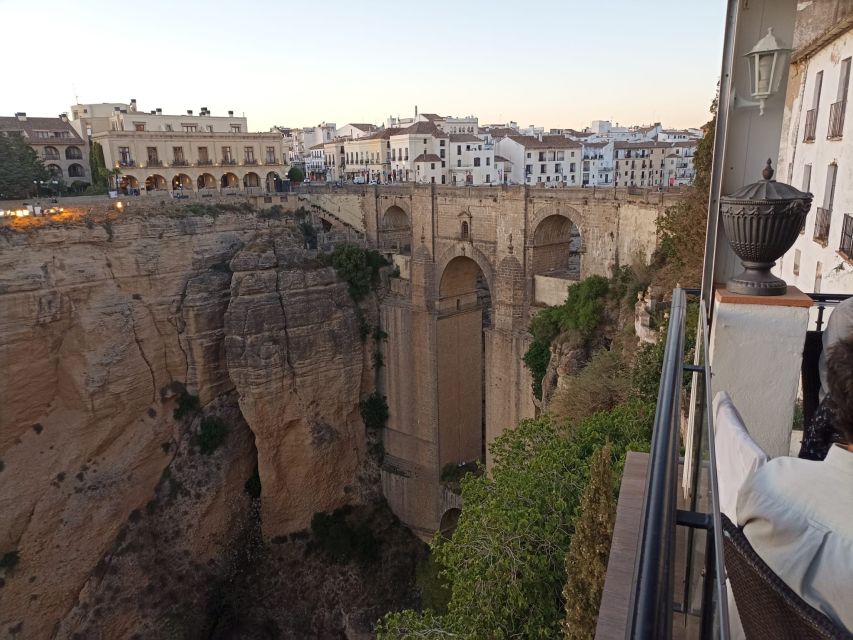
- New Bridge stops with advice on where to stand for the best angles
- Plaza de Toros de Ronda context: why this bullring matters in Spain
- Old-town lanes and key landmarks like Palace of Mondragon and Santa María la Mayor
- A guide-led history lesson that stays practical, not academic
- Food and drink pointers you can actually use right after the walk
Starting at Pl. de la Merced: a tour that gets you oriented fast
Most guided walks in Spain start nicely but leave you guessing where to go next. This one starts at Pl. de la Merced, 1, which is a good choice because it sets you up for Ronda’s main gravity: the drop-offs, the bridges, and the old-town layers. In about 90 minutes, you’ll get a clear sense of how the town is stitched together—up on one side, down on the other, and always with a view stealing your attention every few minutes.
I like that the pacing is meant for a quick orientation. Even if it’s your first time in Ronda, you’ll come away knowing what’s where and why it’s famous. Guides I’ve heard described as energetic and story-driven—people like Tanya, Gema, Susanna, and Lourdes—tend to keep the group moving while still taking time at photo-worthy moments.
You can also read our reviews of more walking tours in Ronda

How the route works (and why 90 minutes feels like more)
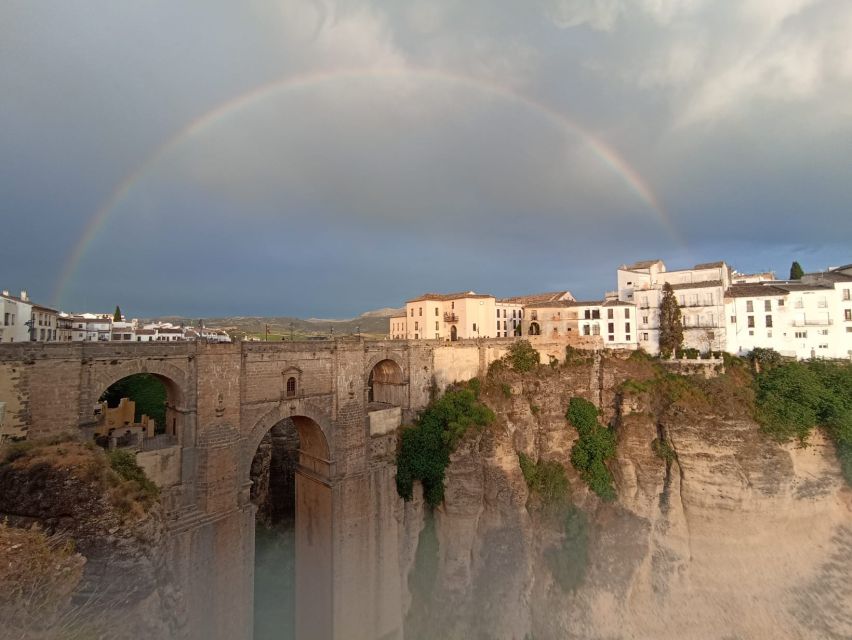
This is a walking tour built around highlights rather than a checklist of every street. You’ll move through the parts of town that give you the real Ronda feeling: steep streets, old stone, and that dramatic sense of “how did they build this here?” The total time is listed as 1.5 hours, and most of that is spent on foot seeing the key areas.
In practice, what makes it work is that the guide doesn’t just read facts. They point out what to notice—architectural cues, the town’s political and cultural shifts, and why certain places are linked to Ronda’s identity. You’ll also get little moments of “okay, now I see it” when the town opens up and the New Bridge appears in a way that’s hard to appreciate if you wander alone.
The New Bridge: your best photo depends on where you stand
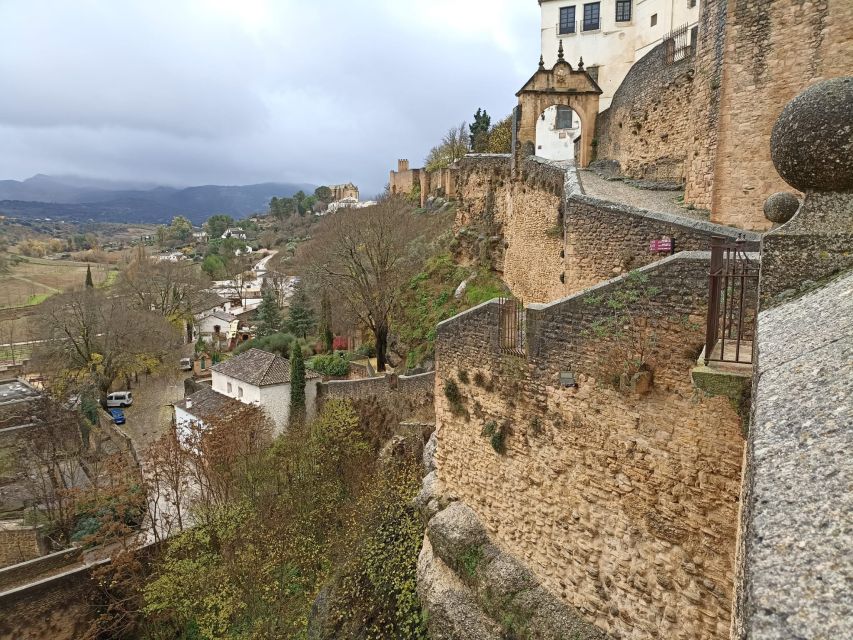
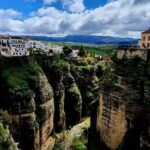
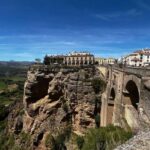
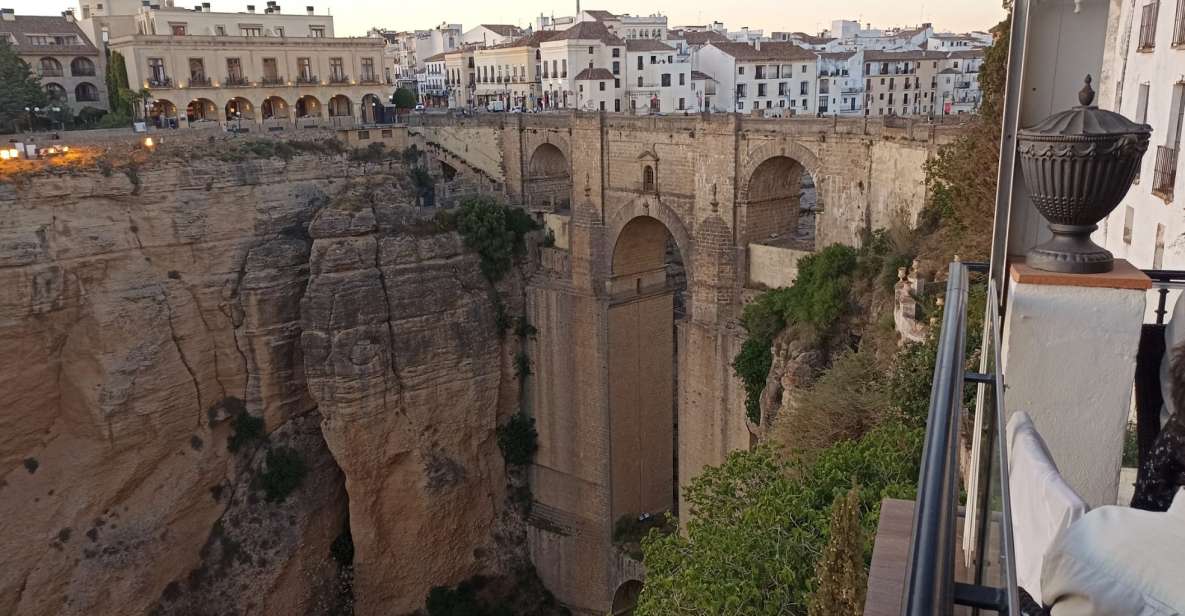
Ronda’s bridges are famous for a reason, but the real value of a guided walk is that you don’t spend half your time guessing. Your route includes the New Bridge, and you’ll be guided to views that make the bridge look as dramatic as it feels in person.
When I talk to people about Ronda, the New Bridge is usually the first thing they mention—then they struggle to explain how to photograph it without losing the sense of height. That’s where a good guide helps: you’ll get direction for where to pause and what to frame. Several guides were praised for pointing out the best viewing points for the bridge and even for nearby angles that show the bridge’s relationship to the canyon and the older parts of the city.
Practical tip: bring comfortable shoes and expect uneven stone. You’ll be stopping and starting often, and you don’t want tired feet before the bridge moment.
Plaza de Toros de Ronda: more than a famous bullring
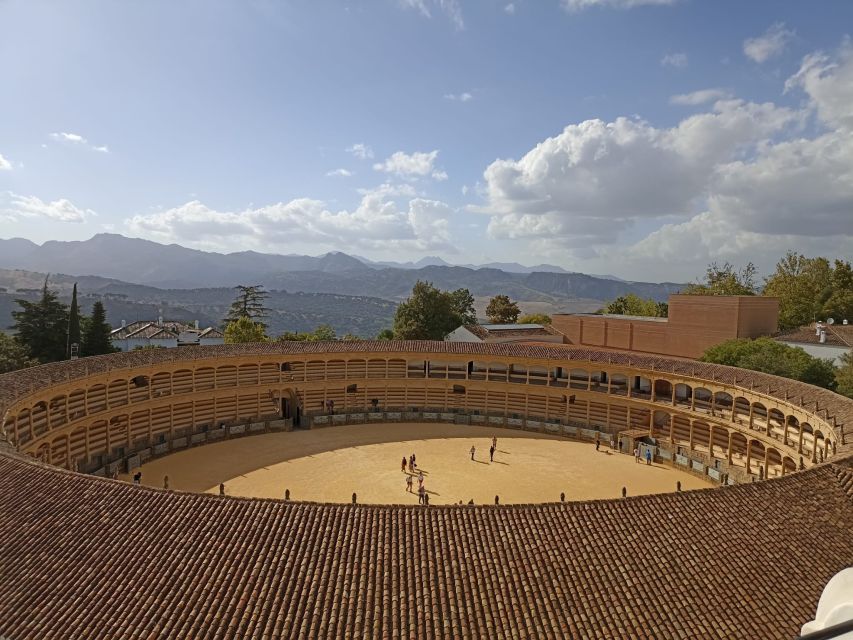
Ronda’s bullring, the Plaza de Toros de Ronda, is often treated like a photo stop. On this tour, it becomes a history lesson you can walk through. You’ll see the bullring area and the walk of the bullfighters, plus learn the story behind why Ronda’s bullring is considered historically significant in Spain.
I like this part because it explains the cultural weight of bullfighting without turning it into a lecture. The guide talks about how the bullring fits into Ronda’s identity—how it shaped the town’s image and what it represents historically. Reviews also highlight that guides shared information clearly and didn’t just gesture from a distance; they timed explanations with the exact spot you’re standing in.
If you’re sensitive to the subject matter, that’s worth noting. This tour is informational and focused on history, but it is still centered on a major bullfighting landmark.
Old Town lanes and the most famous balcony
After the big spectacle of the bridge and bullring, you’ll drift into the streets that make Ronda feel like a movie set. The route includes the commercial street and the old town, where you can see daily-life texture—shops, balconies, and that distinctive stone-and-plaster look.
One stop you’ll hear about is the most famous balcony. Even if you’ve seen Ronda photos online, seeing the balcony from the street and having a guide explain the setting helps it click. This is the sort of detail that turns a view into a memory: you understand what you’re looking at, not just that it’s scenic.
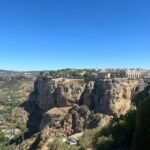
In these older lanes, you’ll also start to feel how Ronda’s geography dictates the town’s rhythm. Buildings sit at angles, streets step up and down, and every turn seems designed for a lookout.
You can also read our reviews of more guided tours in Ronda
Palace of Mondragon: the kind of stop you’ll remember later
The Palace of Mondragon shows up as a key landmark on the walk, and it’s one of those stops where the guide’s storytelling matters. From the outside, you can still sense the importance of the building. With a live explanation, you learn how it relates to Ronda’s past and why it’s still worth mentioning when people talk about the town’s elite architecture.
I like pairing a palace stop with a walk because it changes how you interpret the town. You stop thinking of Ronda as only a bridge town and start seeing it as a place with power, money, and family networks—layers that show up in the architecture and street pattern.
Don Bosco’s House and the city’s texture beyond the big sights
Not every tour includes the “in-between” landmarks, but Don Bosco’s House is part of this route, and that helps the walk feel more like a real stroll through a working town. It also gives you a break from the constant intensity of the bridge-and-bullring moments.
This is the kind of stop that’s easy to skip if you’re just following your own photo list. When a guide points out why a place matters, you start to recognize how Ronda’s story isn’t only about tourism icons. It includes people and institutions that have shaped the town in quieter ways.
Collegiate Church of Santa María la Mayor: what you’ll notice from outside
You’ll also pass by the Collegiate Church of Santa María la Mayor. You likely won’t be going inside on this walk, so the value here is what the guide helps you see from the outside: architectural cues, location choices, and how major religious buildings fit into Ronda’s long timeline.
Some folks specifically wished the tour included entering at least a couple buildings. That’s a fair consideration if you love interior details. Still, even from outside, a guide can help you connect the church to what you’ve learned elsewhere on the walk—especially the way Ronda’s history repeats in different forms across the town.
Tips on food and drink: the real payoff for the evening
A guided intro isn’t just about the sights you see. It’s also about making the next hours less stressful. Guides on this walk were repeatedly praised for recommending where to eat and drink, including tapas suggestions that don’t feel random.
Because Ronda can be lively and full of options, those recommendations matter. If you know what to order and where people go for a good view or a solid plate of food, you waste less time wandering hungry.
One practical note from how people describe the experience: a simple map or clearer written list of tapas spots could make it even easier to find later. Still, the guides’ advice was consistently described as strong, and many visitors said the suggestions led to a great follow-up plan.
Price and value: is $29 worth 1.5 hours?
At $29 per person for a 1.5-hour guided walking tour, this is priced like an “easy win” add-on rather than a full-day immersion. The value comes from two things: (1) you’re getting a guide who explains what you’re seeing, and (2) you’re covering multiple signature areas—New Bridge, bullring zone, old town landmarks—without spending your limited time figuring out the route.
If you’re visiting Ronda for a short stop or you want to get your bearings quickly, $29 can feel like a bargain because it saves you time. If you’re the type who likes to roam slowly and read plaques yourself, you might feel the “guided” portion is less essential. But even then, most people come away appreciating the viewpoint guidance and the way the bullring history is framed.
English or Spanish guide: picking the right language for the stories
Language choice is simple here: you can book with an English or Spanish live guide. What you gain either way is access to the story line—how Ronda developed, why landmarks matter, and what to look for at each stop.
If you’re comfortable in Spanish, going that route can add extra texture to the places you’re hearing about. If you’re not, English is totally appropriate, and guide commentary is set up to be clearly heard and followed through the walk.
Who this walking tour is best for
This tour fits best when you want:
- A high-impact orientation to Ronda’s major sights without a lot of planning
- A guided explanation that makes the New Bridge and bullring land with meaning
- Practical tips for what to do and where to eat right after the walk
It also works well if you’re traveling with mixed interests—people who care about architecture and views, plus people who want local culture context. The walk includes major monuments, but it also includes enough “real town” street time to feel human.
If you’re expecting long interior visits or ticketed access, you might feel under-satisfied. This is a walking highlights experience, not a museum tour.
Should you book this Ronda walking tour?
Yes, I’d book it if you want the fastest way to understand Ronda’s top landmarks and get your bearings for the rest of your day. The best part is the combination of viewpoint guidance and history told where you’re standing, plus food and drink recommendations you can use immediately.
Skip it only if your priority is going inside buildings during the tour or if you hate walking and prefer slow, self-guided exploration with minimal stops. For most first-timers—and for anyone who wants an organized path through a steep, photo-heavy town—this is a smart, fairly priced introduction.
FAQ
How long is the guided walking tour in Ronda?
The tour duration is listed as 1.5 hours.
Where does the tour start and where do you finish?
It starts at Pl. de la Merced, 1 and finishes at Plaza España.
What languages are available for the guide?
The live guide is available in English or Spanish.
Is it only for viewing, or are entrances included?
The tour includes a walking tour and guide, but entrance into places is not listed as included, so you should expect to see major sights from the walk rather than ticketed entry.
What should I bring for the walk?
Wear comfortable shoes.
Is the tour accessible for wheelchair users?
Yes, it is listed as wheelchair accessible.
What are the cancellation and payment options?
You can reserve now and pay later, and you can cancel up to 24 hours in advance for a full refund.