REVIEW · RONDA
Ronda: 2-Hour Private Walking Tour
Book on GetYourGuide →Operated by ANDALUCIA VISIT · Bookable on GetYourGuide
Ronda hits fast, especially when you have a local guide by your side. This 2-hour private walking tour turns the main sights into a connected route, with time for questions, quick photo stops, and the kind of context you just don’t get from a guidebook. You start in the center of town, then work your way toward the gorge views and old streets that shaped Ronda for centuries.
I like two things a lot. First, the personal pace of a private group means you can ask why certain places matter, like the bullring and the bridges. Second, you’ll walk from story to story: bullfighting at the Alameda del Tajo and the ring, then classic Ronda drama at Puente Nuevo with the hanging-house balconies below.
One consideration: this tour is not set up for people with mobility impairments, and you’ll want comfortable shoes because it’s on foot for the full route.
In This Review
- Key Highlights You’ll Actually Feel
- Price and Value: What $141 for a Group Really Buys
- Meeting at La Merced Church: Your Starting Line to Old Ronda
- Alameda del Tajo Park: Bullfighting Talk with Mountain Views
- Paseo de Ernest Hemingway: The Statue and the American Connection
- Outside the Bullring: One of Spain’s Oldest, with Real Meaning
- Puente Nuevo and the Hanging Houses: The Gorge Moment You Remember
- Old Town Walking: Celts, Phoenicians, Romans, Moors, and More
- Mondragón Palace and the Local Museum: A Major Stop Beyond the Facade
- Plaza de la Duquesa de Parcent: Church Scale and Town Hall Energy
- The Town’s Special Virgin: A Local Moment at the End
- Finishing at Pl. del Socorro (Spain Square Area)
- What the Reviews Reveal About How It Feels
- Who This Tour Fits Best (and Who Might Want Something Else)
- Should You Book This 2-Hour Private Walk in Ronda?
- FAQ
- How long is the Ronda private walking tour?
- Where does the tour start?
- Where does the tour end?
- Is this tour private?
- What languages are available for the live guide?
- What sights are included during the walk?
- How much does it cost?
- What should I bring?
- Is the tour suitable for people with mobility impairments?
- Is free cancellation available?
Key Highlights You’ll Actually Feel
- A true local guide on the ground: the guide roster includes standout reviewers’ picks like Gema, Ramon, Tanya, and Juana.
- Gorge views on the way to Puente Nuevo: you’ll get the big panorama without rushing through it.
- Bullfighting context built into the walk: it’s not just sights; it’s what those places meant.
- Old-town layering you can see: marks left by Celts, Phoenicians, Romans, and Moors are part of the story.
- Mondragón Palace and the Local Museum stop: a major building with more than a quick glance.
- Ernest Hemingway’s Ronda connection: you’ll spot the reason behind the statue along the paseo.
Price and Value: What $141 for a Group Really Buys
This tour costs $141 per group for up to 10 people, which changes the math compared with per-person sightseeing. If you’re traveling as a couple or a small family, it can feel like a splurge—but you’re paying for a guide who adjusts to your pace and interests, not for a seat on a crowded walk.
Here’s the practical way to think about it: Ronda is compact, but the best parts (Puente Nuevo viewpoints, the old-town streets, and the bullfighting sites) benefit a lot from interpretation. A private guide helps you notice details and understand why the place is famous, so the tour ends feeling more like a guided tour of meaning than a checklist.
Also, it’s short—about 2 hours—so it fits easily into a day that also includes breakfast, a long lunch, or a second outing. You’re not committing an entire morning or afternoon.
You can also read our reviews of more walking tours in Ronda
Meeting at La Merced Church: Your Starting Line to Old Ronda
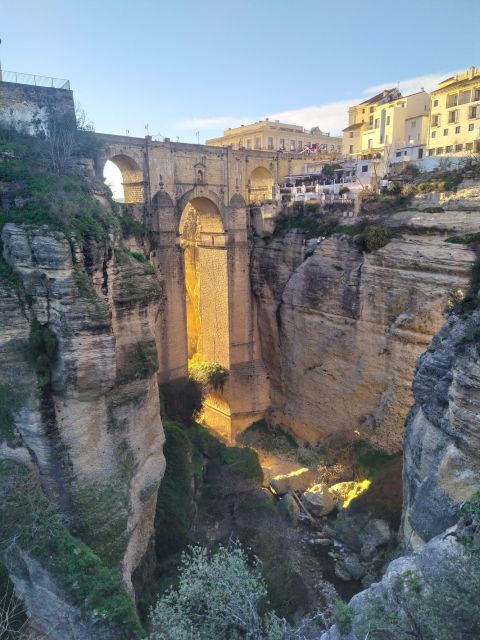
You’ll meet at La Merced Church in the Plaza de la Merced area. This is a smart choice because it gets you into the town core right away. Rather than warming up with transport or a long transfer, you start walking through the same spaces locals use to move around.
The tour is designed for smooth flow. You’ll head out first toward the main park views, then continue along a famous promenade, and later into the older neighborhoods where the layers of Ronda’s past show up in the streets and buildings.
Tip: plan on meeting a few minutes early. Ronda’s center is walkable, but the route is compact—showing up on time helps you avoid feeling rushed before the first viewpoint.
Alameda del Tajo Park: Bullfighting Talk with Mountain Views
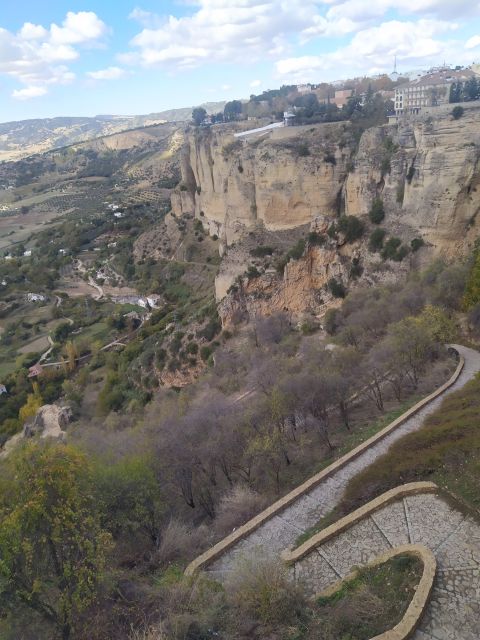
Your first big walking stretch takes you to the Alameda del Tajo, Ronda’s main park. This is where the tour starts mixing scenery and story. You get mountain views while learning how bullfighting connects to Ronda’s identity, not just as a spectacle but as part of the city’s cultural fabric.
The park also gives you a natural rhythm break. You’re not immediately thrown into tight alleyways. You can look around, feel the setting, and get a grounding for what you’re about to see next—especially when you reach the bullring area later in the walk.
If you care about context, this is one of the best parts of the whole experience. The bullfighting history is built in before the sights, so it lands better when you’re standing near the ring.
Paseo de Ernest Hemingway: The Statue and the American Connection
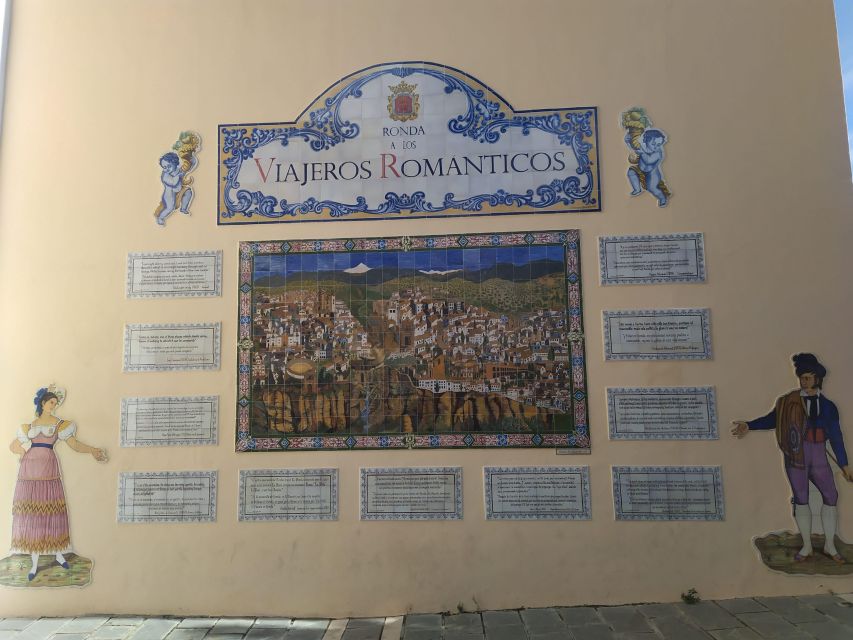
Next you’ll continue toward the Paseo de Ernest Hemingway, and there’s a reason for a statue honoring the American author. Even if you only know Hemingway’s name, you’ll leave with the connection to Ronda, and you’ll likely understand why the city claims him in its own way.
This stop also works as a pacing tool. It’s a straighter section of walking—good for listening and photos—before you shift into the more dramatic parts of the route.
And yes, it’s a little fun when history comes dressed as a literary footnote. You’ll see how Ronda isn’t just ancient; it also inspired writers and visitors in more modern times.
Outside the Bullring: One of Spain’s Oldest, with Real Meaning
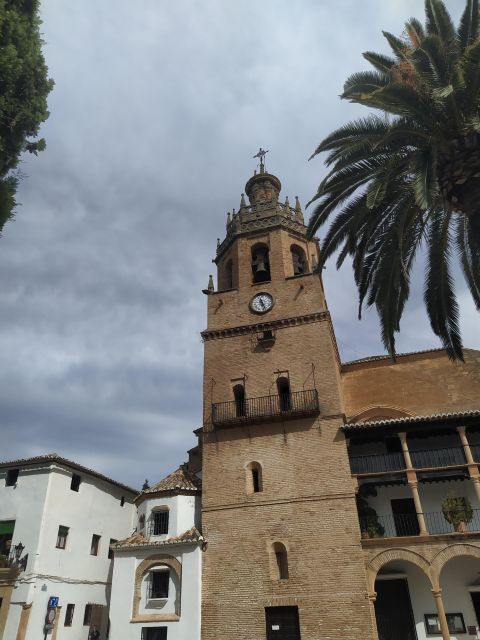
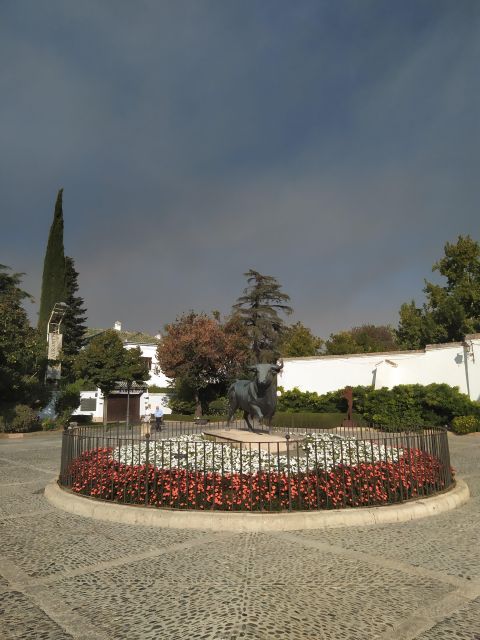
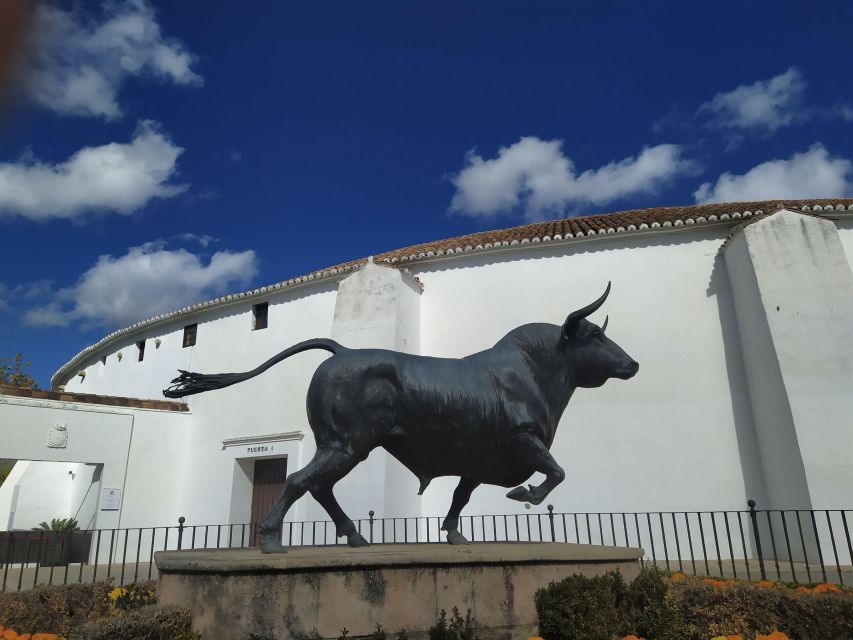
After the paseo, you’ll be outside the bullring, one of the oldest in Spain, often described as the birthplace of traditional bullfighting. This matters because Ronda isn’t just associated with bullfighting; it’s tied to the tradition at a foundational level.
What I like about this approach is that you don’t just stare at a building. The guide connects what you’re seeing with why it became iconic—so the bullring becomes a reference point for the rest of your walk.
Practical note: you’ll be outdoors for viewpoints and street scenes, so check the weather and dress for it. One recent private-tour note highlighted that a guide stayed flexible when conditions were challenging, which is exactly what you want on a walking route.
You can also read our reviews of more private tours in Ronda
Puente Nuevo and the Hanging Houses: The Gorge Moment You Remember
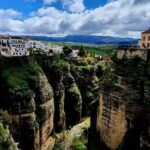
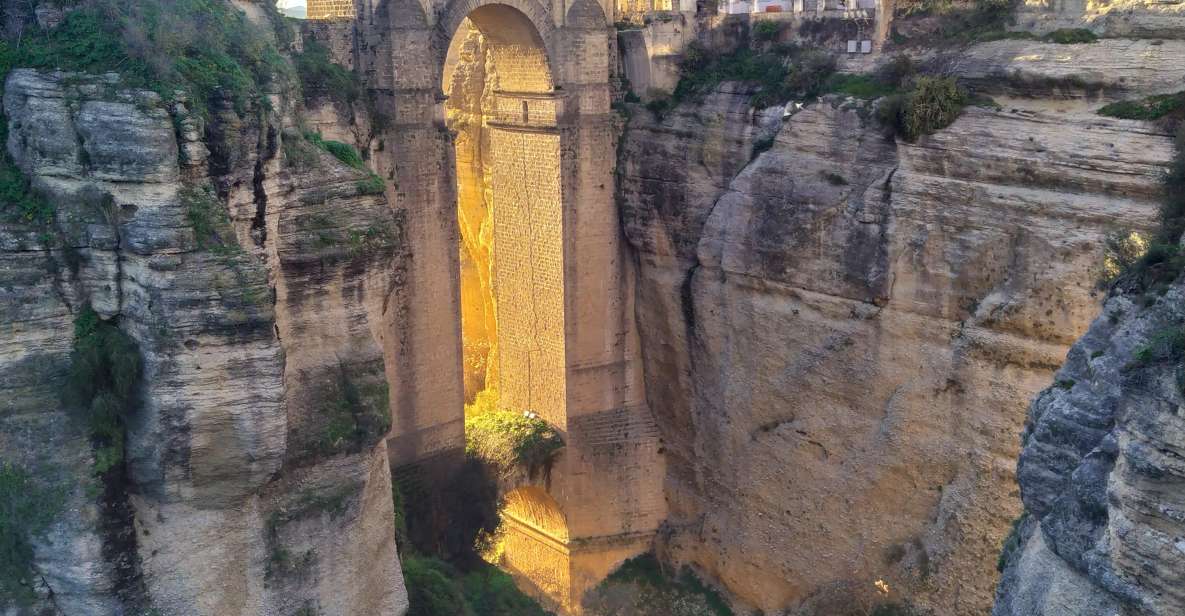
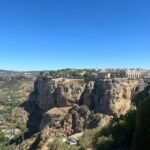
Then comes the big one: Puente Nuevo (New Bridge). This is where Ronda turns cinematic. You’ll get breathtaking views of the gorge, plus the look at Ronda’s emblematic balconies of the hanging houses.
This is not a quick pass-by. The tour route gives you time to see the bridge from the right angles as you walk, and the guide ties the scenery to Ronda’s layout and architecture. The effect is bigger when you understand how the city sits above the drop.
If you’re deciding whether to book: this is the single reason many people come to Ronda, and a guided route helps you find the most worth-it angles without playing map roulette.
Old Town Walking: Celts, Phoenicians, Romans, Moors, and More
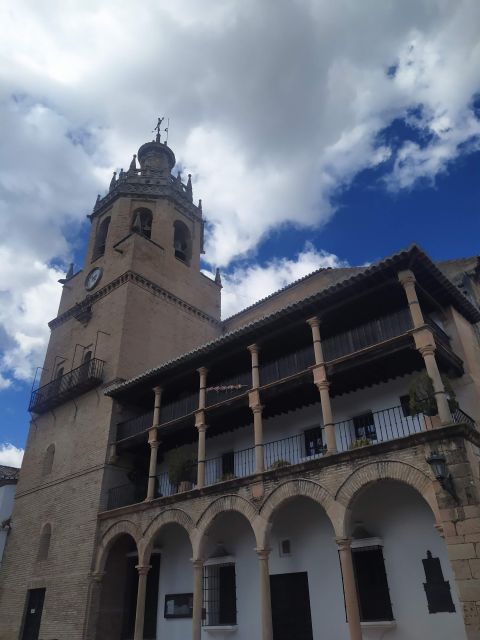
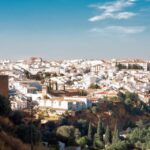
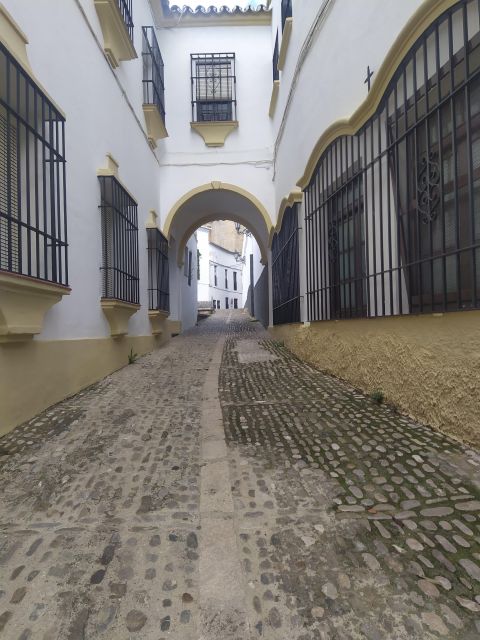
As you move around the older streets, you’ll notice how Ronda keeps multiple chapters in the same spaces. The guide points out marks left by Celts, Phoenicians, Romans, and Moors, each contributing to how the city looked and functioned over time.
What I find valuable here is the way the tour avoids turning history into a list. You’ll connect the time periods to physical clues—street character, architectural hints, and the locations of key buildings—so the past becomes legible while you’re still standing there.
This is especially helpful if you only have a limited amount of time in Ronda. Two hours is short, but the city’s layers are hard to “read” on your own. A guide shortens that learning curve.
Mondragón Palace and the Local Museum: A Major Stop Beyond the Facade
You’ll also pass Mondragón Palace, one of the most visited buildings in Ronda, and it’s home to the Local Museum. Even when you’re not spending extra time inside, a palace like this gives weight to the walking route. It’s a visual reminder that Ronda wasn’t only about defense and views; it was about power, wealth, and civic life too.
The palace stop helps balance the itinerary. After all the dramatic gorge and bullring emphasis, this is a return to building details and local culture.
If you want to do more: consider whether you’ll have energy to linger elsewhere afterward, because museum time can add up once you start looking closely.
Plaza de la Duquesa de Parcent: Church Scale and Town Hall Energy
Next is Plaza de la Duquesa de Parcent, known for the biggest church in Ronda and also for its town hall presence. This square is a useful checkpoint: it’s where you feel the city’s civic heartbeat.
For a short walking tour, squares like this do two jobs. They let you regroup with the guide’s explanation, and they give you a sense of where the city’s “official” life played out as the streets shifted around it.
If you’re the type who likes architecture and how cities arrange power, this stop lands well. You’ll be seeing religious and administrative structures in the same frame, which helps you understand why Ronda developed the way it did.
The Town’s Special Virgin: A Local Moment at the End
Before finishing, the tour includes a stop to see an important virgin for people who live in Ronda. You’ll hear who she is and why she matters locally, which turns the end of the walk into something more personal than just sightseeing.
I like this kind of finish because it reminds you that Ronda isn’t frozen in time. Even after the centuries-old streets and buildings, there’s still local faith and community identity shaping what people care about today.
Finishing at Pl. del Socorro (Spain Square Area)
You’ll wrap up at Pl. del Socorro, 29400 Ronda, Málaga, Spain, often described as a central end point in the Spain Square area. This matters because it’s not a “walk back alone” finish. You end near the core so you can continue with lunch, explore at your own pace, or hop into your next plan without extra effort.
It also keeps your day organized. Two hours goes quickly, so a well-placed finish helps you keep momentum.
What the Reviews Reveal About How It Feels
The consistent theme is that the guide makes the difference. Multiple top-rated experiences mention guides who speak excellent English and keep things engaging, with a dose of humor and flexibility when conditions shift.
A few specifics that come through in the guide stories:
- Gema is repeatedly described as very knowledgeable and personable, with recommendations that extended beyond the tour.
- Ramon earned praise for passion and fun storytelling, especially for turning one-day Ronda time into something that felt fully worth it.
- Tanya and Juana are credited with strong explanations and great timing for photo spots, plus an ability to keep the walk moving.
- There’s also at least one reminder that communication from the company behind the tour firm wasn’t always smooth, so if you have questions, message early and plan with a little buffer.
That last point is worth taking seriously. Most of the value is in the guide, but good trip days run on clear communication too.
Who This Tour Fits Best (and Who Might Want Something Else)
This is ideal for you if:
- You want a private route in a compact historic city.
- You care about bullfighting context, architecture, and the reason behind famous viewpoints.
- You like asking questions and getting answers in real time.
- You have limited time and want Ronda’s best moments connected into one walk.
You might look for a different format if:
- You need wheelchair-friendly access (this one isn’t suitable for mobility impairments).
- You prefer a slower, longer day with fewer stops. This is structured for 2 hours.
Should You Book This 2-Hour Private Walk in Ronda?
Yes, if you’re prioritizing Ronda’s main sights with meaning attached. The itinerary hits the gorge at Puente Nuevo, includes the bullfighting sites around the Alameda and ring area, and builds in old-town layering you can actually see. The private setup and strong guide feedback make it feel like a guided morning you’ll talk about later, not just a walk you completed.
I’d also book if you’re the kind of person who enjoys local details, like the connection to Hemingway and the statue’s reason, plus the local virgin stop that ends the tour with a real sense of what matters in Ronda.
Just be honest about your walking comfort. Bring good shoes, and expect a focused 2-hour route. If that works for you, this is a strong value way to experience Ronda in a short window.
FAQ
How long is the Ronda private walking tour?
The tour lasts about 2 hours.
Where does the tour start?
You meet at La Merced Church in the Plaza de la Merced area.
Where does the tour end?
The tour finishes at Pl. del Socorro, 29400 Ronda.
Is this tour private?
Yes. It’s a private group experience.
What languages are available for the live guide?
The guide is available in English, Spanish, and French.
What sights are included during the walk?
The route includes stops around Alameda del Tajo, Paseo de Ernest Hemingway, the bullring area, Puente Nuevo, older parts of Ronda with visible historical influences, Mondragón Palace (Local Museum area), Plaza de la Duquesa de Parcent, and a final stop to see an important virgin, before finishing in the central area.
How much does it cost?
It’s $141 per group, up to 10 people.
What should I bring?
Wear comfortable shoes.
Is the tour suitable for people with mobility impairments?
No, it’s not suitable for people with mobility impairments.
Is free cancellation available?
Yes. You can cancel up to 24 hours in advance for a full refund.