REVIEW · MALAGA
Tour around the Central Market of Malaga
Book on Viator →Operated by Rutas a pie por la Málaga más tradicional · Bookable on Viator
Malaga feels different when you walk it. This is a comfortable, small-group neighborhood tour that mixes major landmarks with the off-the-beaten-path stuff: churches tied to Holy Week traditions, long-running local shops, and stories about flamenco, shipwrecks, festivals, and even the local way of drinking coffee or chocolate. I love how the guide turns streets into context, so you understand what you’re looking at instead of just passing it.
I also like the end payoff at the Mercado Central de Atarazanas. You’re led through a market space shaped by Muslim walls and old shipyards, then out into the surrounding streets where old and new businesses sit side by side. The only real catch: it’s still a walking tour, mostly on uneven old-town surfaces, so bring shoes you’re happy to wear for a solid 2 hours.
In This Review
- Key highlights at a glance
- Entering Malaga’s everyday neighborhoods in 2 hours
- Plaza Enrique García Herrera: Guadalmedina views and Holy Week energy
- Mapas y Compañía, Muslim-style lanes, and the Thyssen Museum façade
- Plaza de la Constitución: the square behind the coffee culture
- Pasaje de Chinitas and Calle Larios: flamenco and long-running shop life
- Félix Sáenz Square and Edificio Sagasta: details you miss on your own
- Central Market of Atarazanas: shipyards, Muslim walls, and what to watch for
- Price and value: what $17.80 really buys you
- Who should book this Malaga Central Market walk?
- Should you book this Central Market of Malaga tour?
- FAQ
- How long is the tour around the Central Market of Malaga?
- Where does the tour start and end?
- What is the price per person?
- Is the tour group size limited?
- Is food or drink included?
- Do I need to buy tickets for the sights?
- What ticket format do I get?
- Can I cancel for free?
- Where is public transportation nearby?
Key highlights at a glance
- Holy Week landmarks and brotherhood-linked churches set the tone fast, starting near the Guadalmedina River and the Puente de los Alemanes.
- Mapas y Compañía and nearby streets mix old Muslim-style lanes with a modern art presence, including the Thyssen Museum façade.
- Plaza de la Constitución is explained like a local story: naming changes over Spain’s political turns, plus coffee culture and major nearby streets.
- Pasaje de Chinitas is treated as a flamenco corridor with decades of performer “duende” built in.
- Atarazanas Market gets the archaeology and architecture treatment, not just a food stop.
Entering Malaga’s everyday neighborhoods in 2 hours
This tour is built around the idea that Malaga’s best details are often hiding in plain sight. In a compact route, you get the feel of the city’s traditional quarters without the usual script of only the biggest squares and photo spots. The pacing is meant to be easy and comfortable, and the group size stays small (maximum of 20 travelers), so questions don’t get swallowed by a loud crowd.
At $17.80 per person, the value is in two places. First, you’re paying for a professional local guide, not just a walk-through map. Second, the stops you’re shown largely don’t require paid museum entries for the tour experience itself, so your money goes into context: what the buildings mean, why the streets developed this way, and how everyday life connects to religion, music, and local customs.
One practical note: because it’s a walking route, you’ll want to keep expectations realistic. This isn’t a sit-down food tour and it isn’t a slow stroll with frequent long breaks. You’ll move between neighborhoods quickly enough to cover the highlights, but still with enough time for the guide to make the route click.
You can also read our reviews of more shopping tours in Malaga

Plaza Enrique García Herrera: Guadalmedina views and Holy Week energy
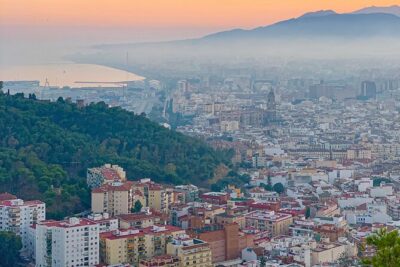
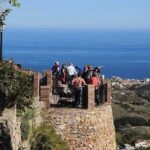
You start at Plaza Enrique García Herrera (Pl. Enrique García-Herrera, 20), in the Centro area. Right away, the tour sets up Malaga’s geography and mood: you’ll look toward the Guadalmedina River and the Puente de los Alemanes, and you’ll connect that setting to the city’s religious traditions.
Then the walk leans into Holy Week in a very Malaga way. You’ll pass churches and brotherhoods linked to the fervor of Holy Week, including the Church of Santo Domingo. This part matters because it explains why so many corners feel emotionally charged during festivals, and why certain architecture and neighborhoods keep showing up in local life year after year.
You’ll also see the Unicaja Museum of Popular Arts and Customs nearby. The tour frames it as a space conceived back in the 1960s to help you understand Malaga’s archaeological and ethnographic past. Even if you don’t go inside, it gives you a lens for what you’re about to see in the streets: traditions aren’t random decoration. They’re a system—stories, beliefs, craft, and daily habits all tied together.
If you’re doing Malaga for the first time, this opening is one of the smartest ways to get your bearings: geography first, then meaning.
Mapas y Compañía, Muslim-style lanes, and the Thyssen Museum façade
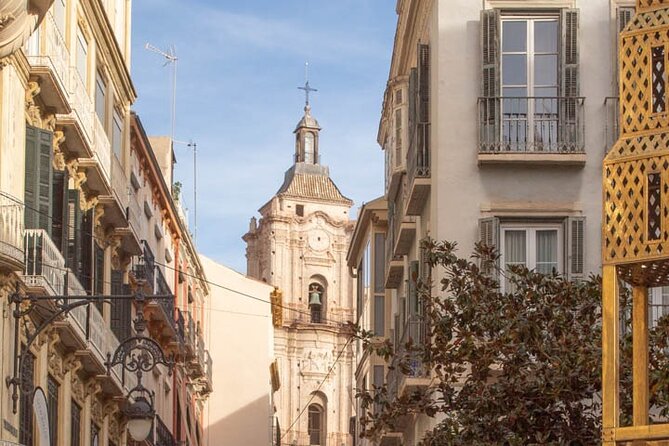
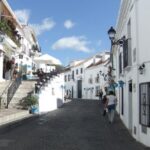
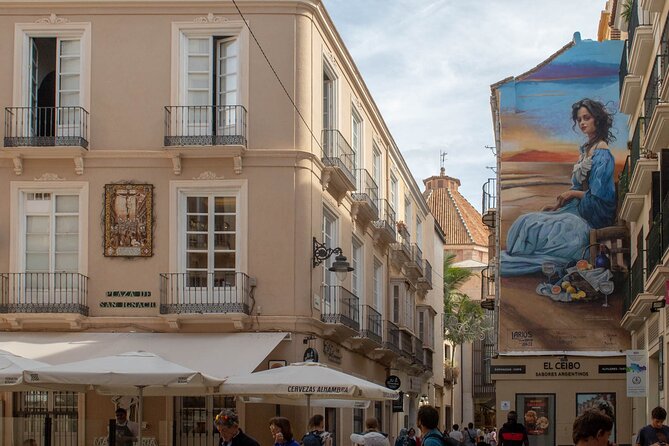
After the initial Holy Week context, you move into streets where the city’s character shows up through storefronts and small crafts. A highlight here is Mapas y Compañía in the area around C/ Compañía. The guide points out how it represents imagination and craft, but you’re also meant to notice the larger streetscape: the blend of older Muslim-influenced street patterns and the way modern ideas now live alongside them.
You’ll see religious and customs-themed imagery too—things like displays of fans, wicker crafts, and flamenco dresses. The tour doesn’t treat these as souvenirs; it frames them as part of how locals express identity through daily objects.
Then the modern-art thread shows up through the Thyssen Museum’s façade. It’s a good contrast moment. You learn that Malaga isn’t stuck in the past—it absorbs change, but it doesn’t erase what came before. That’s the theme of this stop: old streets + new aesthetics = the real look of Malaga.
One small consideration: this area is inside the historic core, so sidewalks can feel tight. If you’re using a mobility aid, go slowly and let the group spacing matter.
Plaza de la Constitución: the square behind the coffee culture
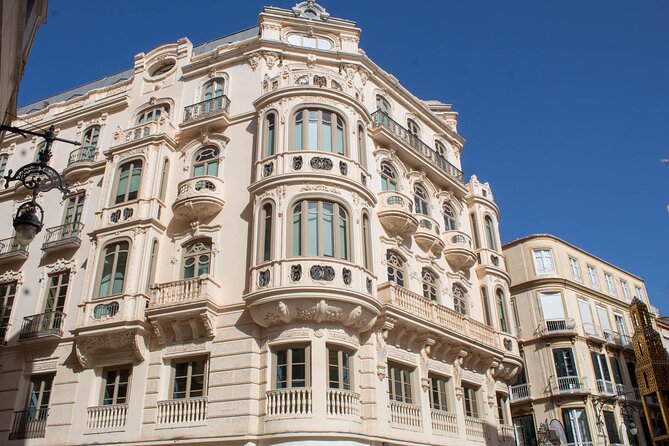
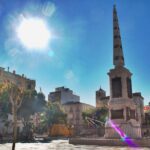
Plaza de la Constitución is the kind of place where the architecture gets most of the credit, but the tour makes sure you understand the social machinery underneath it. The guide explains how the square’s name changed through Spain’s political and social shifts—one of those details that makes a location feel less like a postcard and more like a lived timeline.
You’ll also hear about the Fountain of the Three Graces, and you’ll get references to the mythical (now disappeared) Café Central. This is where the tour becomes especially useful if you care about how locals actually spend time. It connects the square to the city’s café habits and the different coffees you’re likely to notice around Malaga.
From here, you also get views of the Cathedral and key features around the square. The guide focuses on the square’s arteries—the nearby streets and adjacent places where daily life happens. Two examples mentioned during the walk: Plaza Uncibay and C/ Granada, with special attention to Picasso’s importance in the city. You’ll also hear about classic hangouts like Pimpi and The Bell as part of how Malaga social life clusters in certain areas.
If you like cultural context more than constant photo stops, this is one of the best segments of the tour.
Pasaje de Chinitas and Calle Larios: flamenco and long-running shop life
The route then turns toward a place you’ll probably recognize from pictures, but you’ll understand it differently after hearing the story: Pasaje de Chinitas. The guide frames it as a flamenco corridor with performance history stretching back for more than a century. The important detail is the idea of duende—the special artistic spirit—and how singers and dancers developed it in bars and taverns along the passage.
This stop is short, but it lands because it gives you a sound-and-streets explanation. You start to realize flamenco isn’t only a stage act here. It’s also about how music “moves” through neighborhoods.
Then comes Calle Larios, described as Malaga’s main nerve center, built between 1887 and 1891. The tour points out why it became the city’s commercial and entertainment spine, and you’ll see familiar-old-meets-now examples as you walk.
One of the fun details: Casa Mira, including century-old pharmacies where master formulas are still served. It’s the kind of place you could walk past without noticing, but the guide makes you look at it as part of the city’s continuity. You’ll also hear about views connected to the old entrance to the sea, tying the shopping street back to the harbor story.
If you’re sensitive to crowds, consider going at a time when you’re comfortable with busy central streets. Calle Larios is lively by nature.
You can also read our reviews of more tours and experiences in Malaga



Félix Sáenz Square and Edificio Sagasta: details you miss on your own
Not all highlights are famous. Some are just hard to spot without a local eye—and this part of the tour is perfect for that.
At Plaza de Félix Sáenz, the focus is the façade of the old Almacenes de Félix Sáenz and the way the building has been renovated. The guide also explains the square’s real-life role: it’s a meeting place for shopping, leisure, and dining for local residents. That turns the stop from scenery into a social map of Malaga.
You’ll also look for sculptures and small corners that aren’t obvious unless someone points them out. That’s one of the quiet strengths of this tour: it encourages you to slow down for things that don’t scream tourist attention.
Then the walk includes Edificio Sagasta on Sagasta Street 5 at the corner of Herrería del Rey Street. Built in 1925, it’s described as a narrow house shaped into a kind of keel at the corner. Even if you don’t fully visualize it on the first look, you’ll understand why the architecture here is distinctive—Malaga used to build for tight plots and streets that followed older urban patterns.
This segment feels like a mini bonus tour inside the tour.
Central Market of Atarazanas: shipyards, Muslim walls, and what to watch for
Now you reach the big destination: Mercado Central de Atarazanas, ending at C. Atarazanas, 9 at the main entrance.
This is where the tour name makes sense. The market isn’t treated like a generic food hall. The guide explains architectural and historical layers: Muslim walls that once surrounded the city, and the old shipyards that were located where the market stands today. That kind of backstory changes the way you see the building. You stop thinking of it as only modern commerce and start thinking of it as a site that kept reinventing itself.
You’ll also get help spotting what matters inside: the guide shares the most interesting aspects of the products and sales stands you can find there. And the tour broadens the context by noting traditional and avant-garde businesses in the surrounding streets—so the market becomes a doorway to the neighborhood, not a dead-end stop.
If you’re hoping to snack, just plan on buying food on your own. Food and drink aren’t included, but you’ll leave with a clear sense of where to look and what to choose.
Price and value: what $17.80 really buys you
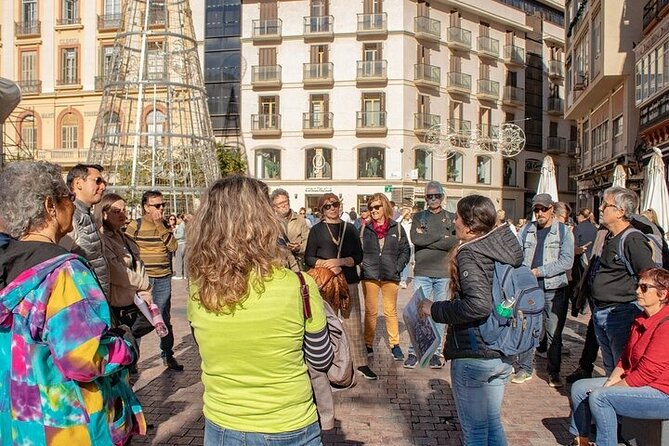
At $17.80 per person for about 2 hours, the pricing makes sense when you look at what’s included: a professional local guide and all taxes. With this structure, you’re paying for interpretation—turning landmarks into meaning—plus a route that weaves multiple areas of Malaga into one outing.
What’s not included is just as important for planning. You should expect to pay for any food or drink you want at the market area. Tips are optional, and there’s no hotel pickup, so you’ll need to get yourself to the start point in Centro.
Also, booking timing can help. This tour is commonly booked about 82 days in advance on average, so if your dates are tight, lock in earlier rather than later.
And because the tour uses a mobile ticket, you’ll want to make sure your phone has battery and you can access the ticket easily at the meeting point.
Who should book this Malaga Central Market walk?
This tour is a great fit if you want a practical first pass through Malaga’s center with stories that connect culture, architecture, and daily life. You’ll get the most from it if you like walking and paying attention to small details—church façades, passageways, shop signs, and market architecture.
It’s also built for broad participation: it’s described as accessible to different ages and physical abilities, and service animals are allowed. You’ll still be walking, so comfy shoes matter.
If you only want one neighborhood and you hate any walking between stops, you might prefer a shorter, more focused market experience. But if you want the market plus the context that explains why it sits where it does, this works well.
Should you book this Central Market of Malaga tour?
Yes—if your goal is to understand Malaga at street level. This is one of those routes where the guide does the heavy lifting: Holy Week landmarks early, cultural threads through coffee and flamenco mid-walk, and Atarazanas Market as the payoff with real historical context (shipyards and Muslim walls).
Book it especially if you appreciate guides who make you look twice. In one strong piece of feedback, the guide Lourdes stood out for making the walk feel both warm and easy to follow, which matches what you want from a small-group cultural route.
FAQ
How long is the tour around the Central Market of Malaga?
It runs for about 2 hours.
Where does the tour start and end?
It starts at Pl. Enrique García-Herrera, 20 (Distrito Centro) and ends at C. Atarazanas, 9, at the main entrance of the Atarazanas Central Market.
What is the price per person?
The price is $17.80 per person.
Is the tour group size limited?
Yes. The tour has a maximum of 20 travelers.
Is food or drink included?
No. Food and drink are not included, though you may find places to buy them near the market.
Do I need to buy tickets for the sights?
The tour experience includes stops where admission is free for the portions listed, and the guide handles what you’ll see on the route.
What ticket format do I get?
You’ll receive a mobile ticket.
Can I cancel for free?
Yes. You can cancel up to 24 hours in advance for a full refund.
Where is public transportation nearby?
The tour is near public transportation, including the Málaga Centro Alameda train stop and the metro stop at Atarazanas.