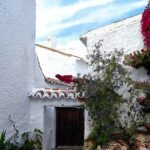
REVIEW · MALAGA
Málaga: Carmen Thyssen Museum Ticket
Book on GetYourGuide →Operated by Museo Carmen Thyssen Malaga · Bookable on GetYourGuide
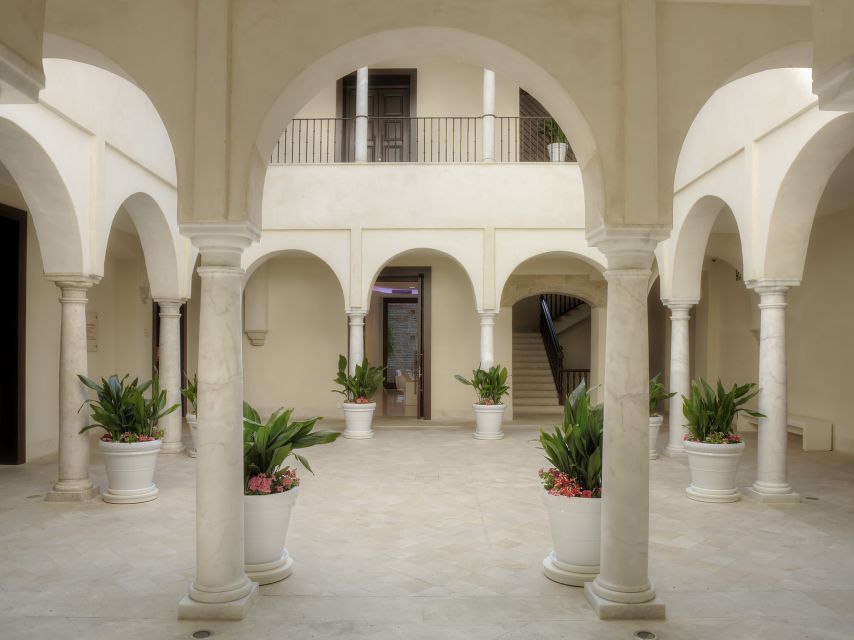
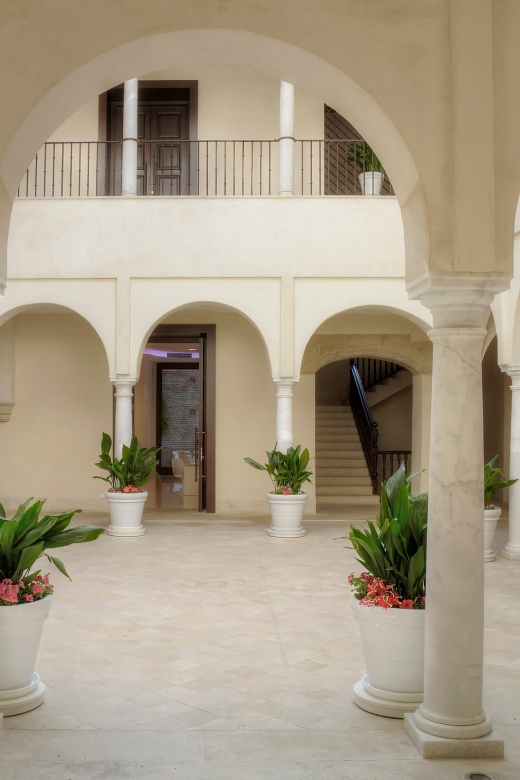
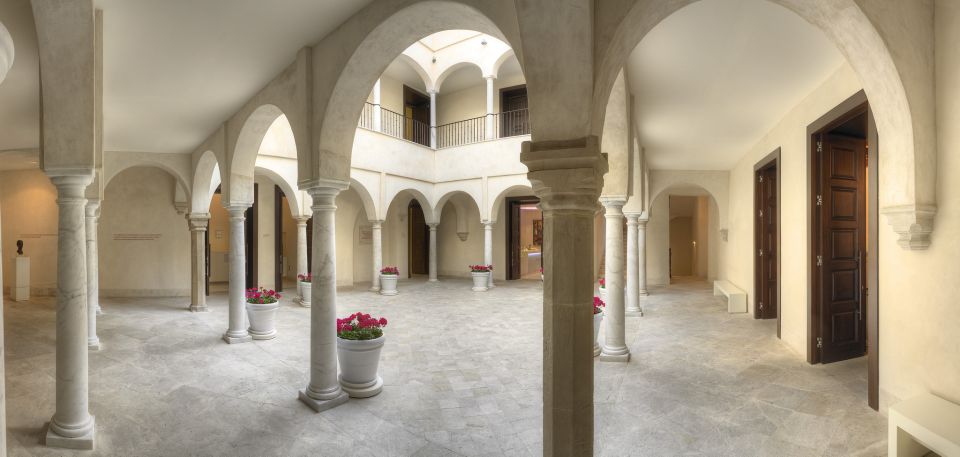
A restored palace makes art feel personal. This visit brings you into the 16th-century Palacio de Villalón, tied to Málaga’s layered Roman and Moorish past, and turns that setting into part of the show. I love the central courtyard and arcaded galleries, because they give the museum a slow, strolling pace that fits the paintings.
I also really like the museum’s focus on 19th-century Spanish and Andalusian art, including Preciosa-style works and Romantic scenes by artists like Sánchez-Perrier and Ortega. One possible drawback: some wall captions can be hard to read up close, so if you rely on small print, plan to take your time and bring glasses if you use them.
In This Review
- Key highlights worth aiming for
- Where you’re actually going: the Palacio de Villalón in Málaga
- The art focus: 19th-century Spain and Andalusia, with a sharp point of view
- What you’ll see inside: palace rooms, courtyard flow, and museum floors
- Start in the palace atmosphere
- Look for the 17th-century paintings in the palace rooms
- Move into the adjoining contemporary buildings for the core collection
- Don’t ignore the upper-floor earlier works (when included)
- The audioguide: how to use it so you actually get value
- Price and value: is $14 worth it?
- Museum rules that affect your day (more than you’d think)
- How long you really need, and when to go
- Who this museum suits best (and who might be less happy)
- Should you book the Museo Carmen Thyssen ticket?
- FAQ
- FAQ
- Where is the Carmen Thyssen Museum in Málaga?
- How long is the ticket valid?
- What’s included with the ticket?
- What languages is the audioguide available in?
- Can I choose between permanent and temporary exhibitions?
- Is the museum wheelchair accessible?
- Are cameras allowed inside?
- Are cell phones allowed in the galleries?
- Is smoking or food and drinks allowed?
Key highlights worth aiming for
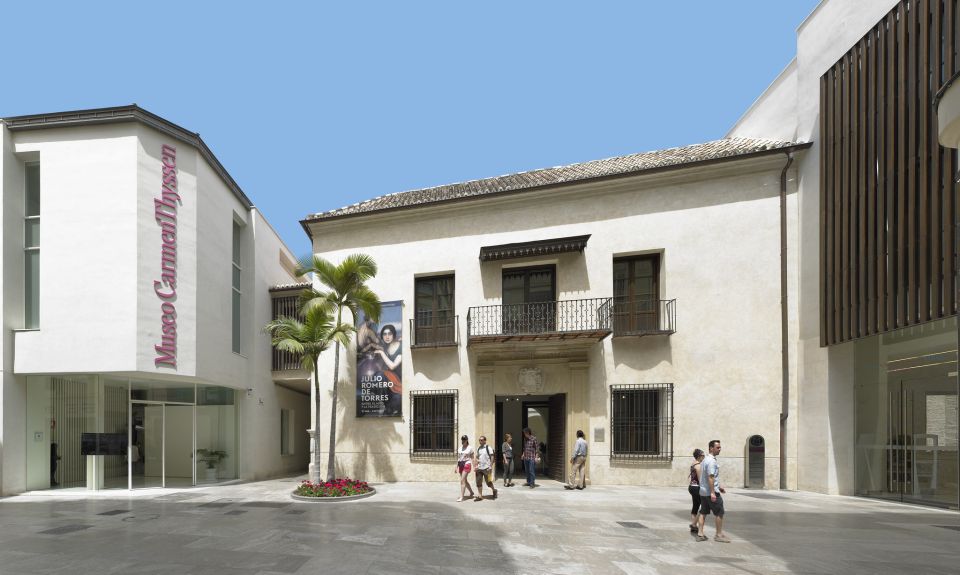
- Palacio de Villalón setting: Renaissance architecture, arcaded galleries, and a central courtyard that grounds your visit.
- Two-level museum flow: 17th-century Spanish paintings in the palace rooms, plus more galleries across the floors.
- 19th-century Spanish and Andalusian focus: The Carmen Thyssen-Bornemisza collection is built to show genres and tastes from the 1800s.
- Preciosa and Romantic works: You’ll see examples linked to Preciosa-style painting and Romantic countryside views.
- Old Masters + later religion paintings (at least some periods): The collection includes earlier works too, including religious paintings mentioned on upper floors.
- Practical rules: No cameras and no cellphones in galleries means you need to enjoy looking, not shooting.
Where you’re actually going: the Palacio de Villalón in Málaga
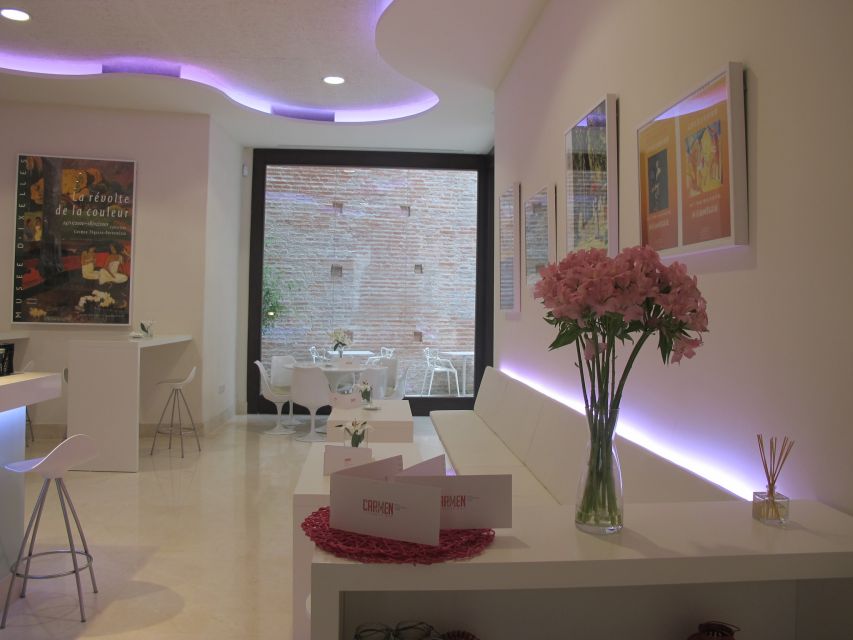
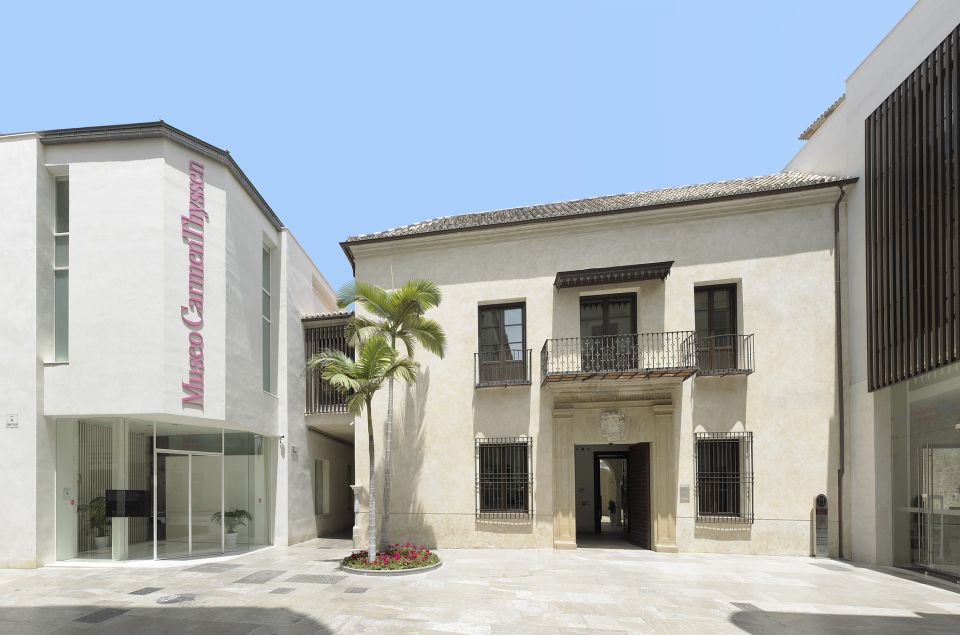
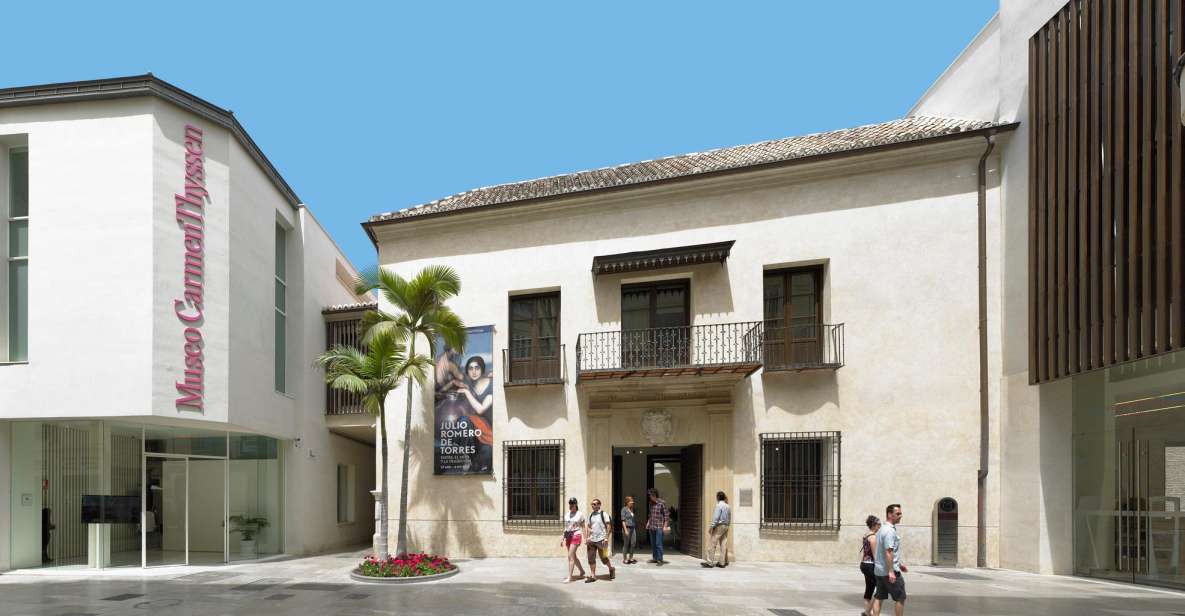
The Museo Carmen Thyssen sits in the restored Palacio de Villalón, a 16th-century building that feels like it was made for wandering. What makes it more than a pretty container is the story of how it’s positioned: it was built over remains from Málaga’s older Roman city, within the old Moorish quarter area. In other words, the museum isn’t just showing art—it’s showing the city’s layers, in stone and layout.
When the restoration project worked on the palace, it focused on recovering the original layout. That’s why the museum’s spaces feel intentional: rooms connect around a central courtyard, and you move through arcaded galleries rather than long, lifeless corridors. Then, attached to the palace, you’ll find newer buildings in a contemporary style that house the permanent and temporary exhibitions. The result is a kind of two-speed visit: old structure for the atmosphere, newer wings for the collections.
If you like architecture at all, this museum tends to be a good fit. The carved wooden ceilings and the supporting fretwork in the principal rooms give you details to notice even when you’re between paintings.
You can also read our reviews of more tours and experiences in Malaga

The art focus: 19th-century Spain and Andalusia, with a sharp point of view
The heart of your visit is the Carmen Thyssen-Bornemisza collection, known for a wide-ranging look at 19th-century Spanish painting genres with a strong emphasis on Andalusia. That matters because it keeps the visit from feeling like a random stack of famous names. Instead, you start to see how Spanish art in the 1800s shifted in style and subject—often tied to region, taste, and what painters were aiming to show.
You’ll encounter different directions in the collection. Romantic scenes are a big one, with artists like Sánchez-Perrier and Ortega mentioned as key names for that style. You’ll also see works associated with Preciosa painting—often linked to a more precise, polished look that can feel very different from heavier, more dramatic styles you might expect.
And then there’s the bonus effect for people who know only a handful of Spanish heavyweights. Some visitors come in thinking in terms of artists such as Zurbarán, Velázquez, Goya, and Picasso. What the Thyssen collection does well is expand that mental map. Even if you don’t know the full cast, you’ll start recognizing patterns: how color, finish, and subject matter changed across decades.
If you’re the kind of person who likes learning a museum’s logic, you’re in luck. This is a collection built to show categories and change over time, not just to display individual masterpieces with no thread.
What you’ll see inside: palace rooms, courtyard flow, and museum floors
Your visit works like a self-guided museum with an included audioguide. You can follow the permanent collection, the temporary exhibitions, or do both, depending on how much time you want to spend. Since the ticket is valid for one day, you can take your time without feeling rushed by an over-tight schedule—just check the available starting times tied to your booking.
Here’s a practical way to think about your route once you walk in:
Start in the palace atmosphere
Begin by orienting yourself around the courtyard and the arcaded galleries. This helps a lot because the palace structure can otherwise make you feel like you’re moving between similar-looking rooms. As you settle in, pay attention to the carved wooden ceilings and the supporting fretwork in the principal rooms—these details are part of the museum experience, not just decoration.
Look for the 17th-century paintings in the palace rooms
Some rooms in the palace include 17th-century Spanish paintings. If you tend to connect to older art through craft and composition, don’t skip these. They can act like a “setting of the table” before the 1800s galleries, because you’ll feel the continuity in Spanish painting styles even when the centuries change.
You can also read our reviews of more museum experiences in Malaga



Move into the adjoining contemporary buildings for the core collection
The museum’s permanent and temporary exhibitions are housed in the adjoining new buildings. That separation can be useful. In the palace, the pace often slows down automatically because the architecture encourages looking at details. In the newer galleries, you can focus on how the collection groups works and moves through genres.
Don’t ignore the upper-floor earlier works (when included)
One review specifically pointed out religious paintings from the 15th and 16th centuries on the top floor. That suggests the museum doesn’t only live in the 1800s; it sometimes reaches earlier periods too, at least depending on how the collection is presented at the time you visit. When you see an upper floor, it’s usually worth climbing even if you think you’re coming for the 19th-century focus.
If you want the smoothest experience, do the rooms in a calm order: palace first for atmosphere, then the main gallery sequence for the 1800s story.
The audioguide: how to use it so you actually get value
Your ticket includes an audioguide with language options in Spanish, English, French, German, and Italian. That’s a big deal in this museum because the artworks are meant to be read—style names, genre categories, and historical context all help you connect the dots.
Here’s how you can make the audioguide work better for you:
- Use it at the start of each section, not only for famous paintings. That’s when it helps you understand what you’re supposed to notice.
- If you’re a fast walker, take a slower breath at key rooms. The audioguide tends to make more sense when you pause and look.
- Since photographs aren’t allowed in the galleries, your memory becomes part of the experience. The audioguide helps you “capture” the meaning instead of just the image.
One review also mentioned how some labels and captions can be hard to read because text can be small. If that’s your weak spot, the audioguide becomes even more useful. Bring reading glasses if you use them. That single habit can save you from standing awkwardly close to the guard line just to make out the details.
Price and value: is $14 worth it?
At about $14 per person, this ticket is usually good value, mostly because you’re paying for three things at once: entrance, the audioguide, and the unique palace setting. Many museum tickets give you one or two of those. Here you get the building experience as part of the content.
The museum’s focus is also clear: 19th-century Spanish and Andalusian art with a structured collection scope. If you’re the type who likes knowing why the art is grouped the way it is, that structure can make a ticket feel more justified. And if you’re flexible enough to include temporary exhibitions, you can get even more out of your day.
One caution comes from a review note about age: someone warned that under-18 visitors might be free. That’s not spelled out in the main activity details you provided, so treat it as a heads-up rather than a guarantee. If you’re traveling with teens, it’s worth checking the policy before you buy so you don’t overpay.
Overall, $14 feels fair—especially since you’re not just visiting a gallery floor. You’re visiting a restored 16th-century palace layered over older Málaga, with an audioguide to help you understand what you’re seeing.
Museum rules that affect your day (more than you’d think)
This museum has a pretty clear set of restrictions. They matter because they can change how you plan your visit and what you bring in.
Key rules you’ll want to remember:
- No cameras in the museum.
- Mobile (cell) phones are not allowed in the galleries.
- No video recording.
- Food and drinks aren’t allowed.
- Avoid bringing large bags; bags over 80 x 50 cm aren’t allowed.
- Don’t touch the works of art.
- Animals other than guide dogs are prohibited.
- Smoking isn’t allowed.
- No swimwear, and don’t bring luggage or large bags.
My practical advice: travel light and expect to rely on your eyes, not your phone. If you normally take a photo at every stop, this museum might feel different at first. But once you switch your focus, the experience often gets calmer—and you tend to notice more.
How long you really need, and when to go
Your ticket is valid for 1 day, and starting times depend on availability. Since you’re touring independently, the real time you need comes down to how you like to see museums.
- If you read labels and listen thoughtfully: plan on a longer visit through both palace spaces and the main galleries.
- If you’re a skimmer: you can still get a satisfying overview, but you might miss some context, especially since caption text may be small in places.
- If a temporary exhibition is on (one review mentioned a special exhibition of Sorolla): you’ll want extra time. Even if you don’t know the artist, temporary shows can add variety to the main 1800s story.
For timing, I’d aim for a part of the day when you’re not racing across town. This is a good stop when you want a structured cultural break between Málaga’s street-walking.
Who this museum suits best (and who might be less happy)
This is a strong match for you if:
- You enjoy Spanish art but want something beyond the usual names.
- You like museums that teach you a way to look, not just show you famous works.
- You’re interested in Andalusia specifically, with an emphasis on how region shapes art.
It might be less satisfying if:
- You’re hoping for an all-action experience with lots of walking outdoors.
- You rely heavily on photos to remember your trip. Cameras aren’t allowed, and phone use is restricted in galleries.
- You read slowly and your eyesight struggles with small gallery captions. The audioguide helps, but you’ll still want to take your time.
The building itself makes this museum a good bet for architecture lovers too. The palace rooms and courtyard flow give you a sense of place that you can’t fake.
Should you book the Museo Carmen Thyssen ticket?
Book it if you want a mix of beautiful 16th-century palace architecture and a focused art collection that shows how Spanish and Andalusian painting evolved in the 1800s. The included audioguide makes it easier to turn a quick museum visit into a meaningful one, especially with the collection’s genre and style themes.
Skip or rethink it only if you’re expecting lots of photos, big signage, and a carefree hands-off experience. Between the photo restrictions and the cell-phone ban in galleries, you’ll need to be okay with a more old-school way of looking.
If you’re in Málaga for a couple days and want one museum stop that feels tied to the city’s past, this one is a smart choice.
FAQ
FAQ
Where is the Carmen Thyssen Museum in Málaga?
The meeting point is Carmen Thyssen Museum, Fundación Palacio de Villalón, C/ Compañía 10, 29008 Málaga. The activity ends back at the same meeting point.
How long is the ticket valid?
The ticket is valid for 1 day. You’ll need to check availability for starting times.
What’s included with the ticket?
Entrance to the Carmen Thyssen Museum is included, along with an audioguide.
What languages is the audioguide available in?
The audioguide is available in Spanish, English, French, German, and Italian.
Can I choose between permanent and temporary exhibitions?
Yes. You can explore the permanent collection, the temporary collection, or both.
Is the museum wheelchair accessible?
Yes, the museum is wheelchair accessible.
Are cameras allowed inside?
No, cameras are not allowed.
Are cell phones allowed in the galleries?
No. Mobile (cell) phones are not allowed in the galleries.
Is smoking or food and drinks allowed?
Smoking isn’t allowed, and food and drinks are not allowed in the museum.