REVIEW · MALAGA
Skip the Line: Private Alcazaba & Gibralfaro with Nasrid Palaces
Book on Viator →Operated by APARTRIP TRAVELS · Bookable on Viator
Moorish walls tell a story at walking speed. This private skip-the-line tour helps you see Malaga’s Alcazaba and Nasrid Palace spaces with an art historian guide, then caps it with Gibralfaro views that make the whole complex easier to understand.
I especially like how the route is guided through the fortress’s design points, from defensive gates to palace courtyards, instead of just getting a list of rooms. I also like that the visit is structured for limited time: the palace portion is quick, and the overall tour runs about 2 hours. One possible drawback: this is a compact format, so you’ll want comfortable shoes and a steady walking pace.
In This Review
- Key highlights you’ll actually feel during the tour
- Alcazaba and Nasrid Palaces: how the skip-the-line matters
- Getting started at C/ Alcazabilla and setting your pace
- The Alcazaba walk: Puerta de la Bóveda to Puerta de la Columnas
- Torre del Cristo and Plaza de Armas: where power changes hands
- Armory tower details and the view from Torre de Maldonaldo
- Nasrid palace courtyards: why Patio de los Naranjos is worth your time
- Castillo de Gibralfaro: the defensive story connects the dots
- How I’d judge the value of a $218.96 private group tour
- What makes the guides stand out (and what to watch for)
- Who this tour fits best in Malaga
- Should you book it? My straight answer
- FAQ
- FAQ
- How long is the Alcazaba, Nasrid Palaces, and Gibralfaro tour?
- What is the group size for this private tour?
- Where do we meet your guide?
- What time does the tour start?
- Are admission tickets included?
- What’s the cancellation policy?
Key highlights you’ll actually feel during the tour
- Skip-the-line entry so you spend time inside the palaces and fortress, not in ticket lines
- Art historian guide who connects what you see (arches, courtyards, towers) to 1,000-year context
- Puerta de la Bóveda and Puerta de la Columnas route that shows how Moorish design served defense and ceremony
- Torre del Cristo, Plaza de Armas fountains, and gardens that layer Islamic and Christian-era changes
- Torre de Maldonaldo (Maldonado Tower) for high, wide panoramas over the city and coast
- Private group up to 10 with time for questions, so the pace stays comfortable for your crew
Alcazaba and Nasrid Palaces: how the skip-the-line matters
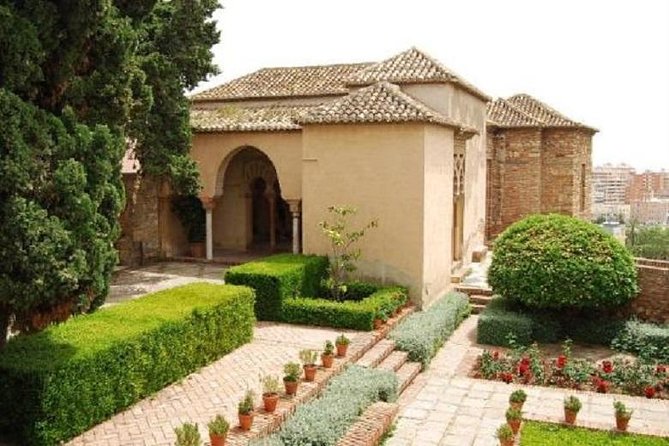
Malaga’s Alcazaba and Nasrid Palace areas are popular for a reason: you get high views, detailed Moorish architecture, and a clear sense of how power was organized on a hillside. The catch is that these sites can be slow when you’re waiting around at entrances. That’s exactly where a private skip-the-line setup pays off.
With this tour, you meet your guide at the Alcazaba entrance and use your ticket to get moving right away. The result is simple: you see more of the fortress’s key moments while your energy is still fresh. It also helps you stay oriented. When you’re not stuck in a line, you start the visit with context, so details like arches and courtyard layouts click faster.
Another value point: this is led by an art historian, not just a standard walking guide. You’ll still be walking, but you’re also getting explanations for what you’re seeing—especially helpful at a site where “pretty architecture” can quickly turn into “okay, now what?” The guide format is built for that.
If you’re trying to fit Malaga’s top Moorish sites into a short window, this tour is the kind of plan that makes the day feel efficient without feeling rushed.
You can also read our reviews of more private tours in Malaga



Getting started at C/ Alcazabilla and setting your pace
You’ll meet at C/ Alcazabilla, 4, Distrito Centro, 29015 Málaga. Tours run every hour on the hour after 10 am, so you can pick a start time that works with your other plans (Cathedral area, shopping streets, museums, or a food break).
This is a private tour with only your group, up to 10 people. That matters more than it sounds. On public tours, someone always slows the group down or someone misses a detail because they’re in the wrong spot. Here, the pace can stay smoother and your questions are less likely to get lost.
Time-wise, you’re looking at about 2 hours total (approx.). The palace portion is designed to be tight, while the rest of the route focuses on the fortress sections and then the viewpoint stop. It’s a smart approach if you don’t want to spend half a day climbing and stopping.
The Alcazaba walk: Puerta de la Bóveda to Puerta de la Columnas
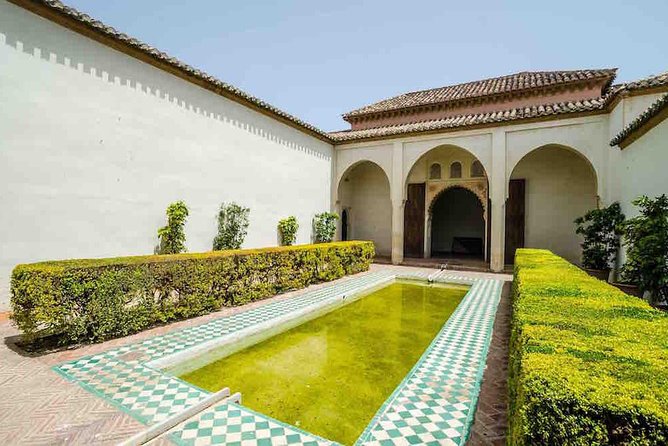
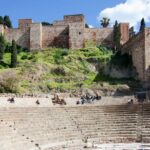
The Alcazaba is more than a hilltop photo stop. It’s a fortified complex that works like a story told in doors, walls, and layered spaces. The tour’s route gives you a way to read the site as you walk.
You enter through the Puerta de la Bóveda (Gate of the Vault). This is a defensive portal style typical of Moorish palaces—meaning it’s designed to slow and control movement. When your guide points this out, you start noticing the logic behind what looks like decorative architecture. You’re not just seeing pretty forms; you’re seeing how design helps security.
Next comes the Puerta de la Columnas (Gate of the Columns), where you’ll see marble columns and horseshoe-shaped arches. If you want a quick education in what makes Moorish design feel distinct, this is a good place to start. The shapes and materials matter. The guide’s job here is to connect those visual cues to cultural influences and how the palace spaces functioned.
Then the tour continues through the Alcazaba’s lower quarters. That part is key because it blends views, gardens, and architectural transitions rather than treating the fortress like one long climb.
Torre del Cristo and Plaza de Armas: where power changes hands
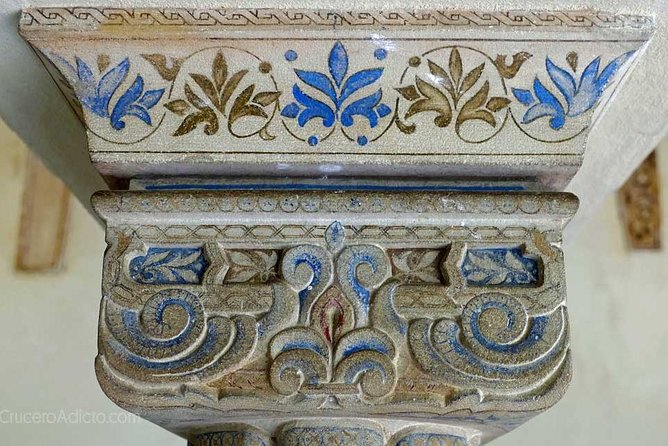
One of my favorite parts of the route is how the tour doesn’t freeze time. You’ll hear about the Torre del Cristo (Christ’s Tower), where the first mass was held after Catholics reclaimed the city. That’s a powerful reminder that this area wasn’t only Moorish—history shifted, and the site absorbed those changes.
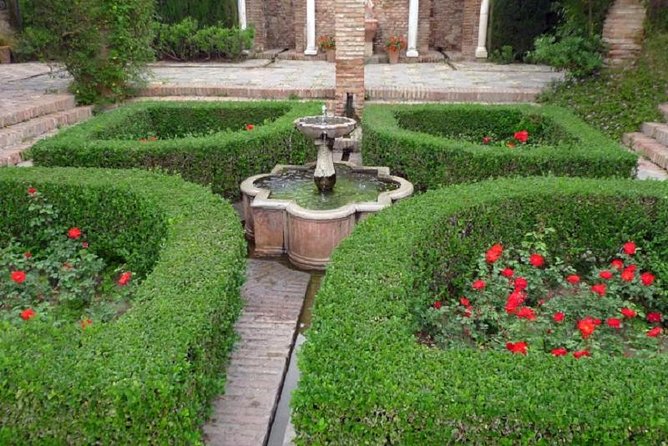
From there, you rest your feet at the fountains in the gardens of the Plaza de Armas. Even if you’re not normally a “garden person,” this break is useful. It gives your brain a pause between climbs and viewpoints, and it also shows how outdoor space was treated as part of the palace experience.
If you like architecture but also like human-scale moments, the gardens and fountains help the fortress feel lived-in instead of purely military. You get a sense of how people moved through daily life within strong walls.
Armory tower details and the view from Torre de Maldonaldo
After the garden area, the tour follows cobblestone paths to an armory tower featuring a carved wooden ceiling from the 16th century. Even if you only catch it for a few minutes, that detail can change your perspective: you’re seeing layers of construction and decoration beyond the earliest period.
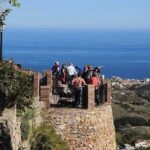
Then comes the payoff for many people: panoramic views from Torre de Maldonaldo (Maldonado Tower). From a viewpoint like this, the Alcazaba and the wider city make more sense. You can see why walls were built where they were, and why the complex was worth defending across centuries.
Practical note: viewpoints are weather-dependent. On a clear day, you’ll likely get the strongest coast and city views. On a hazy day, you can still appreciate the arrangement of the old fortification system even if the far distances blur.
You can also read our reviews of more tours and experiences in Malaga





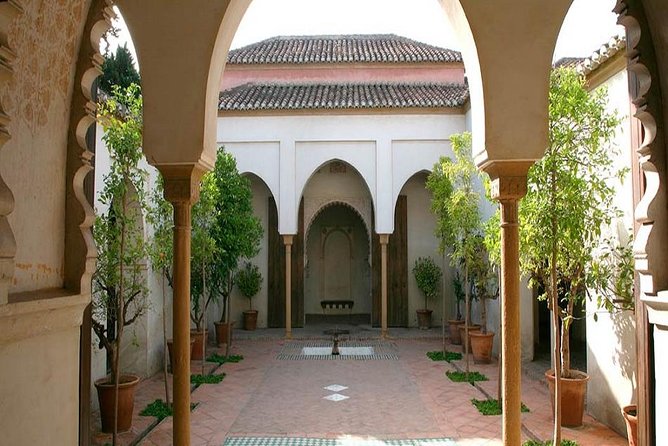
Nasrid palace courtyards: why Patio de los Naranjos is worth your time
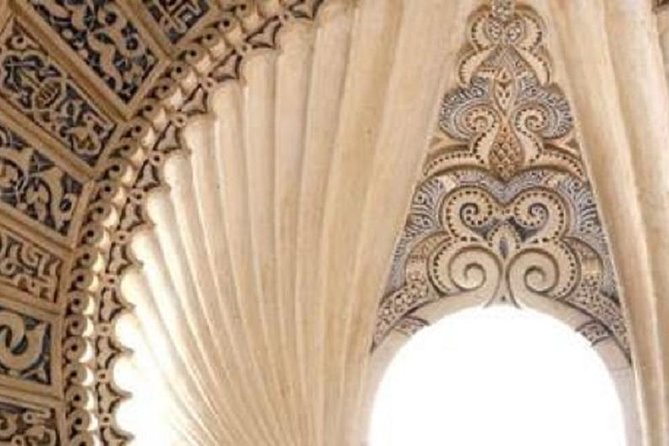
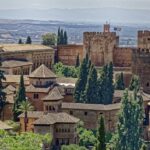
The Nasrid Palace portion is where the tour’s title really earns its keep. You’ll explore courtyards and interior palace spaces with an art historian guide, who points out what makes the area among the best-preserved Moorish royal architecture in Spain.
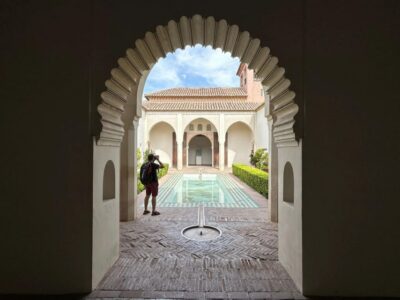
A highlight is the Patio de los Naranjos (Courtyard of the Orange Trees). It’s easy to look at a courtyard and think it’s just scenic. With a guide, the courtyard becomes a lesson in design: how light, symmetry, water, and plant life support the experience of power and ritual.
This is also where a private format helps. If you want to ask questions about horseshoe arches, column styles, or how the spaces were used, you can do it on the spot. The tour is set up to feel personalized rather than like a script.
The palace visit ends outside the palace area, leaving you time to continue your day in Malaga without feeling like you’re stuck in museum mode for too long.
Castillo de Gibralfaro: the defensive story connects the dots
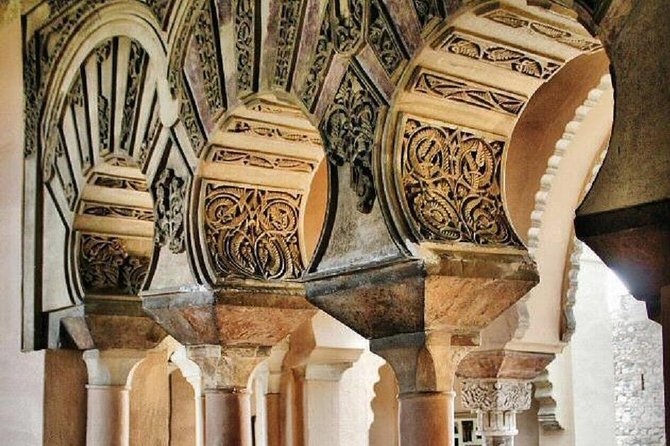
After Alcazaba, you head to Castillo de Gibralfaro. This is a separate stop designed for quick, high impact: the castle sits above Malaga and helps you see the bigger defensive picture.
You’ll explore ancient Moorish walls and towers while learning the castle’s strategic role in defending both the Alcazaba and the port during Islamic and Christian eras. That connection matters. Seeing Alcazaba alone can make it feel like a standalone monument. Seeing it paired with Gibralfaro turns it into a system: defense, observation, and communication across the city.
The time here is about 45 minutes, which is just enough to cover key areas without turning the day into an all-day climb. For photos, it’s a strong window: you’re up high, and Malaga’s layout makes for easy framing.
How I’d judge the value of a $218.96 private group tour

This tour costs $218.96 per group (up to 10). For many visitors, that pricing feels high until you translate it into what you’re buying:
- You’re getting private guidance from an art historian, not just an audio pass.
- You’re getting skip-the-line access, which can matter a lot at these sites.
- Your admission tickets are included for Alcazaba and Gibralfaro.
- The total time is tight enough that you’re less likely to lose precious hours to delays.
If you’re traveling as a couple, it’s still often easier to justify because you’re effectively paying for two people’s time with a specialist guide, plus the time saved. If you’ve got a small group of friends or family, it becomes even better value because you share the cost while keeping the tour private.
One more value angle: private tours reduce the “missed detail” problem. At the Nasrid Palace courtyards and gate transitions, you’ll notice more when someone explains what to look for. That’s the kind of value that shows up on your photos afterward.
What makes the guides stand out (and what to watch for)
The guides matter here. In real life, this type of architecture tour lives or dies by explanation. This tour tends to shine when the guide can connect design details to human stories.
I’ve seen clear evidence of that kind of teaching through guide names like Maria, Beatriz, and Mohammed. The strongest pattern: guides are described as passionate and attentive, with clear communication about where to meet and how to move through the sites. That fits the structure of the tour—because the route is active, and good guidance keeps it smooth.
One caution: there was at least one serious service failure in the recorded history—a guide no-show due to a family emergency. That’s not something you can plan for in a way that makes it comforting, but it’s a reminder to build in a little buffer on the day. If your schedule is extremely tight, plan other activities with some flexibility and double-check meeting time details when you receive them.
Who this tour fits best in Malaga
This private Alcazaba and Nasrid Palaces + Gibralfaro setup works best if you fit one of these profiles:
- You want Moorish architecture explained in plain language (gates, arches, courtyards, towers).
- You’re short on time and want a tight route that still feels meaningful.
- You like viewpoints but also want them tied to history, not just photos.
- You’re traveling with people who benefit from a personalized pace and direct answers.
It can also suit most people who can handle walking on cobblestones and stairs, since the experience is listed as most travelers can participate.
If you’re the type who wants a long, self-paced wandering day with no structure, you might find the pace a bit planned. But if you want a strong “best of” route in a manageable window, this is a good match.
Should you book it? My straight answer
If you want the Alcazaba and Nasrid Palaces to feel understandable—rather than just impressive—this is the kind of tour I’d recommend. The combination of skip-the-line, an art historian guide, gate-to-courtyard routing, and a connected second stop at Gibralfaro is a smart use of limited time.
I’d book it if you:
- care about architecture details like horseshoe arches and courtyard layout
- want a plan that fits into about 2 hours
- are traveling with a small group and want it private
I’d think twice if:
- you want a fully self-paced visit with zero structure
- you have a very flexible schedule and would rather spend more time lingering on your own
FAQ
FAQ
How long is the Alcazaba, Nasrid Palaces, and Gibralfaro tour?
The tour lasts about 2 hours (approx.).
What is the group size for this private tour?
It’s a private experience, and your group is the only group participating, with a maximum of up to 10 people.
Where do we meet your guide?
You meet at C/ Alcazabilla, 4, Distrito Centro, 29015 Málaga, Spain, and the tour ends back at the meeting point.
What time does the tour start?
Tours are available every hour on the hour after 10 am, and you’ll receive your appointment time after booking confirmation.
Are admission tickets included?
Yes. Admission ticket is included for the Alcazaba and Gibralfaro stops.
What’s the cancellation policy?
You can cancel for a full refund if you cancel at least 24 hours before the experience’s start time. Cancellation is free up to that point.