REVIEW · MALAGA
Picasso roots Private Walking Tour in Central Malaga
Book on Viator →Operated by Voila Malaga · Bookable on Viator
Picasso in Malaga feels close to the street. This private 2-hour walk connects the dots from 19th-century Malaga life to the places tied to Picasso’s family, faith, and early days, with a local guide who keeps it moving and easy to follow. You’ll start near Teatro Cervantes and finish by Plaza del Obispo, seeing key stops that explain how Picasso became part of the city story.
I particularly like how the tour focuses on family and locations, not just names in a guidebook. I also like the guide energy—Juan Diego is described as friendly, helpful, and genuinely passionate about both Málaga and Picasso. One heads-up: it’s long on walking for a short time, so comfortable shoes are not optional.
In This Review
- Key highlights you’ll feel as you walk
- From Teatro Cervantes to Plaza del Obispo: the route makes sense
- 1800s Malaga first: why the tour starts with society, not paintings
- Picasso’s playground: turning childhood into something you can point to
- Birthplace and family: seeing Picasso through the people around him
- How the Picasso museum story connects to the city
- Father’s teaching spot: learning where inspiration had a schedule
- Café Chinitas and Picasso’s last Malaga visit: the story gets spicy
- Bishop’s House and a special Picasso exhibition stop
- Price and value: is $120.41 worth it?
- Who should book this Picasso roots tour?
- Should you book it?
- FAQ
- How long is the Picasso roots private walking tour?
- Where does the tour start and where does it end?
- Is this tour private?
- What language is the tour offered in?
- What’s included?
- Will I receive a mobile ticket?
- When will I get confirmation after booking?
- Is free cancellation available?
- Do I need to plan for walking?
Key highlights you’ll feel as you walk
- Malaga in the 1800s: you’ll read the city’s 19th-century society through the buildings around Picasso’s beginnings
- Picasso’s playground: you’ll get specific about where childhood life and inspiration likely formed
- Birth + family context: birthplace, family story, and how the city connects to his legacy
- Church stop that ties it together: the church linked to his baptism and his parents’ marriage
- Café Chinitas in Picasso’s last Malaga visit: you’ll hear what happened there on his final return
- Bishop’s House exhibition: a themed Picasso presentation in a historic setting
From Teatro Cervantes to Plaza del Obispo: the route makes sense
This is a private walking tour, meaning it’s only your group, not a big shared herd. The start point is Teatro Cervantes (C. Ramos Marín, s/n), and the tour ends at Plaza del Obispo—so you’ll get that satisfying feeling of walking the story through the central core and not just circling the same blocks.
Plan for roughly 2 hours on foot. That doesn’t mean nonstop hustle, but you will be on sidewalks for the whole time, taking in doorways, street corners, and a steady sequence of history. If you’re visiting with any kind of walking limits, you’ll want to think it through, because the tour’s strength is in the pacing between sites.
Also note the tour is offered in English, so you won’t need to work that hard to keep up.
You can also read our reviews of more walking tours in Malaga
1800s Malaga first: why the tour starts with society, not paintings
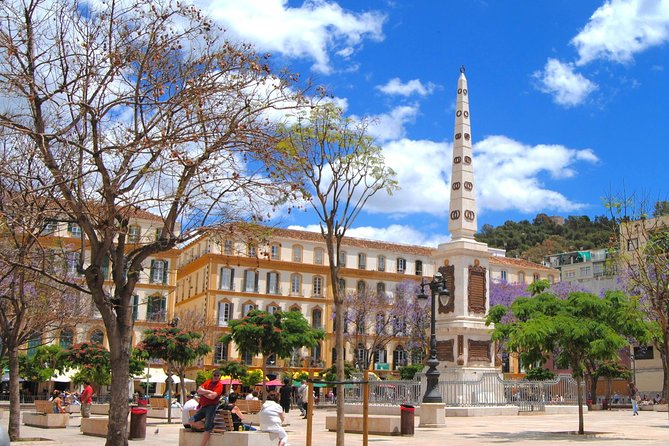
The tour’s first stop sets the stage with how Málaga worked in the 19th century, right around when Picasso was born. I like this approach because it prevents Picasso from feeling like a sealed-off museum figure. Instead, you’re placed into the real-life context—how people lived, moved, and formed communities—so the later stops about family make immediate sense.
You’ll learn through the building itself, not from a lecture that floats above the street. That means you’ll start noticing details like how architecture and street layout reflect what mattered to locals back then. It’s a simple trick, but it changes how you see everything that follows.
The payoff: when the tour gets to Picasso’s family and childhood spaces, you already understand the city backdrop. That’s what makes the story click rather than feel random.
Picasso’s playground: turning childhood into something you can point to
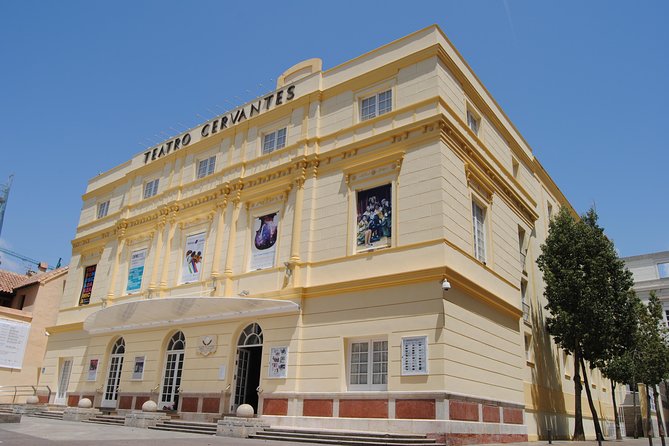
One of the most engaging parts is meeting what was Picasso’s playground. Instead of waving at a general “old town” area, you’re guided to a specific sense of place—where a kid could wander, observe, and absorb life.
This is where I think the guide’s skill matters. The best walking tours don’t just tell you where something is; they explain why that location fits the person. Here, you’re encouraged to connect the setting to the kind of curiosity Picasso had.
Even if you’re not an art-history person, you’ll likely get value from this section. It makes Picasso’s early life feel practical and human—less genius-on-a-pedestal, more kid growing up inside a working city.
Birthplace and family: seeing Picasso through the people around him
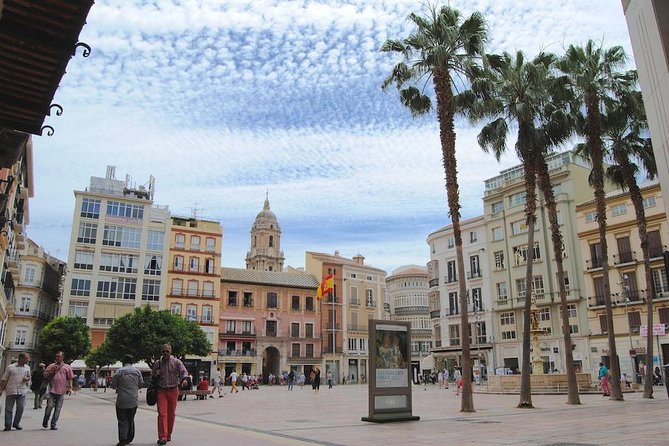
The next stops bring you to Picasso’s birthplace and the family story behind it. This is one of the tour’s strongest themes: you don’t get Picasso as a standalone icon—you get him as a son, a family member, and a kid shaped by relationships.
You’ll also visit the church where Picasso was baptised and where his parents got married. That kind of stop can feel a little surprising on an art tour, but it actually helps you understand the role of family traditions and community rituals in his early life. It’s a reminder that big artists start in very ordinary patterns.
If you like stories that connect art to real life—family, religion, hometown routines—you’ll find this portion especially satisfying. If you’re hoping for deep explanations of specific famous artworks, you might notice the tour is more about origins and context than technique.
How the Picasso museum story connects to the city
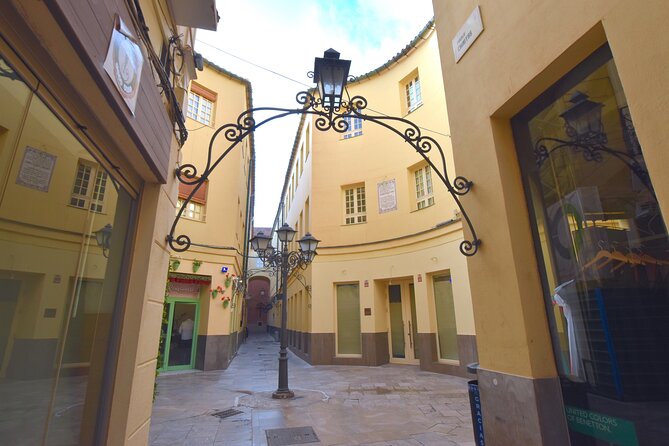
Another stop explains why we have a Picasso museum and how his family lent his works to the city. I like that this tour doesn’t leave you with “Picasso is important.” It answers the more useful question: how did Málaga end up holding Picasso’s legacy in a formal way?
That’s value you can use right away. When you later visit museums on your own, or read about Picasso, you’ll have a clearer sense of the city-to-artist connection. You won’t just see objects; you’ll understand why they’re there.
This also makes the tour feel grounded and local. It’s not only about a famous painter; it’s about Málaga protecting and sharing its relationship with him.
You can also read our reviews of more private tours in Malaga





Father’s teaching spot: learning where inspiration had a schedule
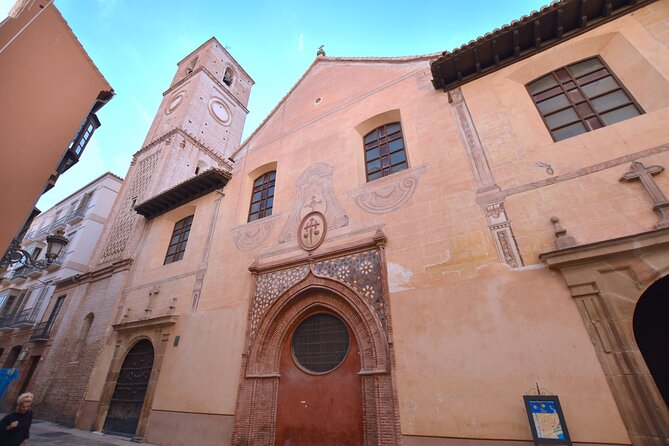
You’ll see where Picasso’s father used to teach, and you’ll hear about how Picasso himself would go to visit him. This is a smart move on the tour’s part, because it shows how Picasso’s world wasn’t only outdoors or imaginative—it also lived inside routines, classrooms, and adult work life.
There’s something quietly powerful about being pointed at a place where a parent’s profession shaped the daily environment of a child. It can help you picture Picasso learning by observation and listening, not just making things up in a vacuum.
If you’re the type who enjoys biography that feels specific, this section will land well. You’ll leave with images you can keep, because the guide ties ideas to places you can later find on your own map.
Café Chinitas and Picasso’s last Malaga visit: the story gets spicy
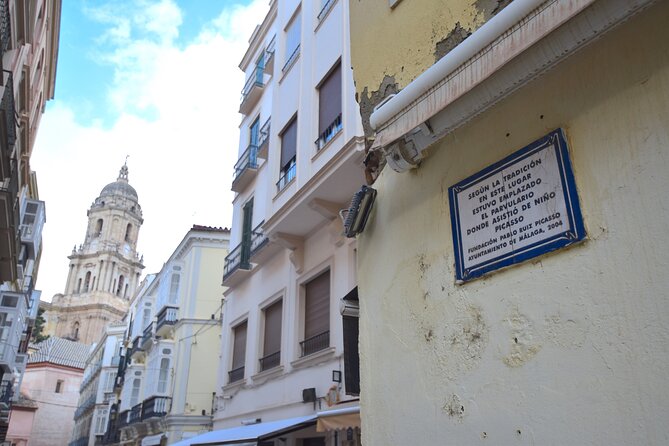
Then you hit Café Chinitas, and you’ll learn what happened there in Picasso’s last visit to Málaga. I won’t pretend the details are as straightforward as a checklist—what makes this stop interesting is the way it adds drama and humanity to the timeline.
This is the point where the tour feels less like “dates and buildings” and more like a story with momentum. Even if you only remember one thing, it’s likely the feeling of Picasso returning to the city at a later stage and being connected to a place that locals know.
So if you like cultural stops—cafés, social hubs, and the kind of spots where conversations and reputations grow—this segment is a great match.
Bishop’s House and a special Picasso exhibition stop
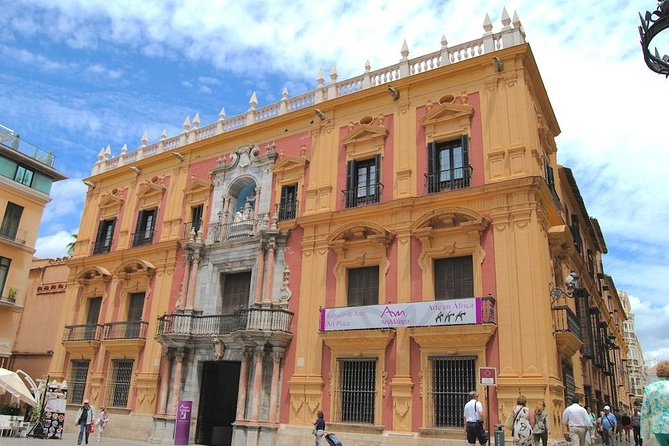
The tour finishes at the Bishop’s House area, where there has been a special exhibition focused on Picasso’s work. This matters because it gives you a “bridge” from the biography you just learned into what you might actually see in exhibitions.
Even if you don’t plan to enter every museum room right away, this kind of stop helps you understand how the city frames Picasso now. It also gives you a reason to care about the setting: you’re seeing how Málaga turns its history into an ongoing experience.
The Bishop’s House setting also works as a natural landing point. Ending near Plaza del Obispo puts you back in a lively central zone, easy for continuing dinner plans or grabbing a drink afterward.
Price and value: is $120.41 worth it?
At $120.41 per person for a private 2-hour tour, the value depends on what you want.
If you’re traveling as a couple or a small group, private usually means better attention and less waiting. And because the tour is guided in English with a local guide, you’re not left piecing the story together yourself.
The tour also offers group discounts, which can make it feel much more reasonable if you’re with friends. Plus, it’s offered as a mobile ticket experience, and it’s scheduled as a private activity—your time is respected, and you aren’t negotiating with strangers’ pace.
One more value point: the tour is designed as a chain of context stops—19th-century society, childhood spaces, church moments, family teaching, and civic legacy. That’s a lot of narrative packed into two hours, and that often beats doing it alone when you want a coherent story without the guesswork.
Who should book this Picasso roots tour?
I think this tour is ideal if you want:
- A family-and-place way of understanding Picasso, not just a list of landmarks
- A guide who brings local passion, especially if you value explanations that feel friendly and clear
- A walk that’s short enough for a day trip but structured enough to feel complete
It’s also a good choice for first-time visitors who don’t want to build their own route from scratch. If you already know a lot about Picasso’s artwork and are hunting for technical art analysis, you may find this leans more toward biography and city connections than deep critique. Still, that can be a nice balance.
Should you book it?
Yes, I’d book it if you like guided stories that connect a famous name to real neighborhoods. The tour’s strongest assets are the place-based biography and the guide approach—friendly, informative, and clearly passionate. If you want to understand why Málaga cares about Picasso, and how that relationship is built through specific buildings and moments, this format does the job.
Just go in with realistic expectations about walking. Wear comfortable shoes, and give yourself the mental space to absorb a steady run of stops. Do that, and you’ll end the tour with a much clearer sense of Picasso as a living part of Málaga’s streets—not just a figure behind glass.
FAQ
How long is the Picasso roots private walking tour?
It’s listed at about 2 hours.
Where does the tour start and where does it end?
It starts at Teatro Cervantes (C. Ramos Marín, s/n, Distrito Centro, 29012 Málaga) and ends at Plaza del Obispo (Distrito Centro, 29015 Málaga).
Is this tour private?
Yes. It’s a private tour/activity, and only your group will participate.
What language is the tour offered in?
The tour is offered in English.
What’s included?
The experience includes a private tour and a local guide.
Will I receive a mobile ticket?
Yes. It’s listed as offering a mobile ticket.
When will I get confirmation after booking?
Confirmation is sent within 48 hours of booking, subject to availability.
Is free cancellation available?
Yes, you can cancel for a full refund if you cancel up to 24 hours in advance of the experience’s start time.
Do I need to plan for walking?
Yes—wear comfortable shoes and clothes. The experience also notes that most travelers can participate.